

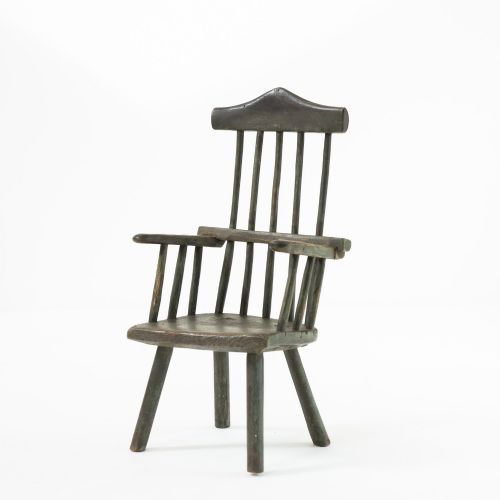


Childrens Windsor Chair
These childrens windsor chair examples are small-scale vernacular seating built for young occupants, offering domestic utility and traditional craftsmanship.
Childrens Windsor Chair
A childrens windsor chair is a downscaled traditional seat designed for domestic use by young members of the household. These pieces mirror the robust construction methods of adult seating while accommodating smaller proportions.
The versions most commonly met across these listings originate from the eighteenth and nineteenth centuries, spanning periods such as the Georgian and Victorian eras. Makers produced these chairs in various regional British idioms, incorporating stick backs and spindle backs into the design.
Forms include armchairs, rocking chairs, and simple seated variations intended for children. Each piece demonstrates how cabinetmakers and rural joiners adapted standard seating designs for youth use.
Materials and construction
Makers constructed childrens windsor chairs using solid timbers native to the British countryside, notably elm, ash, beech, yew, and fruitwood. These woods provided the necessary strength for daily domestic use while allowing turners to shape slender spindles and legs on a lathe.
Construction typically involved a plank seat into which the legs and back sticks were wedged and pegged. This pegged jointing method ensured stability without requiring complex metal fixings.
Childrens Windsor Chair Retail Price Guide 2026
Typical asking prices for childrens windsor chair among the pieces listed under this phrase on Sellingantiques today, from the lower quarter to the upper quarter. They describe what is for sale here now, not the wider market.
Materials documented across the available pieces include elm, ash, beech, yew wood, fruitwood, and applied paint surfaces.
Judging quality in miniature seating
Quality in a childrens windsor chair rests upon the selection of timber and the dexterity shown in turning the spindles and legs. Figured yew wood or well-grained elm indicates a more deliberate choice of material by the maker compared to plain hardwood.
Proportion and structural balance also separate standard examples from finer works. A successful piece maintains the visual harmony of an adult chair while scaling down accurately for a child.
The Childrens Windsor Chair Glossary
- Stick back
- A chair design where turned wooden spindles are tenoned directly into the seat, forming the backrest. This method provides robust support.
- Vernacular
- Objects made by local craftsmen following regional traditions rather than strict academic styles. These pieces utilise local materials and practical designs.
- Spindle back
- A chair back constructed from multiple slender turned rods. These elements distribute weight evenly and lighten the visual appearance of the frame.
- Windsor chair
- A chair built with a solid wooden seat into which all other components are inserted. The legs and back do not rely on a continuous frame.
Childrens Windsor Chair: Frequently Asked Questions
What is a childrens windsor chair?
A childrens windsor chair is a miniaturised version of the classic British stick back or spindle back seat. These pieces were built for young occupants using traditional timber construction methods.
Craftsmen scaled down the proportions while retaining the sturdy pegged joints and solid seats characteristic of adult versions.
How were these chairs used?
These small seats served practical functions in domestic nurseries and family rooms. They provided stable, portable seating for young children during meals and daily activities.
Some examples include rocking bases designed to soothe infants, while others functioned as stationary armchairs for older youths.
How do I date a childrens windsor chair?
Dating relies on examining the timber species, turning profiles, and construction wear. Eighteenth-century examples often feature dense yew wood and early regional turning characteristics.
Later nineteenth-century pieces frequently utilise beech or elm with simpler spindle arrangements and machine-finished components.
What woods were used?
Makers selected local British hardwoods for their strength and availability. Elm, ash, beech, and yew appear frequently across these chairs.
Seat planks typically consist of elm for its resistance to splitting, while spindles and legs utilise harder woods like ash, beech, or fruitwood.