



Charcoal and Chalk
Charcoal and chalk works are expressive works on paper, prized for tonal depth and immediacy by collectors seeking historic draftsmanship.
Charcoal and Chalk
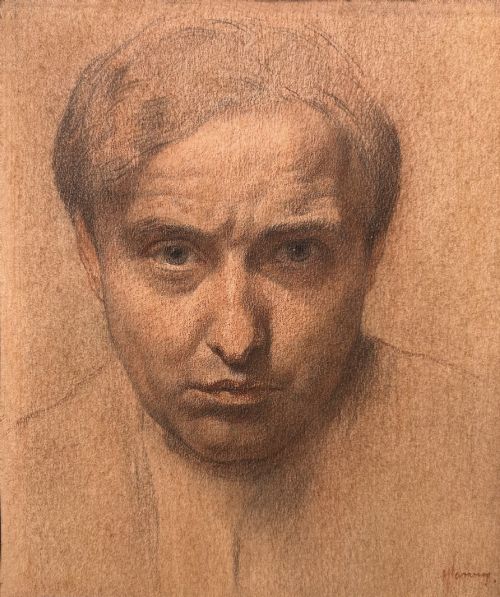
Charcoal and chalk drawings combine dark, velvety lines with bright, contrasting highlights on paper. Buyers seeking charcoal and chalk encounter varied portraits, figure studies, and landscape compositions spanning several centuries.
The selection ranges from seventeenth-century Italian sheets and French neoclassical examples to twentieth-century modern British works. Portrait drawings and nude life studies form the core of what collectors meet here.
Framed artworks appear alongside unframed sheets, often protected behind glass within period frames such as gilded wood. These pieces capture the direct hand of the artist through swift preparatory sketches and finished exhibition drawings.
Materials and technique
Artists draw with compressed or vine charcoal to establish deep shadows and bold outlines on paper supports. Toned paper frequently serves as a mid-tone ground, allowing white chalk to build luminous highlights.
Pastel and watercolour pigments occasionally supplement the monochrome palette, adding subtle colour to portrait drawings. Works are secured behind glass to protect fragile charcoal particles and chalk dust from smudging.
Charcoal and Chalk Retail Price Guide 2026
Typical asking prices for charcoal and chalk among the pieces listed under this phrase on Sellingantiques today, from the lower quarter to the upper quarter. They describe what is for sale here now, not the wider market.
Sometimes a stray thumbprint remains baked in the charcoal dust, left behind by an impatient artist rushing to catch the fading light.
Assessing the work
Quality rests upon the sureness of the draftsmanship and the vitality captured in the subject's expression. Masterful handling of light and shadow distinguishes accomplished academic studies and avant-garde pieces from routine academic exercises.
The integration of the paper tone with the dual media determines the visual balance of the composition. Well-preserved sheets retain crisp contrast between dark charcoal strokes and bright chalk highlights without excessive fading.
Pierre-Paul Prud'hon·Demetrios Galanis·John Hoppner·John Macallan Swan·Frank Dobson·George Richmond
The Charcoal and Chalk Glossary
- Charcoal
- A dry drawing medium made from charred wood that produces rich, dark black lines. It smudges easily and allows for broad tonal blending.
- Chalk
- A soft mineral substance used to apply opaque white or coloured highlights to drawings. It provides sharp contrast against dark charcoal and toned paper.
- Toned paper
- Paper manufactured or prepared with a neutral mid-tone colour like grey, tan, or blue. This surface helps artists judge highlights and shadows simultaneously.
- Deux crayon
- A drawing technique utilising two distinct colours of chalk or crayon, typically black and red on tinted paper. This method creates depth and warmth in figurative compositions.
- Giltwood
- Wood carved and coated with a thin layer of gold leaf or gilt paint. These frames frequently house antique drawings.
Charcoal and Chalk: Frequently Asked Questions
How do I care for charcoal drawings?
Keep drawings behind glass and away from direct sunlight to prevent fading and paper degradation. Avoid shaking or moving framed pieces abruptly to protect the loose pigment.
Store loose sheets flat in acid-free archival sleeves within a climate-controlled environment. Professional framing with conservation-grade materials ensures the delicate medium remains undisturbed over time.
What is toned paper used for?
Toned paper provides a neutral mid-tone background that eliminates the stark glare of pure white sheets. This middle ground lets artists apply dark charcoal for shadows and white chalk for highlights.
The resulting tonal harmony allows for rapid sketching of volume and light during life studies and portrait sessions.
How are charcoal and chalk drawings dated?
Dating relies on stylistic conventions, watermarks in the paper, costume details in portraits, and documented signatures or inscriptions. Comparative analysis with dated works by the same school or artist provides further confirmation.
Frame styles and historical provenance records also help establish the approximate period of creation.
What is a deux crayon drawing?
A deux crayon drawing employs two distinct drawing stones, traditionally black and red chalk, on tinted paper. This French method produces lifelike warmth and modelling in portraiture and figure studies.
Artists utilise the two tones to separate cool shadows from warmer flesh highlights.