




Ceramic Teacup Trio
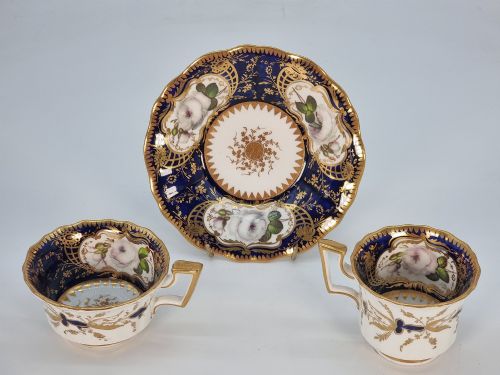
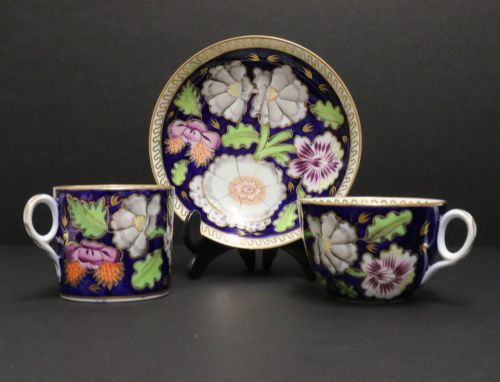
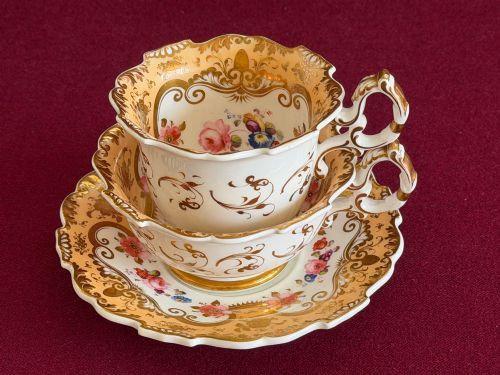
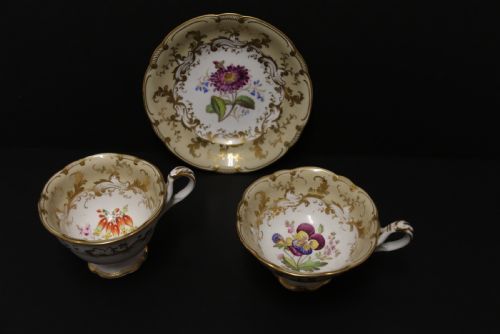
These ceramic teacup trio sets bring matching cups, saucers and side plates together for formal tea drinking.
Ceramic Teacup Trio
When you search for a ceramic teacup trio, you look at matched sets of three porcelain pieces consisting of a teacup, saucer and matching plate from periods including the 18th Century, Regency, Victorian, and Edwardian eras.
The version you meet most often on this page is the English porcelain cabinet trio, frequently dating from the early 19th century and decorated with hand-painted motifs and gilded detail.
These sets encompass forms from makers such as Spode, Coalport, Worcester, and Davenport, reflecting domestic tea habits across successive British design movements.
How they were made
Potters shaped these vessels using bone china and porcelain, firing the clay bodies before applying enamel glazes and hand-painted pigments.
Finishing touches involved the application of gold leaf and gilding to rims, handles, and surfaces to elevate the appearance of the teaware.
Ceramic Teacup Trio Retail Price Guide 2026
Typical asking prices for ceramic teacup trio among the pieces listed under this phrase on Sellingantiques today, from the lower quarter to the upper quarter. They describe what is for sale here now, not the wider market.
Decoration techniques across the items include hand-painted motifs, enamel glaze, and applied gold leaf.
What varies in quality
The standard of a ceramic teacup trio rests on the crispness of the porcelain body and the precision of the hand-painted brushwork applied across all three matching items.
Pieces from notable factories show superior ceramic translucency and more meticulously preserved gilding compared to simpler utilitarian tea wares.
A H & R Daniel·Newhall·Coalport John Rose·Derby·Worcester·Royal Worcester·Davenport·Minton·Spode·Wileman Foley Shelley·Gladstone Potteries
The Ceramic Teacup Trio Glossary
- Cabinet trio
- A matching teacup, saucer and plate intended primarily for display in a cabinet rather than daily use. These often feature finer hand-painting and heavier gilding.
- Bone china
- A type of soft-paste porcelain containing bone ash, which yields a strong, bright white ceramic body. It allows for thinner walls while retaining durability.
- Gilding
- The application of gold leaf or powdered gold onto the ceramic surface. It is typically fired onto the glaze to accent rims and handles.
- Enamel glaze
- A vitreous composition fused to the ceramic body during firing to provide a smooth, coloured, or glossy protective coating. This surface accepts hand-painted details.
- Flight period
- An era of Worcester porcelain production associated with Thomas Flight and his sons running from the late 18th century. Items from this time display distinct neoclassical or floral motifs.
Ceramic Teacup Trio: Frequently Asked Questions
What is included in a ceramic teacup trio?
A trio consists of three matching ceramic components designed for tea service. These are a teacup, a saucer, and a matching side or bread-and-butter plate.
Historically, this grouping allowed a single person to enjoy tea and accompaniments with fully coordinated tableware.
How do I date a ceramic teacup trio?
Dating relies on identifying factory marks stamped or painted on the ceramic bases, combined with stylistic cues from periods like Regency or Edwardian designs.
Shape profiles, ceramic body thickness, and the specific style of hand-painted or gilded decoration also point to particular decades of production.
Can I use antique teacup trios for drinking tea?
Many examples remain robust enough for gentle use, though early porcelain is sensitive to thermal shock and abrasive washing.
Collectors often reserve cabinet trios for display rather than daily service to preserve the delicate enamel glazes and gold leaf.
What is the difference between porcelain and bone china?
Traditional porcelain uses fine white clay fired at high temperatures to create a dense, vitreous material with varying degrees of translucency.
Bone china incorporates animal bone ash into the ceramic mixture, producing a warmer white tone and a stronger body that permits thinner walls.