

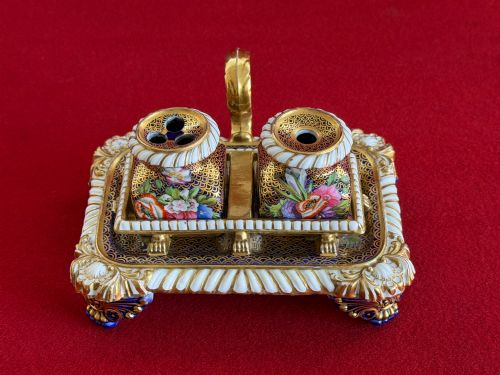


Ceramic Desk Set
A ceramic desk set brings a functional elegance to the writing table, uniting utility with the refined artistry of porcelain, earthenware, and faience.
Ceramic Desk Set
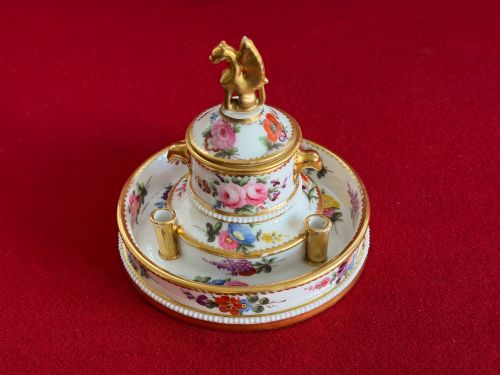
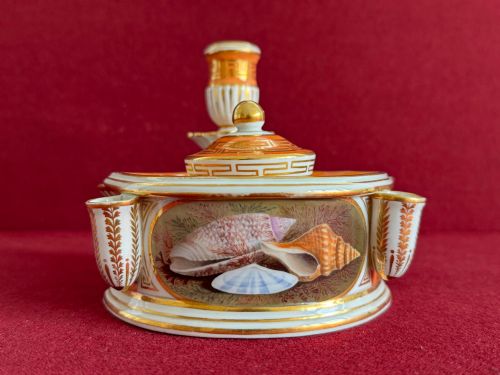
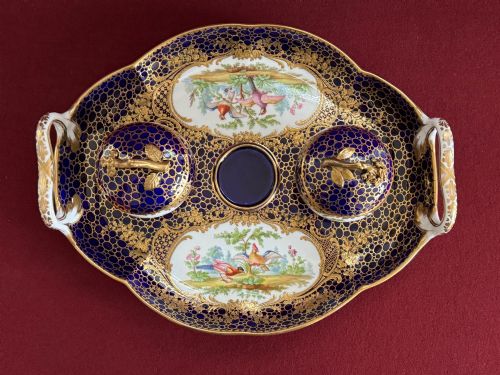
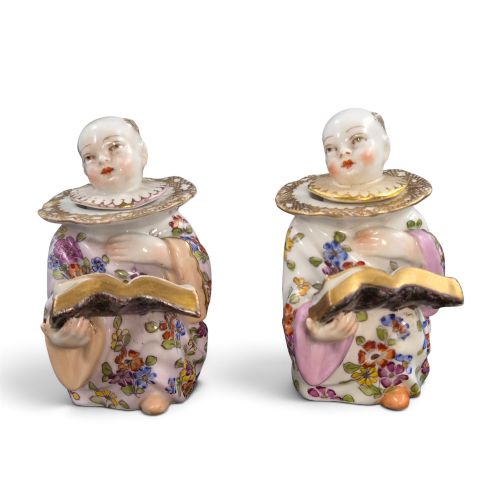
A ceramic desk set encompasses inkstands, desk accessories, and figural inkwells fashioned from porcelain, earthenware, and tin-glazed faience. These pieces span periods from the Georgian and Regency eras through the Victorian age into the twentieth century, reflecting shifting tastes in domestic writing equipment.
The versions most commonly met on this page include porcelain inkstands with fitted wells and compartmentalised trays, alongside blue and white Dutch Delft examples and Continental figural pieces. Makers ranging from Minton and Spode to Worcester and Edmé Samson produced these desk accessories for the writing desks of grand and modest households alike.
Forms vary from grand desk stands mounted on brass bases to sculptural figural compositions and classical revival shapes decorated with Chinoiserie scenes or floral patterns. Each piece is designed to hold ink and writing implements while serving as an ornamental centrepiece on a desk top.
Materials and production methods
The construction of a ceramic desk set typically involves moulded or thrown ceramic, porcelain, or tin-glazed earthenware, often combined with brass mounts and gold leaf highlights. Potters shaped the clay bodies by hand or in moulds before firing them to create stable vessels suitable for holding liquid ink.
Glazing and decoration followed the initial firing, utilising techniques such as underglaze blue painting, enamel detailing, and polychrome transfer printing. Pieces like Schneeballen German wares required the meticulous application of small applied porcelain petals and blossoms by hand prior to the final kiln process.
Ceramic Desk Set Retail Price Guide 2026
Typical asking prices for ceramic desk set among the pieces listed under this phrase on Sellingantiques today, from the lower quarter to the upper quarter. They describe what is for sale here now, not the wider market.
Listings feature pieces spanning the Georgian, Regency, Victorian, and later nineteenth-century periods, utilising porcelain, earthenware, and tin-glazed faience.
Distinctions in quality
Quality in a ceramic desk set is determined by the crispness of the moulding, the fineness of the porcelain body, and the hand-painted execution of the decoration. Pieces produced by established manufactories display superior potting and more confident brushwork in motifs such as Watteau scenes or dragon compartments.
The integration of secondary materials, such as finely chased brass bases or intricate applied porcelain floral work, distinguishes the more ambitious pieces from standard utilitarian inkwells. Preservation of the original glaze sheen and the delicacy of surviving decorative elements further separate standard wares from exceptional examples.
Minton·Flight and Barr·Spode·Edmé Samson·Flight Barr and Barr·Meissen
The Ceramic Desk Set Glossary
- Inkstand
- A complete desk set comprising an inkwell, sander, and pen tray mounted on a shared ceramic or brass base. It was the standard writing accessory for correspondence in Georgian and Victorian households.
- Faience
- Tin-glazed earthenware produced across Europe, particularly associated with Dutch Delft and French manufactories. The opaque white glaze provides a smooth surface for painted decoration.
- Schneeballen
- A German porcelain technique featuring dense clusters of small applied flowers and leaves covering the entire surface of a vessel. This laborious method creates a textured, snow-ball effect popular in the early nineteenth century.
- Encrier
- The French term for an inkstand or inkwell. It frequently appears in descriptions of continental desk accessories from the nineteenth and twentieth centuries.
- Chinoiserie
- European decorative motifs imitating Chinese artistic styles, often featuring figures, pagodas, and landscapes in blue and white or polychrome enamels on porcelain bodies.
Ceramic Desk Set: Frequently Asked Questions
What is included in a desk set?
A traditional desk set typically includes a central inkwell, often accompanied by matching compartments for pens, stamps, or a sander for drying ink. Many examples sit upon an integrated ceramic tray or a brass base.
These pieces were designed to keep a writing desk organised while providing a decorative focal point in a study or drawing room.
How do I date a ceramic inkwell?
Dating a ceramic inkwell involves examining the paste, glaze characteristics, and any factory marks stamped or painted on the base. Stylistic clues such as Regency shapes or Victorian revival ornamentation also provide a reliable guide to the period of manufacture.
Comparing the decorative palette, such as hand-painted Chinoiserie or floral enamels, helps narrow down the decade in which the piece was produced.
Were these inkwells used daily?
These desk accessories were created for practical daily use in writing letters, keeping accounts, and signing documents. Ink was poured directly into the ceramic or porcelain well, where a quill or metal nib pen was dipped before writing.
Because they were handled frequently during correspondence, surviving examples show varying degrees of ink staining inside the wells from active service.
How should I clean my inkstand?
Cleaning a ceramic inkstand requires gentle care to preserve the glaze and any delicate applied decoration like gold leaf or brass mounts. Warm water and a mild detergent are generally sufficient to remove dust and old ink residue from the interior of the wells.
Harsh abrasives and chemical solvents must be avoided to protect antique porcelain surfaces and hand-painted enamel designs from damage.