

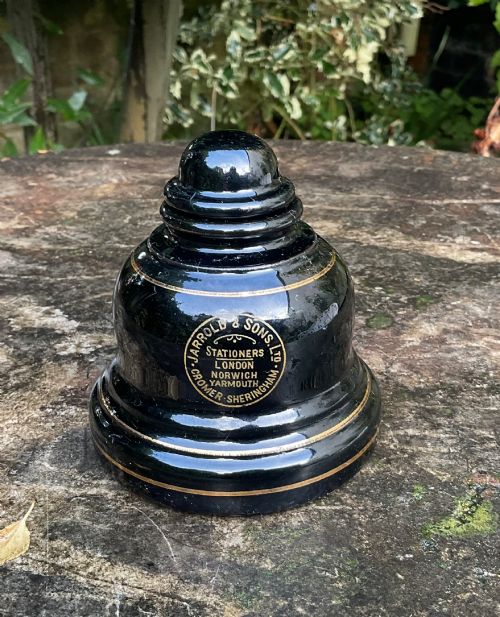


Ceramic Desk Ornament
These ceramic desk ornament pieces bring functional character to a workspace, offering period charm through inkwells, figures, and animal studies.
Ceramic Desk Ornament
A ceramic desk ornament encompasses functional inkwells, quill holders, and decorative figures designed to sit upon a writing surface. These pieces span periods from the eighteenth century through the art deco era, originating from English potteries, German factories, and Asian workshops.
The most common examples encountered on this page are Victorian Staffordshire dog figures and inkstands, alongside continental porcelain animals and glazed earthenware items. Buyers find everything from utilitarian stoneware rugby ball inkwells to decorative German porcelain lamps shaped like spitz dogs.
The selection ranges from functional desk accessories like brush washers and water bird carvings to sculptural ornaments such as majolica gnomes and hoop-skirted figures. Each piece reflects the desk accessory tastes of its specific period, whether Georgian, Regency, Victorian, or early twentieth century.
How they were made
Potters utilised earthenware, stoneware, and porcelain to shape these objects, often applying detailed glazes and enamel decoration before firing. Items such as the German porcelain inkstand incorporate intricate hand-applied elements like Schneeballen floral covers.
Makers integrated brass fixtures, gold leaf accents, and glass components where function required, balancing structural durability with decorative refinement. Pieces like the Sumida Gawa pottery brush washer combine moulded stoneware bodies with modelled figures climbing the exterior.
Ceramic Desk Ornament Retail Price Guide 2026
Typical asking prices for ceramic desk ornament among the pieces listed under this phrase on Sellingantiques today, from the lower quarter to the upper quarter. They describe what is for sale here now, not the wider market.
Materials across these listings span earthenware, porcelain, stoneware, glass, and brass, alongside celadon jade and gold leaf.
What varies in quality
The sophistication of the ceramic body and the preservation of original mounts or covers dictate the standing of a desk ornament. Well-executed pieces maintain their intended purpose alongside decorative integrity, retaining vibrant colours and intact functional elements.
Sumida Gawa Pottery·Spode·Rosenthal
The Ceramic Desk Ornament Glossary
- Majolica
- A type of earthenware coated with an opaque tin-lead glaze and decorated with vibrant metallic oxide colours. It gained popularity during the Victorian era for ornamental figures and sculptural desk items.
- Schneeballen
- A German porcelain technique meaning snowball, featuring dense clusters of small applied petals covering the surface. This laborious method requires individual placement of each flower by skilled hands.
- Inkstand
- A complete desk tray or stand incorporating one or more inkwells, pen holders, and sanders. These functional assemblies often use porcelain, brass, or stoneware.
- Celadon
- A pale green jade-like glaze applied to ceramics, or carved jade itself, originating in East Asian traditions. It provides a smooth, translucent surface favoured for scholar's desk carvings.
- Suiban
- A shallow Japanese ceramic basin used for floral arrangements or as a brush washer on a scholar's desk. These vessels accommodate water and display distinctive regional glazes.
Ceramic Desk Ornament: Frequently Asked Questions
What is a ceramic desk ornament?
A ceramic desk ornament is a decorative or functional object made from clay or porcelain designed for use on a writing table. These include inkwells, quill holders, brush washers, and figural paperweights.
Such items served practical purposes in historical writing rooms while offering aesthetic pleasure through modelled animals, human figures, and glazed finishes.
How were antique inkstands used?
Antique inkstands held liquid ink for dip pens, alongside sand for drying ink and holders for quill pens. They sat centrally on writing desks in studies and offices.
The inclusion of multiple wells allowed writers to use different coloured inks without constantly cleaning a single reservoir.
How do I date a porcelain dog inkwell?
Dating relies on examining the ceramic paste, glaze characteristics, and potting style specific to periods like the Victorian era or Georgian times. Makers' marks, where present, offer precise attribution.
Stylistic cues such as the modelling of Staffordshire animals or German porcelain techniques also help narrow the decade of manufacture.
Can I use an antique inkwell today?
Most antique inkwells function mechanically, though some collectors prefer to display them dry to preserve fragile ceramic or glass inserts. Porcelain and stoneware bodies remain durable for everyday placement.
Care should be taken with historical materials, particularly when filling or cleaning residual dried ink from nineteenth-century wells.