


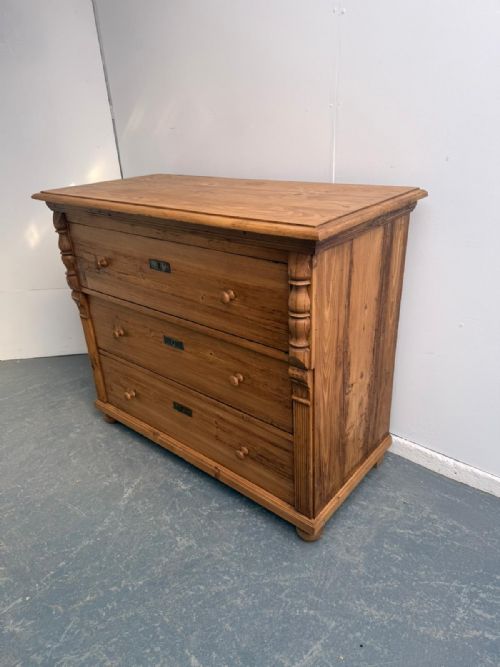
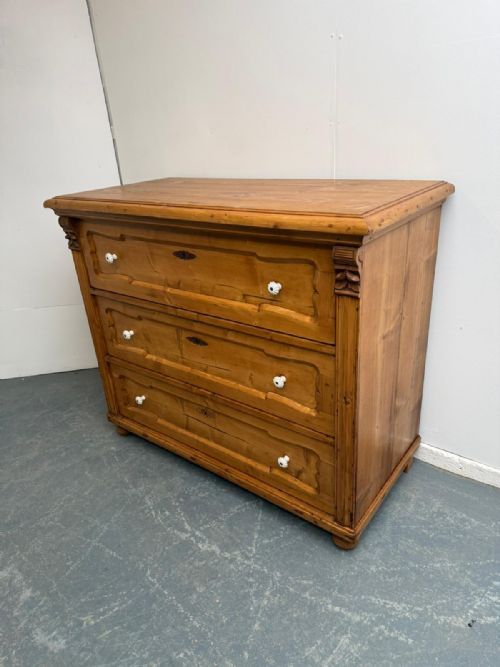
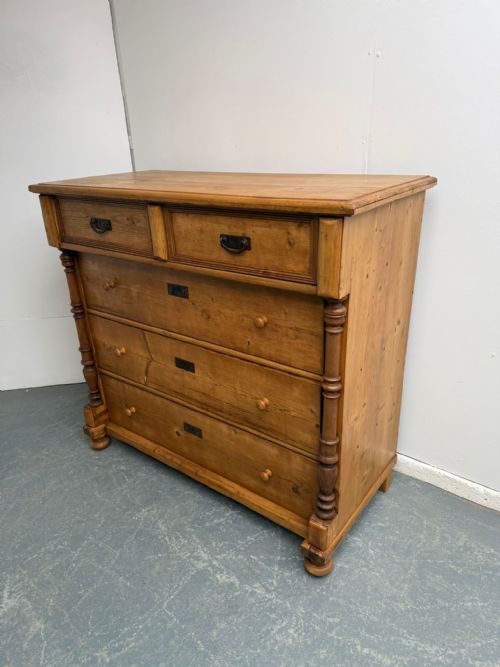
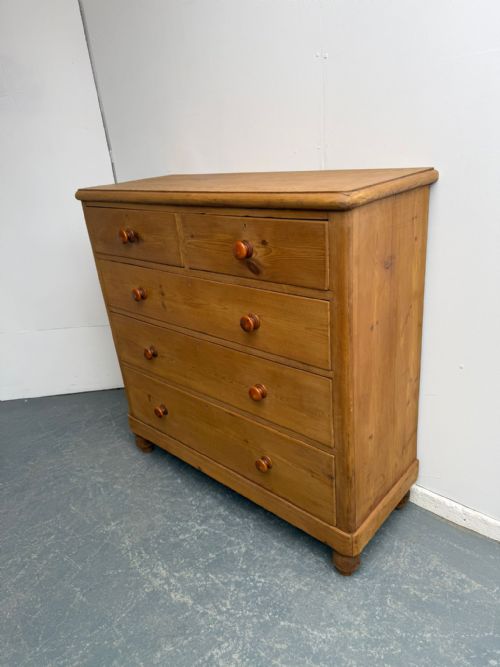

Century Old Dresser
A century old dresser brings honest utility and warm pine grain to a room, offering robust storage built to endure.
Century Old Dresser
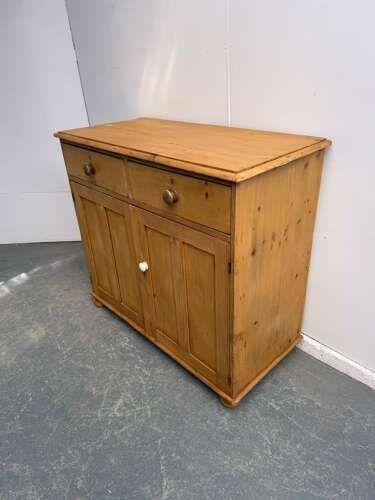
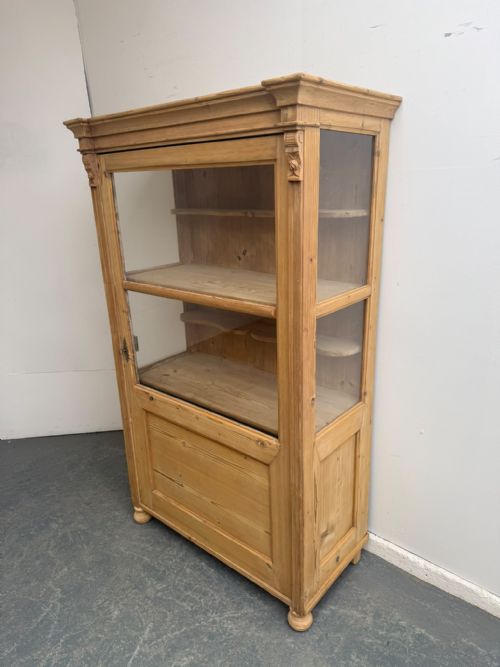
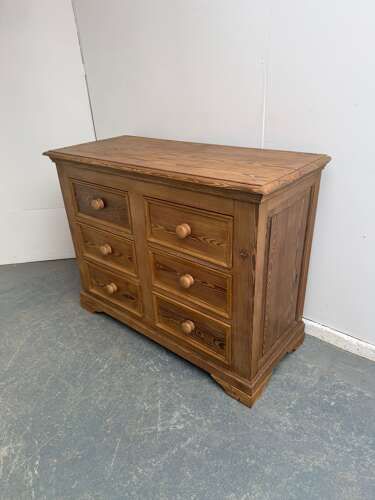
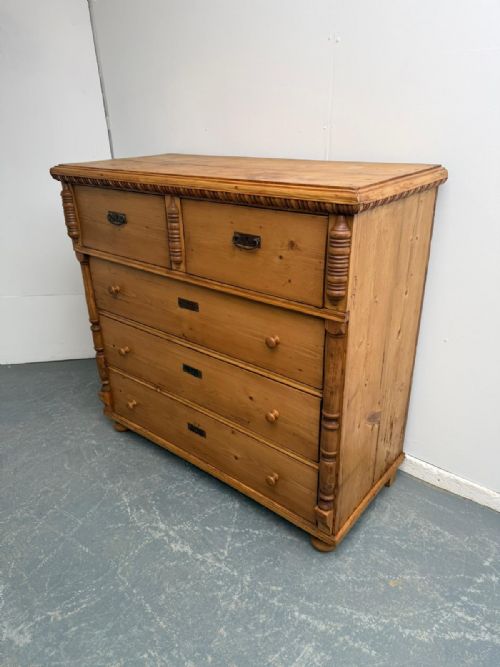
A century old dresser encompasses practical household storage forms from the Victorian era, spanning dresser bases, glazed display cabinets, and large chests of drawers. These utilitarian items served everyday domestic needs in kitchens and parlours, providing substantial capacity for tableware, linen, and provisions.
The versions most frequently met on this page are sturdy pine pieces originating from English, Irish, Welsh, and continental European workshops. Their forms range from simple three-drawer and six-drawer chests to substantial dresser bases featuring bread slides and glazed upper cabinets.
Regional variations emerge through specific construction details, such as columned pilasters on Hungarian examples or distinct proportioning in Welsh and Irish workshops. Buyers encounter pieces finished with traditional wax or left raw and ready for painting, reflecting their long history of domestic use.
Materials and construction methods
Makers relied primarily on solid pine, utilising its accessible nature and reliable grain to build heavy carcases and drawer boxes. Surfaces received traditional wax finishes to nourish the timber and highlight natural knots, while secondary elements incorporated iron, brass, and occasional glass panels.
Construction techniques prioritised durability, employing robust joints and timber framing to withstand heavy daily usage in busy households. Details such as applied wooden columns, glazed doors, and sliding bread boards demonstrate the practical craftsmanship typical of nineteenth-century country workshops.
All listed pieces belong to the Victorian period, constructed primarily from solid pine with iron, brass, and glass elements.
Judging quality and proportion
Quality in a century old dresser rests upon timber selection and the integrity of the original construction rather than decorative excess. Finer examples display well-matched pine boards, balanced proportions, and clean architectural details such as turned columns or intact glazing.
Subtleties of scale and regional character separate standard utility pieces from more substantial vernacular forms. The survival of original hardware, smooth drawer action, and untouched timber surfaces distinguish superior examples from heavily altered pieces.
The Century Old Dresser Glossary
- Dresser base
- A low sideboard or cupboard unit, often featuring drawers and doors, designed for food preparation and storage.
- Bread slide
- A pull-out wooden board integrated into furniture joinery, historically used for cooling bread or food handling.
- Glazed flat display cabinet
- A wall-mounted or freestanding cabinet with glass panel doors intended for showcasing household wares.
- Victorian country
- A stylistic descriptor reflecting robust, unpretentious domestic furniture produced during the reign of Queen Victoria.
- Pine
- A softwood commonly utilised in nineteenth-century vernacular furniture for its workability and distinct grain patterns.
Century Old Dresser: Frequently Asked Questions
Where were these pieces made?
These pieces originate from various domestic and regional workshops across England, Ireland, Wales, and continental Europe.
Makers utilised local softwoods, principally pine, applying regional design characteristics such as columned pilasters or distinct drawer configurations.
How do I care for waxed pine?
Waxed pine surfaces require occasional maintenance using traditional furniture wax to preserve the moisture and sheen of the timber.
Avoid placing these pieces in direct sunlight or near heat sources to prevent the wood from drying out or splitting.
Are these items suitable for modern kitchens?
These robust storage pieces integrate well into contemporary interiors, offering generous drawer space and surface area for modern living.
Their substantial construction and honest timber grain bring character and practical utility to dining rooms, kitchens, and hallways.