
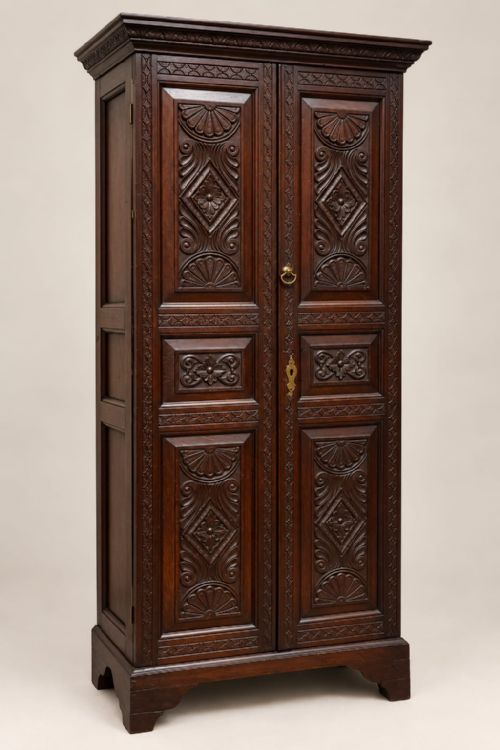
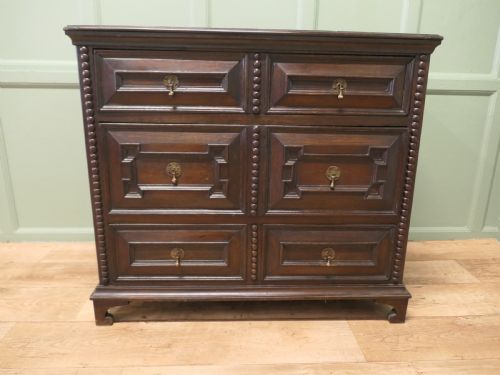
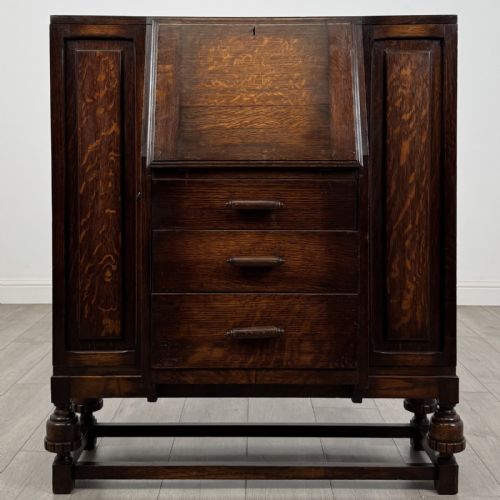
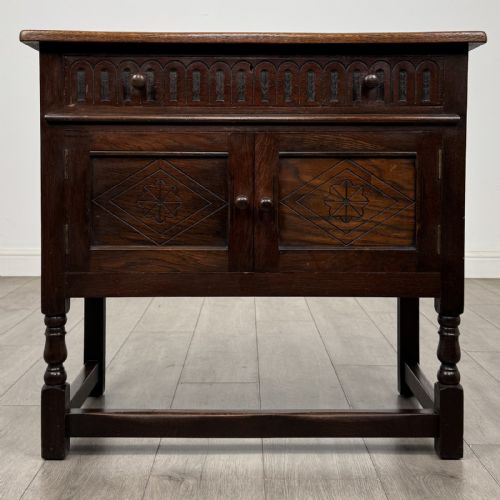
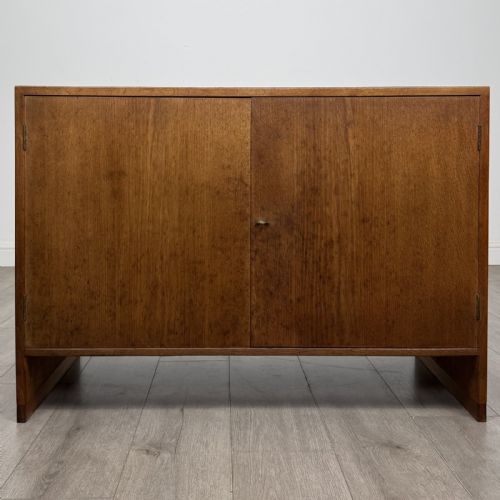
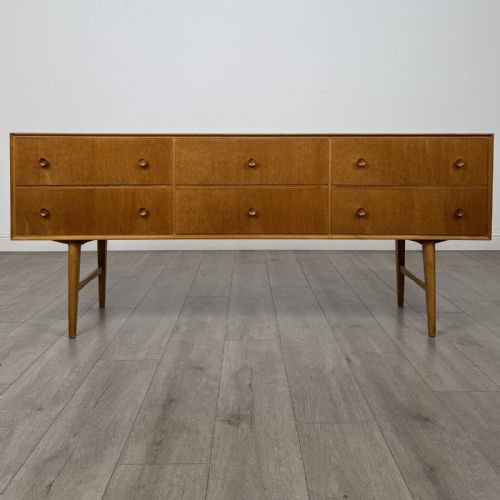
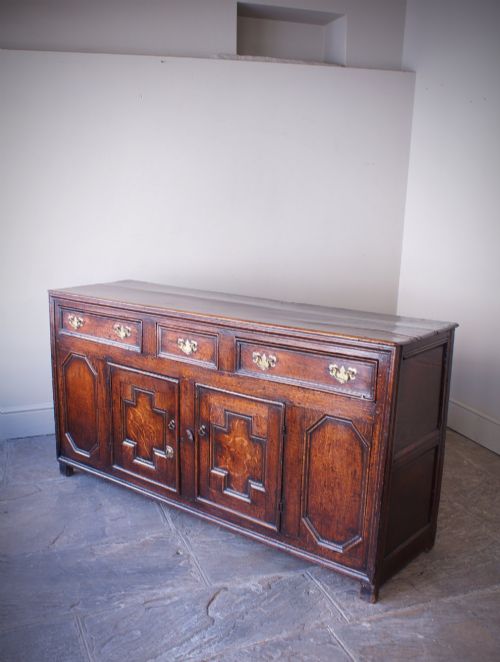
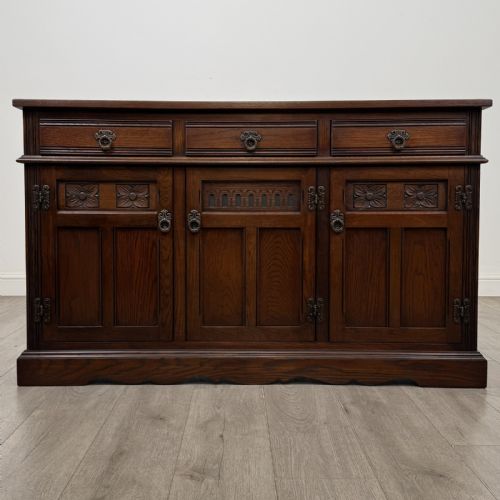
Century Oak Cabinet
A century oak cabinet brings dependable storage and sturdy grain into a room, spanning periods from the seventeenth century through to the mid-twentieth.
Century Oak Cabinet
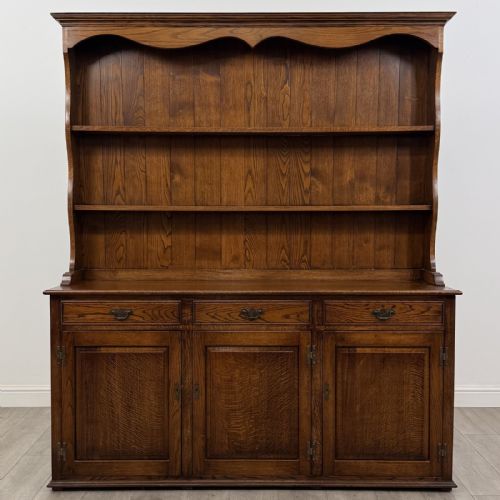
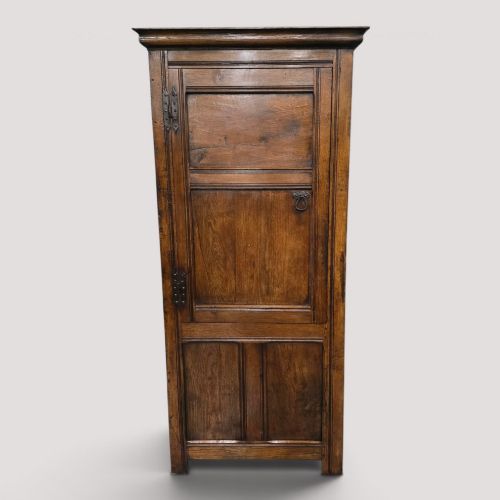
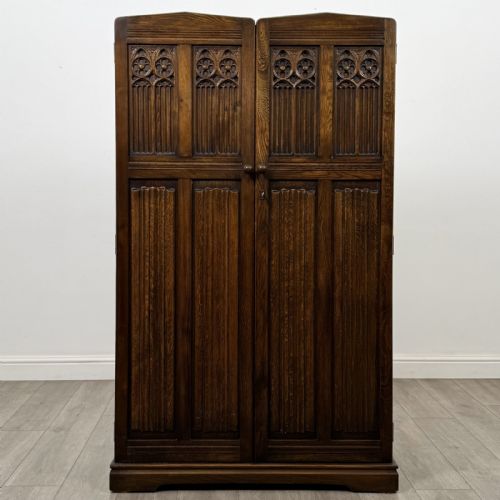
A century oak cabinet covers a broad span of functional domestic furniture, ranging from small spice cupboards and food larders to large Welsh dressers, sideboards, and display cases. The pieces found here stretch from seventeenth-century panelled vestment cupboards and Georgian dresser bases to Edwardian wardrobes and twentieth-century filing chests.
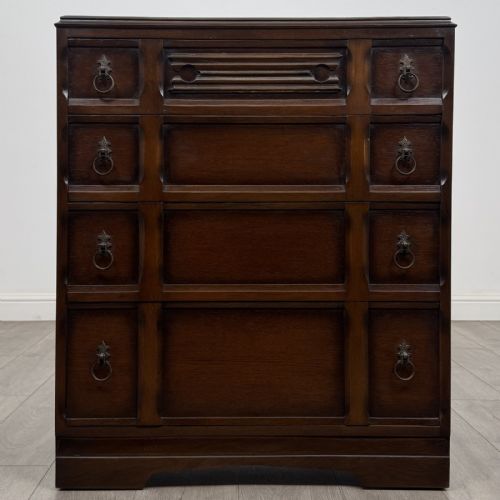
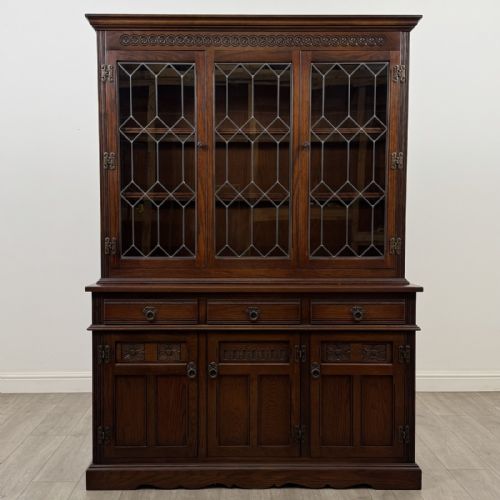
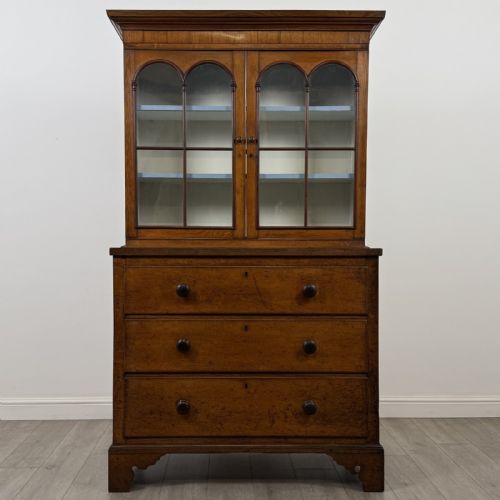
Buyers seeking a century oak cabinet encounter diverse forms including bookcases with glazed doors, chests of drawers with raised galleries, and fitted bureaux with pigeon holes. The selection includes regional variations such as Cheshire dresser bases and Welsh deuddarn cupboards alongside continental items.
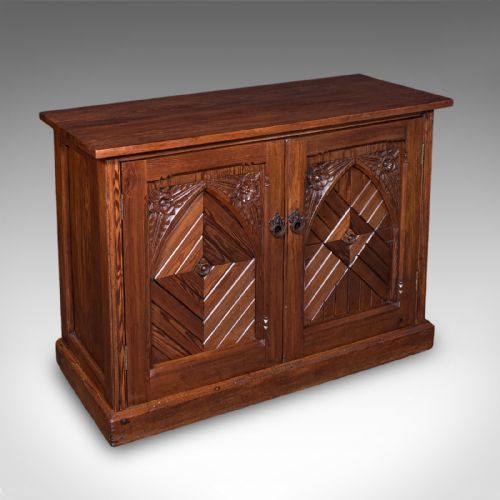
The dominant aesthetic presence across the selection derives from solid oak construction, often enriched with carved panels, brass handles, or glass viewing panes. Pieces date across several centuries, with a significant concentration originating in the twentieth century and the Georgian era.
How they were made
Maker construction relies heavily on solid oak timber, frequently accented with pollard oak for decorative grain effects, and assembled using traditional joinery methods appropriate to each period. Structural integrity is supported by hardware such as brass handles and iron fittings.
Glazing appears on display cabinets and bookcases, while interior fittings incorporate shelves, pigeon holes, and drawers. Surface finishes and carved details reflect specific historical movements, including Gothic Revival, Arts and Crafts, and Jacobean Revival.
Materials paired with oak across the inventory include brass, glass, iron, silver plate, and pine.
What varies in quality
The degree of hand-carving and the sophistication of regional or period detailing differentiate standard storage furniture from exceptional examples. Cabinetry associated with notable makers or specific stylistic movements carries distinct craftsmanship value.
The selection of timber grain, particularly figured or pollard oak variations, influences the visual depth of a piece. Original hardware, intact glass panels, and the survival of internal fittings such as pigeon holes contribute to overall integrity.
John Moyr Smith·Gillows·Charles Dudouyt
The Century Oak Cabinet Glossary
- Deuddarn
- A traditional Welsh two-tier cupboard used for storage, often featuring panelled doors and carved details.
- Dresser base
- A low sideboard or table base with drawers, historically utilised in kitchens and dining rooms for food preparation and storage.
- Tantalus
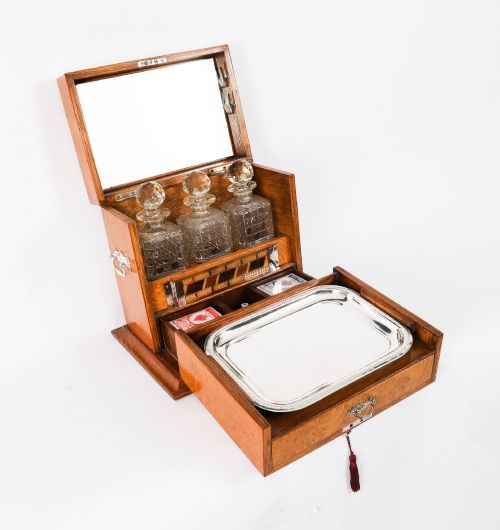
- A locked decanter stand, commonly constructed in oak with metal framing, designed to secure alcoholic beverages.
- Pollard oak
- Timber taken from trees that have been pollarded, producing a highly figured and knotted grain pattern prized for decorative veneers.
- Gallery
- A raised railing or shelf along the top edge of a chest of drawers or sideboard, intended to prevent items from sliding off.
Century Oak Cabinet: Frequently Asked Questions
What is a deuddarn?
A deuddarn is a traditional Welsh cupboard featuring two distinct sections, commonly constructed from solid oak during the eighteenth century.
These pieces provide substantial storage capacity and typically display regional carving patterns on their panelled doors.
How do I identify a Georgian piece?
Georgian items display proportions and joinery characteristic of the eighteenth and early nineteenth centuries, often utilising golden oak.
Look for traditional drawer construction, period brass handles, and regional cabinet-making traits such as those found on Cheshire dressers.
Where were these cabinets used?
These cabinets served primarily in dining rooms, halls, and kitchens for storing food, tableware, linens, and books.
Specialised forms like spice cupboards and food larders fulfilled specific domestic storage needs in older households.
How do I care for oak furniture?
Solid oak furniture benefits from placement away from direct heat sources and strong sunlight to protect the wood and finish.
Routine dusting with a dry cloth and occasional application of appropriate beeswax maintain the surface condition of the timber.