




Cast Bronze Incense Burner
A cast bronze incense burner brings centuries of ritual history and sculptural weight to a room.
Cast Bronze Incense Burner
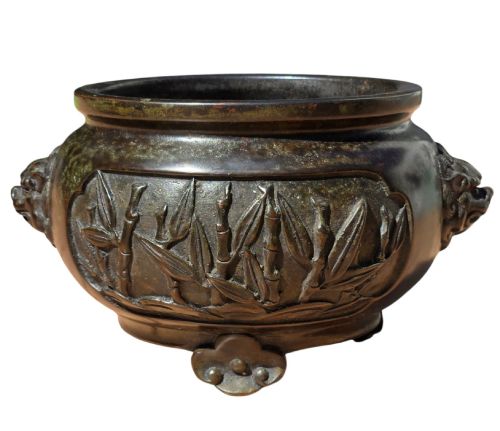
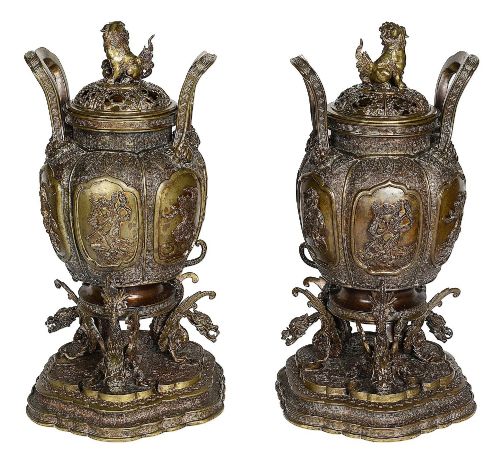
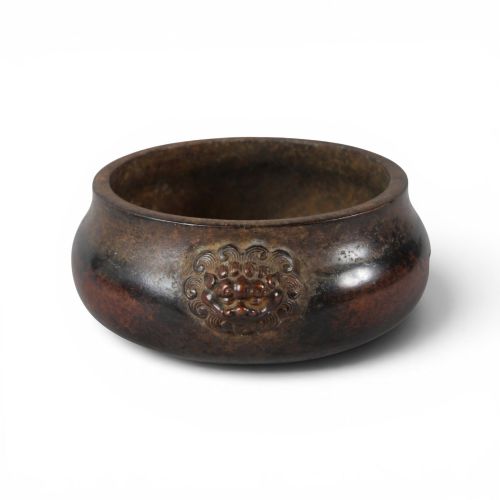
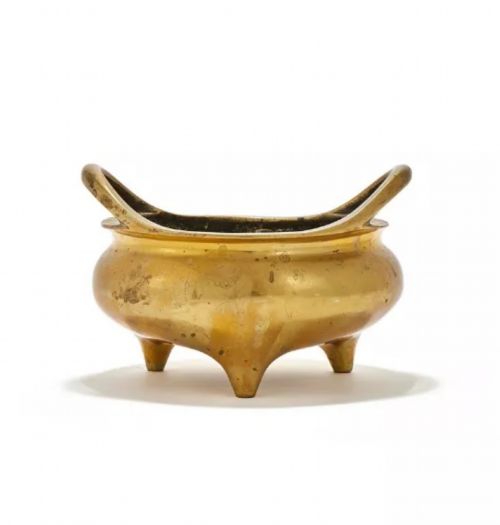
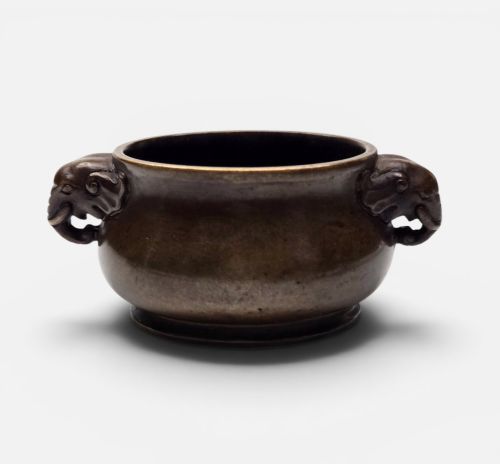
A cast bronze incense burner takes many traditional forms, ranging from tripod vessels and lidded urns to hanging ceremonial censers and decorative bowls. Buyers searching for a cast bronze incense burner will encounter pieces spanning the Ming and Qing dynasties, the Japanese Edo and Meiji periods, alongside Victorian and Georgian examples. These vessels were created for scholar's studios, temples, and formal display, often featuring sculptural handles like taotie masks or elephant heads.
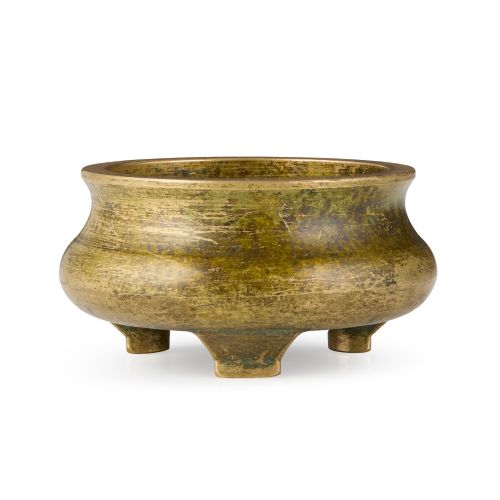
Scholar's censers dominate the selection, notable for their restrained proportions, heavy casting, and specific studio marks. Asian and Oriental pieces appear frequently, alongside Anglo-Indian variations that show diverse cultural influences in surface decoration and finial design. Whether configured as a junk boat, a bamboo section, or a lobed lotus form, each vessel serves as a container for aromatic materials.
Materials and Casting Techniques
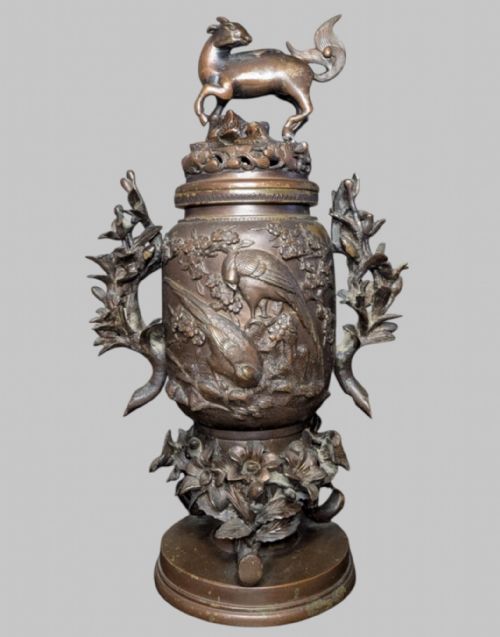
Metalworking for these vessels relies primarily on bronze, brass, and copper alloy, sometimes enhanced with gilt bronze or gold leaf applications. The foundational technique is lost-wax casting, which allows for intricate relief panels, animal finials such as fu lions and goats, and detailed surface textures.
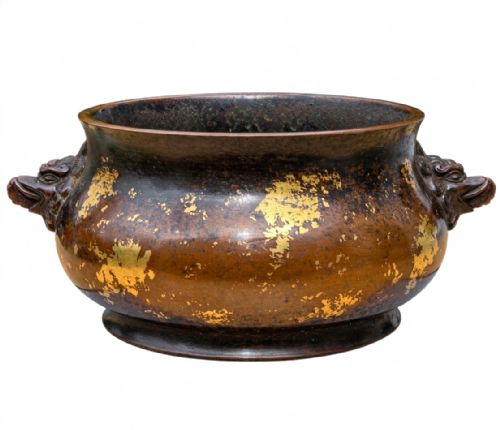
Heavier pieces demonstrate substantial metal density, occasionally featuring specialist finishes like gilt-splashing. The cooling and finishing processes result in varying resonant qualities, visible in the solid construction of tripod legs and handles.
Some incense burners take whimsical forms, including boats, bamboo segments, and animals like goats.
Evaluating Cast Bronze Quality
Quality in these vessels is dictated by the precision of the casting and the crispness of the relief work, from delicate floral panels to powerful mask handles. Weight serves as a clear indicator of substance, with heavier pieces showing greater density in the alloy walls.
The sophistication of the surface finish and the clarity of any studio marks distinguish standard utility vessels from master-cast examples intended for scholarly contemplation. Original components, such as carved hardwood stands or fitted lids with animal finials, further elevate the integrity of the piece.
The Cast Bronze Incense Burner Glossary
- Censer
- A container used for burning incense. These vessels often feature pierced covers to allow smoke to escape gracefully.
- Tripod
- A vessel supported by three legs. This configuration is standard for many classical scholar's burners.
- Taotie
- A mythological zoomorphic mask motif commonly cast into ancient and historical ritual bronzes. It frequently appears on handles and surface bands.
- Jardnière
- A decorative pot or bowl designed to hold plants. In this context, larger bronze vessels often share this classification alongside incense burners.
- Finial
- A decorative ornament fixed to the top of a lid. Common examples on these burners include lions, goats, and floral motifs.
Cast Bronze Incense Burner: Frequently Asked Questions
How were incense burners used?
These vessels functioned in scholarly retreats, temples, and homes to burn aromatic resins or wood powders. The smoke created a contemplative atmosphere while scenting the interior space.
Lidded versions controlled the release of smoke through pierced designs, while open bowl forms allowed direct dispersal from the central well.
What is a scholar's censer?
A scholar's censer is a refined bronze vessel made for the desk or studio of an educated elite. They prized understated forms, pleasing tactile weight, and subtle patination over ostentatious decoration.
Many carry studio or maker marks on the base, connecting them to specific dynasties and periods of appreciation.
How do I care for antique bronze?
Antique bronze requires minimal intervention to preserve its historical surface and natural patina. Dusting with a soft, dry cloth is usually sufficient for regular maintenance.
Avoid using metal polishes or harsh cleaning agents, as these remove the aged oxidation that collectors value.
How can I tell the period?
Dating relies on stylistic markers such as cast relief motifs, the shape of the handles, and any inscribed marks. Ming and Qing dynasty pieces display distinct regional casting characteristics.
Japanese Edo and Meiji examples introduce different sculptural interpretations, while Victorian and Georgian items reflect European decorative tastes of the nineteenth century.