

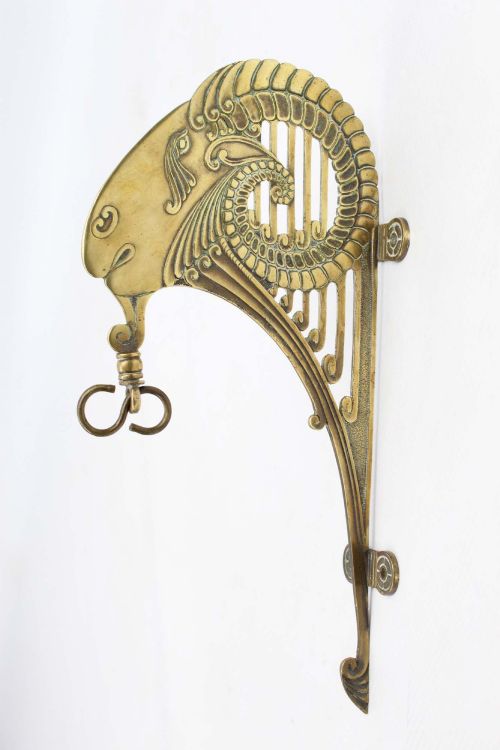


Cast Brass Wall Hanging
These cast brass wall hanging pieces bring weight and metallic lustre to an interior, offering practical mirrors, brackets and bells shaped by Victorian, Art Deco and Neoclassical hands.
Cast Brass Wall Hanging
A cast brass wall hanging brings sturdy metalwork and decorative relief directly to vertical surfaces, combining utility with distinct period style. When you search for cast brass wall hanging, you encounter diverse domestic objects ranging from mirrors and brackets to bells and desk clips repurposed for display.
Victorian and nineteenth-century examples dominate the material record here, frequently displaying elaborate motifs like cherubs, mask crests or ram's heads. Later twentieth-century items shift toward cleaner Art Deco lines and themed plaques, showing how foundry work evolved across the decades.
Materials and construction
Foundries produced these items primarily through casting molten brass into detailed moulds, creating high-relief ornamentation that was subsequently finished by hand. Secondary elements such as original mirror plates, glass, steel, enamel and gilt metal surfaces appear alongside the primary brass structure to complete each piece.
The combination of heavy cast metal with specialist components like sprung letter clips or clock movements required precise mechanical assembly. Makers utilised durable alloys that held sharp decorative edges and aged with a distinctive metallic patina over time.
Cast Brass Wall Hanging Retail Price Guide 2026
Typical asking prices for cast brass wall hanging among the pieces listed under this phrase on Sellingantiques today, from the lower quarter to the upper quarter. They describe what is for sale here now, not the wider market.
Listings feature brass, bronze, steel, glass and enamel across Victorian, Art Deco and Neoclassical Revival styles.
Assessing quality in cast brass
The integrity of integrated elements, such as original mirror glass or functional moving parts like bells and letter clips, elevates a piece. Superior examples demonstrate careful hand-finishing that removes excess seam lines while preserving the character of the metal.
The Cast Brass Wall Hanging Glossary
- Cast brass
- An alloy of copper and zinc poured into a mould to create solid decorative objects with detailed three-dimensional relief. This technique allowed makers to produce consistent ornamental forms efficiently.
- Cartel wall clock
- A clock designed to hang directly on a wall, housed in an ornate frame made of materials such as gilt metal or brass. These pieces combined functional timekeeping with sculptural wall decoration.
- Neoclassical revival
- A design style drawing inspiration from classical Greek and Roman architecture and art, prominent in nineteenth-century decorative metalwork. It emphasises symmetry, restraint and traditional motifs.
Cast Brass Wall Hanging: Frequently Asked Questions
What is a cast brass wall hanging?
It is a decorative or functional metal object designed to be mounted on a vertical surface, including mirrors, brackets, bells and plaques.
These pieces use cast metal techniques to incorporate high-relief ornamentation, spanning various historical design periods.
How do I date a brass wall mirror?
Dating relies on stylistic clues such as Victorian mask crests, nineteenth-century casting techniques, or later Art Deco geometric forms.
Examining the backplate, fixings and the presence of original glass also helps establish the approximate age of the piece.
Where were these items used in the home?
They served practical and decorative roles in hallways, parlours and studies as mirrors, lighting brackets, clocks and desk accessories.
Smaller items like bells and letter clips added metallic texture and utility to everyday domestic routines.
How should I clean antique brass?
Dusting with a soft, dry cloth preserves the aged patina and prevents the accumulation of grime on detailed cast surfaces.
Harsh chemical polishes should be avoided because they strip away the historic coloration that collectors value.