

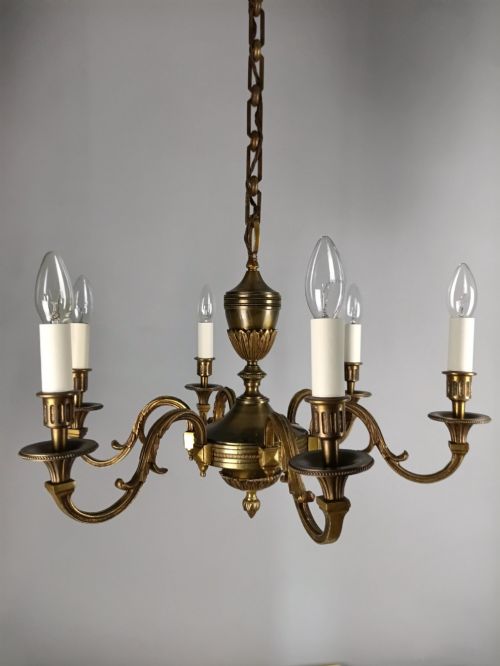
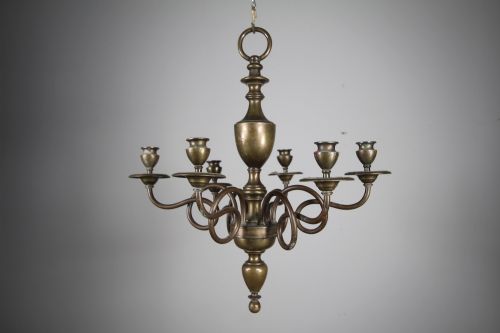
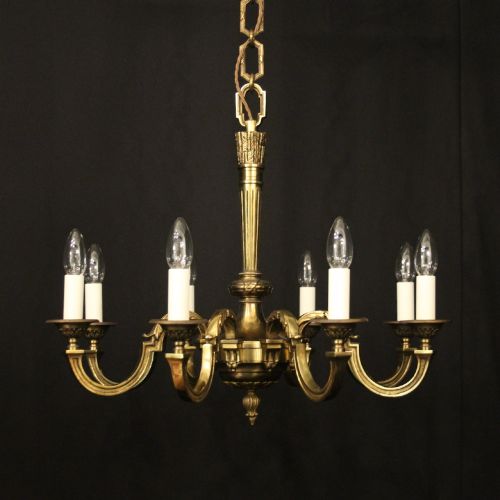
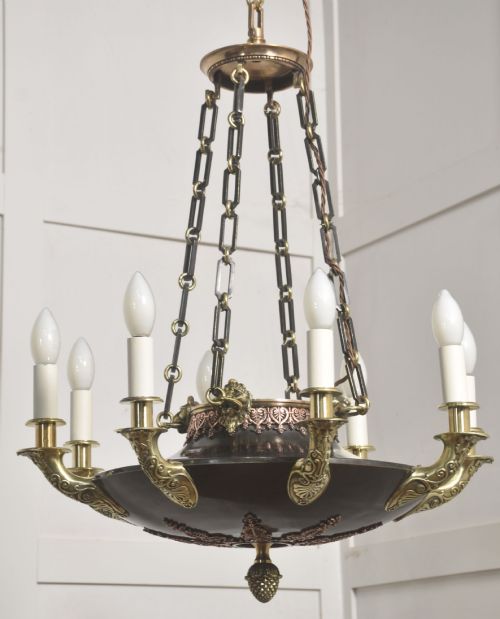
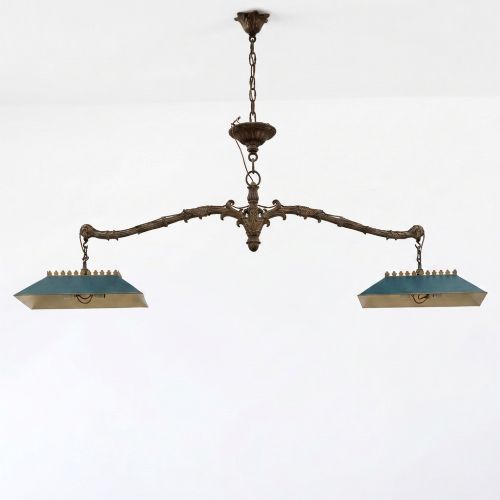
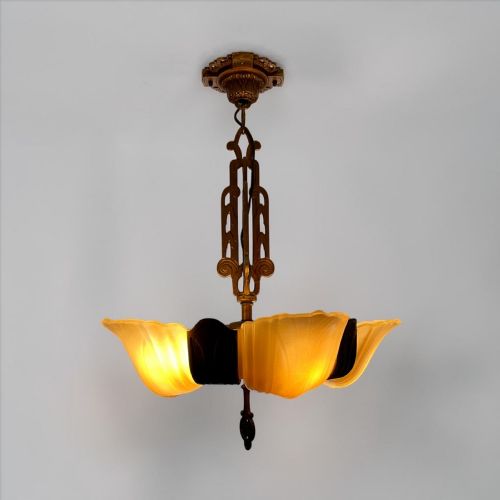
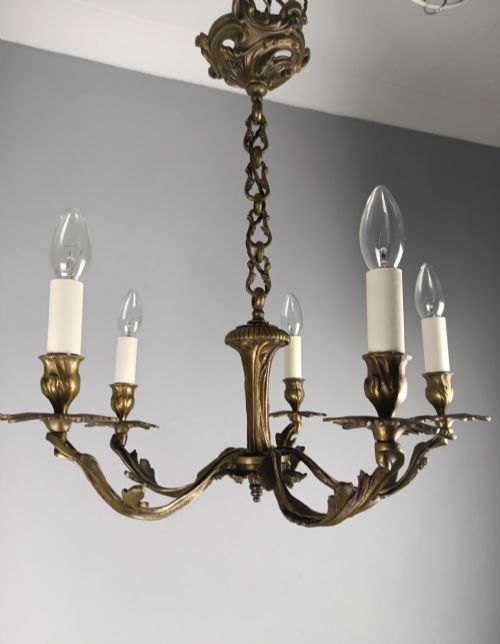
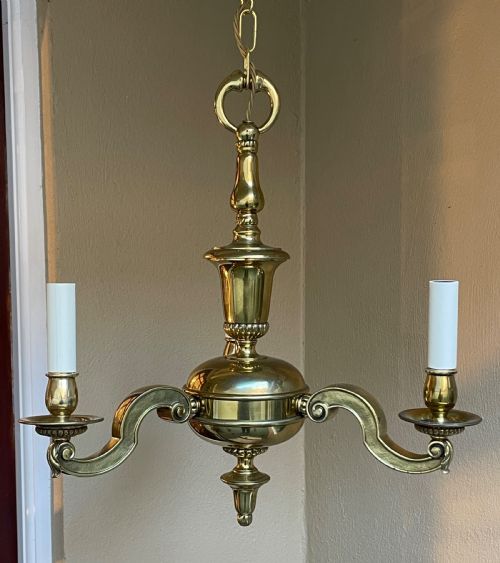
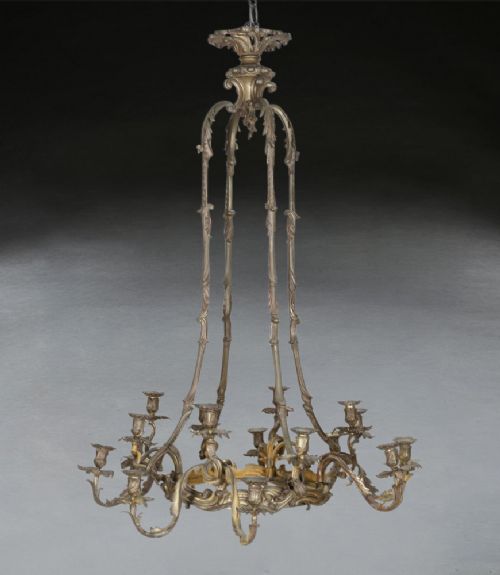
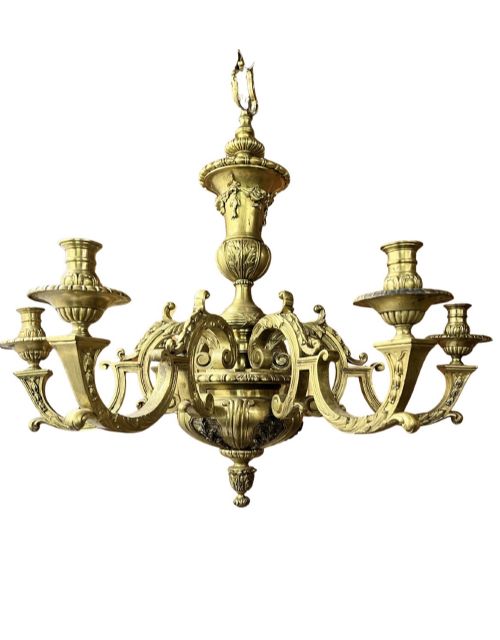


Cast Brass Pendant
These cast brass pendant fixtures range from Victorian chandeliers to Edwardian lanterns, offering solid metal construction and period illumination for traditional interiors.
Cast Brass Pendant
A cast brass pendant sits overhead, bringing functional illumination and decorative weight to a room through multi-armed chandeliers, hanging hall lanterns, and ceiling roses.
When searching for a cast brass pendant, buyers encounter pieces spanning the nineteenth century through the 1930s, with French styles and heavy multi-branch fittings appearing frequently across the selection.
The category encompasses varied lighting forms from large multi-light chandeliers and billiard lights down to smaller hall lanterns and ceiling roses featuring acanthus leaf mounts or gothic details.
How they were made
Metalworking for these pieces relies primarily on cast brass and bronze, utilised to form robust frames, arms, and decorative mounts that support the weight of larger multi-branch chandeliers.
Glass elements integrate with the metal structures, utilising frosted glass, cut glass, or slip shades to diffuse the light emitted by the bulbs or candles within the lanterns and ceiling fixtures.
Surface finishes include gilt bronze, silver bronze, and dark bronze patination, which provide distinct visual textures alongside applied enamel or copper highlights.
Cast Brass Pendant Retail Price Guide 2026
Typical asking prices for cast brass pendant among the pieces listed under this phrase on Sellingantiques today, from the lower quarter to the upper quarter. They describe what is for sale here now, not the wider market.
The listings feature nineteenth-century and early twentieth-century lighting forms, spanning Victorian, Edwardian, and Art Deco periods.
What varies in quality
The substance of the casting dictates the physical weight and definition of the ornament, where heavy quality pieces display crisp detail in acanthus leaves and structural mounts.
Artistic execution in style-driven details, such as French rococo curves or baroque ormolu work, separates standard production from finer decorative examples.
The integration of secondary materials like cut glass or blue enamel alters the refinement of the piece, shifting a simple utility light into a grand decorative focal point.
The Cast Brass Pendant Glossary
- Cast brass
- An alloy of copper and zinc melted and poured into a mould to create rigid structural or decorative components for lighting fixtures. This method allows for intricate relief patterns.
- Chandelier
- A branched ornamental light fixture designed to be suspended from a ceiling. These pieces hold multiple light sources, ranging from three branches up to twenty-four.
- Hall lantern
- An enclosed hanging light fixture typically suspended in an entryway or hallway. They often feature glass panels held within a metal framework.
- Ormolu
- A metallic technique involving the application of finely ground high-carat gold to a bronze object. This finish produces a bright golden lustre on decorative mounts.
- Ceiling rose
- A circular decorative moulding fixed to the ceiling from which a pendant light is suspended. Victorian examples frequently utilise cast brass.
Cast Brass Pendant: Frequently Asked Questions
How do I hang a heavy brass chandelier safely?
Suspension of heavy cast bronze or brass chandeliers requires fixing directly into ceiling joists or using a dedicated structural support box rated for the weight.
Professional electrical installation ensures the wiring can handle multi-bulb fixtures safely without straining the ceiling junction.
What rooms suit a cast brass pendant?
Large multi-branch chandeliers suit high-ceilinged living rooms, dining spaces, and grand hallways where their physical presence and light output can fill the volume.
Smaller lanterns and ceiling roses work well in entrance halls or period bedrooms needing focused overhead illumination.
How do I clean antique brass and bronze?
Dusting with a soft, dry cloth preserves the aged patina and prevents the accumulation of grime on intricate cast mounts and glass panels.
Harsh chemical polishes should be avoided because they strip away the historical surface colour that collectors value.
How can I tell the period of a light?
Stylistic indicators such as French Louis styles, Victorian gothic elements, or Art Deco slip shades point towards specific manufacturing decades.
Construction methods, wiring access points, and the composition of the metal frame also offer clues regarding the age of the piece.