

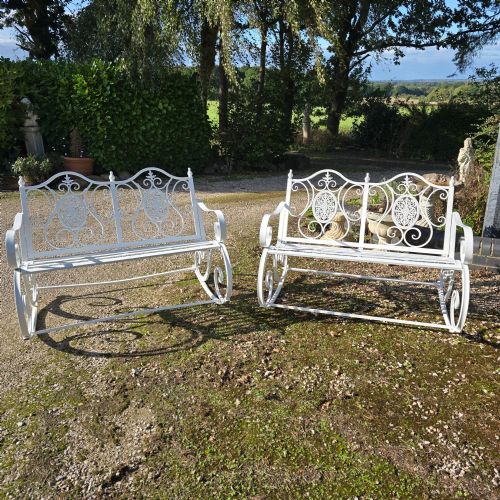
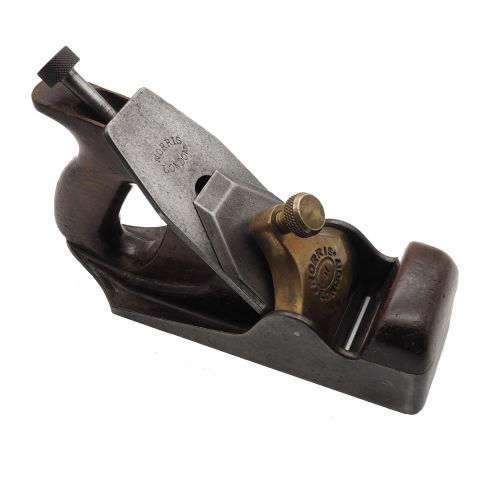
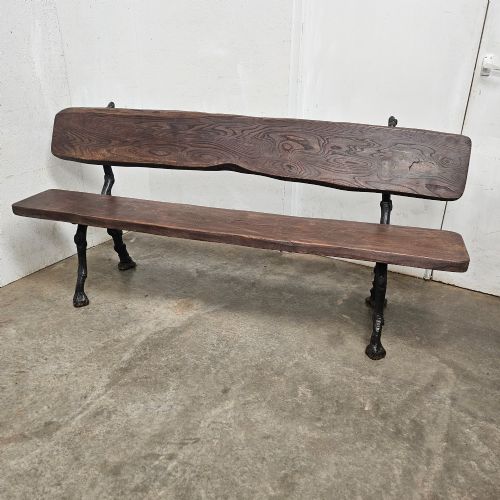
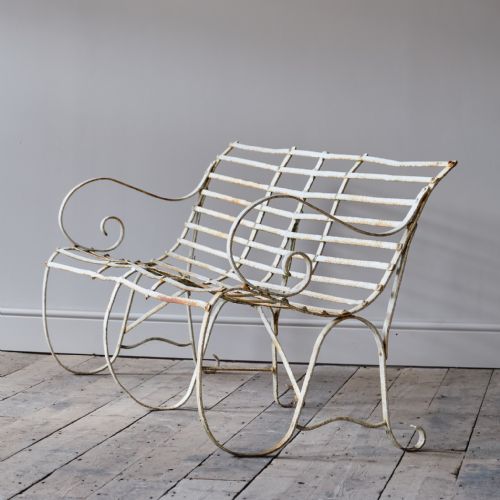



Cast and Wrought Iron Bench
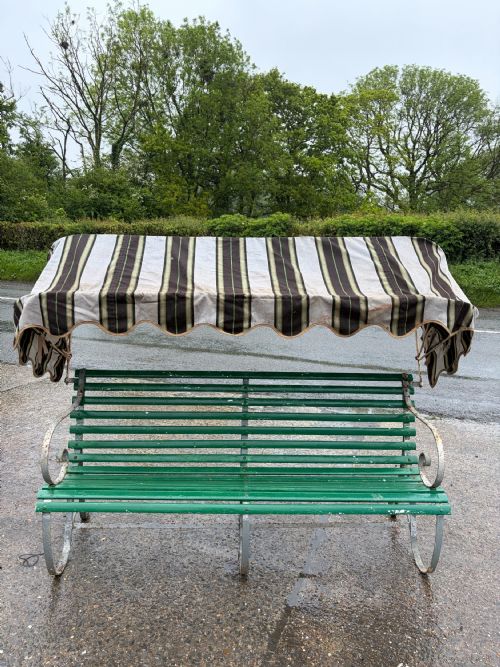
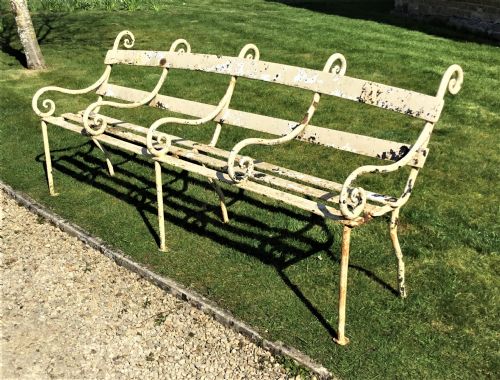
These cast and wrought iron bench examples combine heavy metal frames with timber slats, offering sturdy garden seating built to weather the elements.
Cast and Wrought Iron Bench
A cast and wrought iron bench brings durable metalwork to exterior and interior spaces, combining structural rigidity with decorative detail. Buyers searching for a cast and wrought iron bench typically encounter nineteenth-century garden furniture alongside industrial work tables and specialised seating.
The selection ranges from classic Victorian garden seats featuring protective canopies to French faux bois designs and strapwork patterns. Examples frequently pair cast or wrought iron frames with timber elements like pine, elm, or hardwood to form the seat and backrest.
Origins span British and French workshops from the eighteen-fifties through the early twentieth century. Most pieces on this page serve as garden benches or industrial work surfaces, reflecting both domestic leisure and workshop utility.
What varies in quality
Quality rests in the crispness of the iron foundry work and the complexity of the strapwork or decorative motifs. Finer pieces display refined casting details on the ends and canopy structures rather than coarse, utilitarian smoothing.
The choice of secondary timber also dictates standard, with dense woods like elm or hardwood outlasting softer pine alternatives. Integration between the metal frame and the wooden slats reveals the care taken during initial assembly.
Cast and Wrought Iron Bench Retail Price Guide 2026
Typical asking prices for cast and wrought iron bench among the pieces listed under this phrase on Sellingantiques today, from the lower quarter to the upper quarter. They describe what is for sale here now, not the wider market.
Some garden benches arrived equipped with tin canopies to shield readers from unexpected British showers.
The Cast and Wrought Iron Bench Glossary
- Cast iron
- Iron poured into a mould in a foundry to create rigid, decorative forms. This material forms the heavy structural ends of garden seats.
- Wrought iron
- Iron heated and hammered by a smith into specific shapes. This technique produces tough, fibrous components like strapwork braces.
- Faux bois
- Imitation of wood grain rendered in concrete, metal, or other materials. French garden pieces utilise this style to mimic natural branches.
- Strapwork
- Flat bands of metal arranged in geometric or interlaced patterns. This ornamental technique reinforces the backrests of period benches.
Cast and Wrought Iron Bench: Frequently Asked Questions
How do I date a garden bench?
Dating relies on stylistic clues and foundry marks found on the metal components. Victorian pieces often feature registered design stamps or elaborate cast decoration.
Later twentieth-century examples tend toward simpler industrial profiles with fewer decorative flourishes. Comparing the construction methods of the iron frame helps narrow the production era.
Can these benches stay outdoors?
Most pieces were built specifically for exterior use in gardens and parks. Regular maintenance helps protect the iron and timber from weathering.
Applying appropriate sealants to the wooden slats and treating metal surfaces prevents corrosion. Winter storage under cover extends the lifespan of antique materials.
What timber was used for seats?
Pine, elm, and various hardwoods served as standard materials for the slats and tops. Dense timbers resisted rotting when exposed to damp garden environments.
Replacement slats are common on older pieces where the original wood perished. Matching the timber species preserves the historical integrity of the furniture.
What is Victorian strapwork?
Strapwork involves intersecting metal bands that create open, airy patterns across the backrest. This design reduced the heavy visual weight of solid iron.
Smiths riveted or bolted the flat iron strips together within a rigid outer frame. The technique offered both structural strength and decorative elegance.