

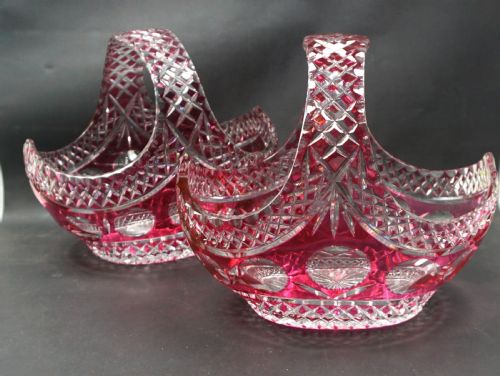


Cased Glass Vessel
A cased glass vessel is a layered piece of craftsmanship that brings rich depth of colour and texture to a room.
Cased Glass Vessel
When you search for a cased glass vessel, you encounter layered glass objects designed for display, most frequently taking the form of vases or decorative baskets from the nineteenth century and the nineteen-thirties. These pieces combine multiple layers of distinct glass colours, allowing artisans to cut through the exterior layer to reveal contrasting hues beneath.
The most common examples on this page hail from Victorian Bohemian workshops and the Belgian production of Val Saint Lambert, often featuring green or red glass layered over clear crystal. Alongside these decorative vessels, the category occasionally encompasses nineteenth-century maritime dioramas and scale models contained within protective wooden display cases.
How they were made
The creation of these vessels relies on gathering multiple layers of molten glass on a blowpipe, fusing different coloured strata together before shaping the piece by hand or in a mould. Makers frequently utilised techniques such as triple casing to build up dense walls of ruby or green glass over a clear lead crystal core.
Surface ornamentation on these pieces often incorporates gold leaf, delicate hand-painting, and precise facet-cutting through the outer glass layers to expose the contrasting colour underneath.
Cased Glass Vessel Retail Price Guide 2026
Typical asking prices for cased glass vessel among the pieces listed under this phrase on Sellingantiques today, from the lower quarter to the upper quarter. They describe what is for sale here now, not the wider market.
Some vessels share their classification with entirely different protective housing, including miniature sailing ships safely preserved inside wooden display boxes.
What varies in quality
The distinction between standard production and exceptional quality lies in the precision of the glass layering and the depth of the subsequent wheel-cutting. Superior pieces display even wall thickness across multiple strata and crisp, clean cuts that cleanly expose the underlying colour without chipping.
Artistic collaboration and design pedigree also separate standard decorative ware from finer examples, particularly when notable designers like Charles Graffart directed the production for major continental factories.
Val St. Lambert·Charles Graffart·Webb
The Cased Glass Vessel Glossary
- Cased glass
- Glass composed of two or more distinct layers of different colours, fused together during the blowing process.
- Lead crystal
- A high-clarity form of glass containing metal oxide that increases weight and brilliance.
- Ruby glass
- Deep red glass created by adding gold or copper compounds to the molten batch.
- Triple cased
- Glass formed with three distinct outer layers surrounding a core, offering multiple strata for decorative cutting.
Cased Glass Vessel: Frequently Asked Questions
What is a cased glass vessel?
A cased glass vessel is an object constructed from multiple fused layers of coloured glass, often manipulated through cutting or etching.
These pieces range from Victorian Bohemian goblets to nineteen-thirties Belgian vases.
How do I identify a Victorian piece?
Victorian examples frequently display heavy gilding, vibrant ruby or satin finishes, and traditional Gothic or Bohemian revival motifs.
Examining the base for wear patterns and pontil marks helps confirm the nineteenth-century origin.
Where were these vessels made?
Production centres were primarily concentrated in Bohemia and Belgium, with prominent manufacturers like Val Saint Lambert leading the design field.
British makers such as Webb also contributed notable satin glass productions during the late Victorian period.
How should I clean my vessel?
Clean cased glass vessels gently using warm water and a mild detergent, avoiding harsh abrasives that might damage surface gilding.
Careful handling is essential, particularly with items featuring delicate painted details or multiple thermal layers.