



Cased Glass Scent Bottle
A cased glass scent bottle brings together coloured or cut glass and fitted housings in tortoiseshell, leather, or wood for travel and display.
Cased Glass Scent Bottle
A cased glass scent bottle combines glass vessels with protective outer housings or layered glass techniques, spanning the Georgian, Victorian, and Edwardian periods. Buyers searching this phrase encounter individual pocket pieces alongside elaborate travelling sets, caskets, and combination boxes housing multiple bottles.
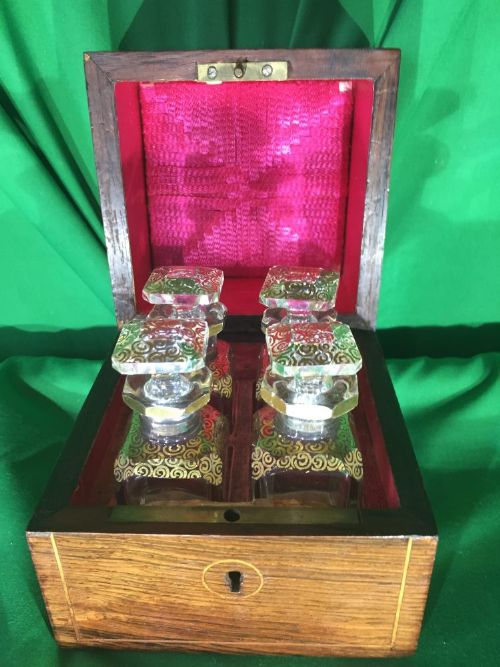
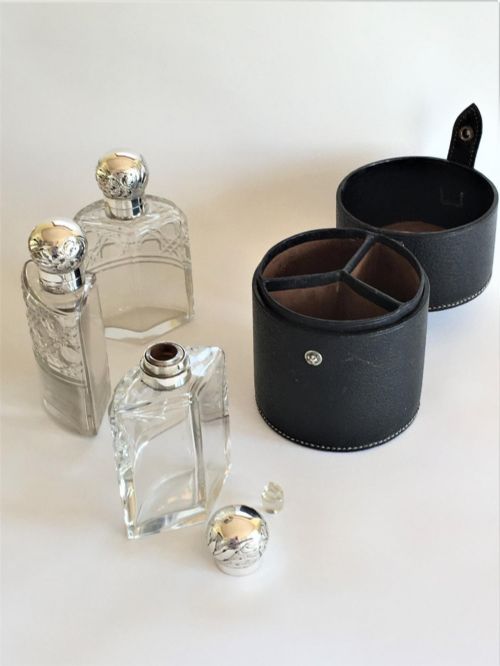
The materials seen in these housings range from embossed leather and tortoiseshell to coromandel and rosewood fitted with silver or silver-gilt mounts. Many examples pair cut glass or opaline glass vessels with fitted velvet and satin interiors designed to secure the perfume during transit.
Materials and construction
Makers utilised layered techniques such as blue overlay and bohemian triple cased glass, applying contrasting outer layers of glass that were subsequently cut away to reveal the colour beneath. Vessels were paired with silver, silver-gilt, and brass caps, often stamped with hallmarks indicating Birmingham, London, or Sheffield origins.
Outer cases required skilled cabinet work and metalwork, using timber frames lined in velvet and leather, or carved organic materials like tortoiseshell, bone, and ivory to house the glass containers snugly.
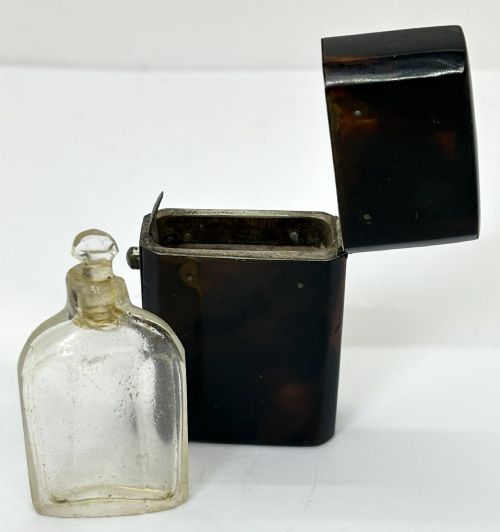
Some nineteenth-century travelling sets cleverly squeeze multiple cologne bottles, tweezers, and bodkins into a single pocket-sized tortoiseshell package.
Judging quality in cased vessels
Quality rests on the crispness of the glass cutting, the depth of colour in overlaid or opaline pieces, and the precision with which the exterior case fits the bottles. Superior examples retain their original matching stoppers and clean, undamaged glass surfaces.
The standard of the outer case distinguishes finer pieces, particularly where exotic woods like coromandel or rosewood, or detailed silver-gilt mounts and fitted tool sets, remain intact and fully operational.
The Mousley Brothers·Charles May
The Cased Glass Scent Bottle Glossary
- Cased glass
- Glass formed with multiple distinct layers of different colours, often cut back on the exterior to expose the underlying shade. This technique creates high contrast and intricate surface patterns.
- Opaline glass
- An opaque or translucent pale glass popular in the nineteenth century, frequently used for vanity and perfume containers. It provides a smooth, porcelain-like surface often mounted in silver.
- Silver-gilt
- Sterling silver coated with a thin layer of gold, providing a rich yellow lustre. This finish appears frequently on bottle caps and internal mounts.
- Tortoiseshell
- The mottled brown and amber shell of the hawksbill turtle, utilised for small luxury boxes and scent bottle holders during the Georgian and Victorian eras. It is often paired with silver inlay.
- Coromandel
- A dense, dark tropical timber with distinctive contrasting grain, favoured for luxury nineteenth-century caskets and writing boxes. It offers a heavier and more decorative alternative to rosewood.
Cased Glass Scent Bottle: Frequently Asked Questions
What is a cased glass scent bottle?
A cased glass scent bottle is either a perfume vessel made from multi-layered glass or a glass bottle enclosed within a fitted protective housing of leather, wood, or metal.
These pieces were designed for personal use on dressing tables or for secure carriage in travelling luggage and chatelaines.
How do I date a cased scent bottle?
Dating relies on stylistic markers, materials, and metal hallmarks where present. Georgian examples often feature tortoiseshell holders, while Victorian and Edwardian pieces frequently display Birmingham or London silver marks alongside fitted velvet interiors.
Changes in glass colours, such as opaline or bohemian layered techniques, also help assign pieces to specific nineteenth-century decades.
What is the difference between a set and a single bottle?
Singular bottles were typically carried in pockets or suspended from chatelaines, whereas sets feature multiple bottles housed together in fitted boxes, caskets, or leather travelling cases.
Sets often include combinations of cologne bottles and vanity jars intended for comprehensive grooming routines.
How should I care for antique glass and leather cases?
Keep glass vessels clean using mild water, avoiding harsh abrasives that might damage cut surfaces or overlaid colours. Protect outer leather, wood, or tortoiseshell cases from excessive moisture and direct sunlight to preserve the original finish.
Ensure fitted interiors and silver mounts remain dry to prevent deterioration of the lining materials.