




Carved Wooden Table Gong
These carved wooden table gong pieces bring resonant tone and striking craftsmanship into a room.
Carved Wooden Table Gong
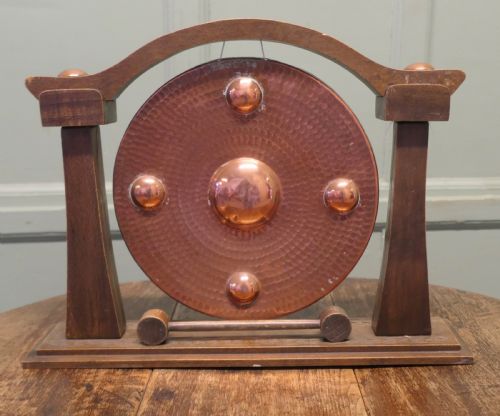
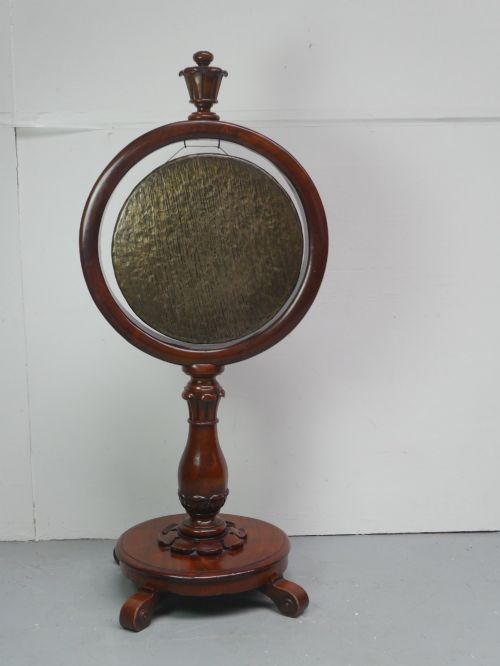
A carved wooden table gong serves as an ornamental and functional percussion piece, traditionally used to announce meals or gather guests in domestic settings. The search phrase covers a range of compact domestic bells mounted in decorated wooden frames designed to sit upon furniture.
Visitors to this selection encounter items originating from the nineteenth and twentieth centuries, spanning Victorian, Edwardian, and later decades. Common stylistic influences range from Chinese export and Chinoiserie to Arts and Crafts, Black Forest, and Victorian Gothic Revival.
The primary forms include dinner gongs, table gongs, and novelty variations incorporating animal carvings or Oriental designs. These objects combine percussion elements such as brass bells or bronze plates with substantial wooden stands.
How they were made
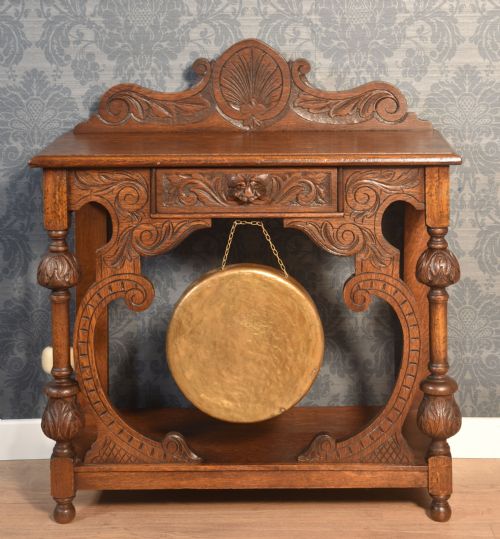
Makers fashioned the structural stands using various timbers including oak, hardwood, and mango wood, often applying intricate relief carving to the surfaces. The woodwork frequently incorporates regional motifs, from traditional European foliage and Black Forest fauna to Chinese dragons and Oriental iconography.
Metal components such as brass bells, copper plaques, and bronze elements provide the resonant striking surfaces, suspended within the wooden frames by cord. Artisans combined these metal elements with turned or carved wooden bases and hanging arches to complete each piece.
Materials recorded across the selection include oak, hardwood, mango wood, brass, bronze, copper, and glass.
What varies in quality
The distinction between standard examples and superior pieces lies in the depth and precision of the woodwork. Crisp, deeply undercut relief carving on the wooden frames demonstrates a higher level of artisan skill than flat or rudimentary surface decoration.
Material selection also dictates overall grade, with dense hardwoods and well-cast bronze or brass bells producing a clearer, more sustained acoustic tone. The structural integrity of the hanging cord and the harmonious balance between stand and striker complete the assessment.
Winterhalder and Hofmeier
The Carved Wooden Table Gong Glossary
- Chinoiserie
- European decorative style reflecting Chinese artistic influences. This aesthetic appears frequently in nineteenth-century decorative arts and furniture.
- Black Forest
- Regional style of wood carving originating from central Europe. Pieces from this tradition often feature naturalistic animal figures and deep relief work.
- Arts and Crafts
- Design movement emphasising handcraftsmanship and traditional materials. Items from this period display honest construction and deliberate artistic expression.
- Dinner Gong
- Percussion instrument utilised in large households to signal meal times. These objects combine a suspended metal bell with a decorative mounting frame.
Carved Wooden Table Gong: Frequently Asked Questions
What is a table gong?
A table gong is a small percussion instrument featuring a suspended metal bell or plate held within a decorative wooden stand. Designed for domestic use, these pieces sat on sideboards or tables.
Historically, households utilised these gongs to summon family members or guests to dinner. Today, they function as decorative objects that retain their traditional acoustic properties.
How do I date these gongs?
Dating relies on stylistic clues, timber choice, and manufacturing methods visible in the wooden stand and metal bell. Victorian and Edwardian examples often feature period-specific motifs and construction traits.
Reference markers such as Arts and Crafts detailing or Chinoiserie ornamentation help place pieces within the nineteenth or twentieth century. Examining the wear on the hanging cord and striker also provides context.
Where were these pieces used?
These gongs appeared primarily in dining rooms, halls, and drawing rooms of large country houses and urban residences. Their placement allowed the sound to carry effectively across the ground floor.
As domestic routines shifted in the twentieth century, their practical function diminished, leading to their preservation as decorative antiques. They continue to sit on hall tables and sideboards in modern interiors.
How do I care for wooden gongs?
Preserving the woodwork involves dusting with a soft cloth and avoiding excessive moisture or direct sunlight. Periodic application of appropriate wax protects the carved surfaces of the hardwood or oak frames.
Metal components require minimal intervention beyond gentle cleaning to maintain their finish. Ensuring the suspension cord remains secure prevents accidental damage to the bell.