
Carved Wooden Standing Lamp
A carved wooden standing lamp brings height and texture to a room, offering functional illumination through solid timber forms.
Carved Wooden Standing Lamp
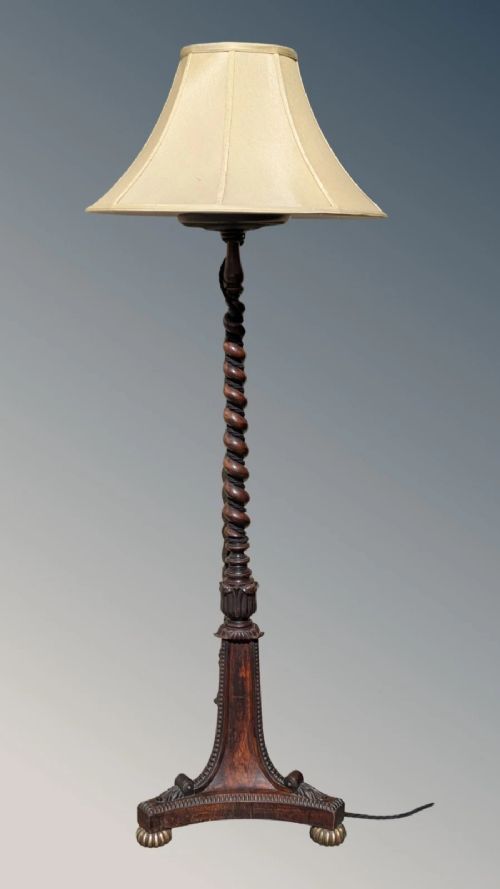
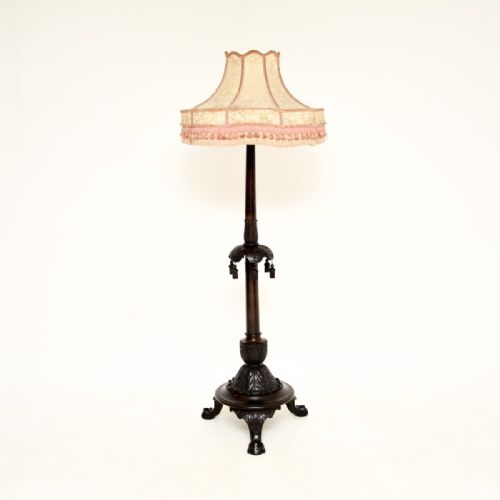
A carved wooden standing lamp is a tall interior lighting fixture designed to illuminate a room from a fixed floor position. When you search for a carved wooden standing lamp, you encounter pieces that range from straightforward Edwardian and Victorian turnings to more elaborate revival styles.
The selections available here draw on periods spanning the nineteenth century through the interwar years, incorporating styles such as Arts and Crafts, Jacobean Revival, and William IV Revival. These pieces frequently appear alongside related low support furniture like side tables, occasional tables, and lamp bases.
Makers and workshops utilise dense timbers to construct these vertical light fittings, often pairing them with fabric shades or simple brass hardware. Buyers meeting these standards find that the wood grain and carved detailing dictate the character of the piece.
Materials and construction methods
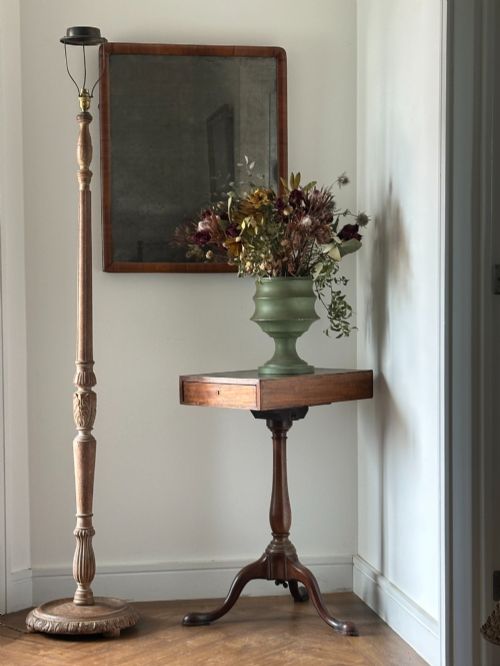
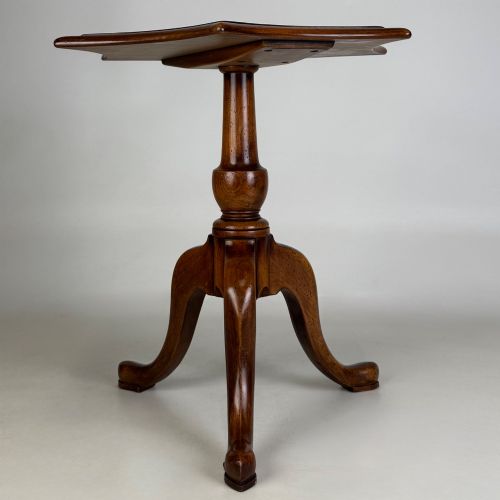
Makers construct carved wooden standing lamps using dense hardwoods such as oak, walnut, and mahogany, shaped through manual turning and hand-carving. Artisans often mount these upright shafts onto solid tripod bases or heavy circular plummets to maintain structural stability.
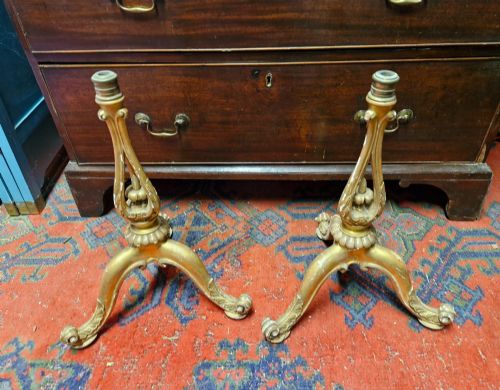
Surface treatments range from waxed and limed finishes that highlight the natural grain of the timber to applied gilt, paint, and polychrome detailing. Metal components, including brass fittings and adjustable collars, integrate directly with the turned wood to hold electrical wiring or traditional lamp holders.
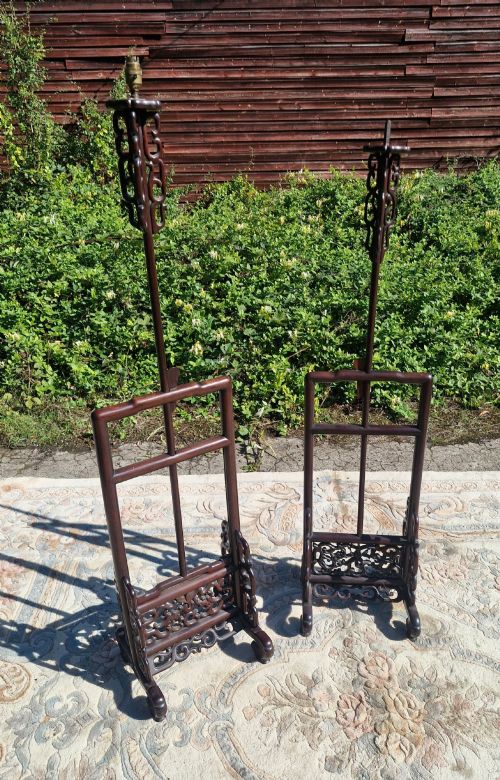
The listings show carved wooden standing lamps spanning Victorian, Edwardian, and interwar periods, utilising oak, walnut, mahogany, and gilt finishes.
Assessing quality in standing lamps
Quality in a carved wooden standing lamp rests on the depth and crispness of the hand-carving rather than superficial surface decoration. Sharply defined foliage, fluting, or figural elements show the hand of a skilled artisan working directly in the timber.
Proportion and stability determine the standard of the manufacture, with superior pieces maintaining a balanced weight distribution from the heavy base to the upper standard. The choice of timber grain, whether figured walnut or quarter-sawn oak, further separates standard production pieces from finer examples.
Trevor Page and Co·Shapland and Petter·Liberty of London
The Carved Wooden Standing Lamp Glossary
- Standard lamp
- An alternative historical term for a floor lamp or standing lamp, describing a tall vertical light fixture intended to stand directly on the floor. These pieces position the light source above seated height.
- Barley twist
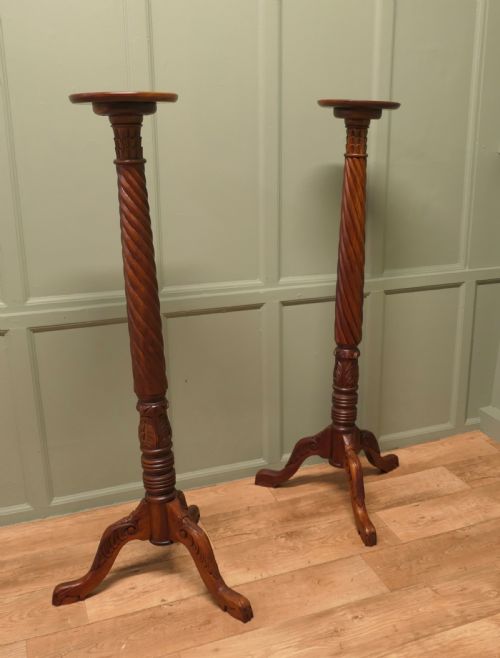
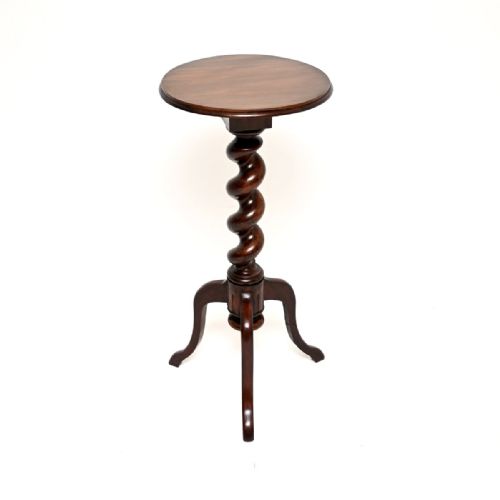
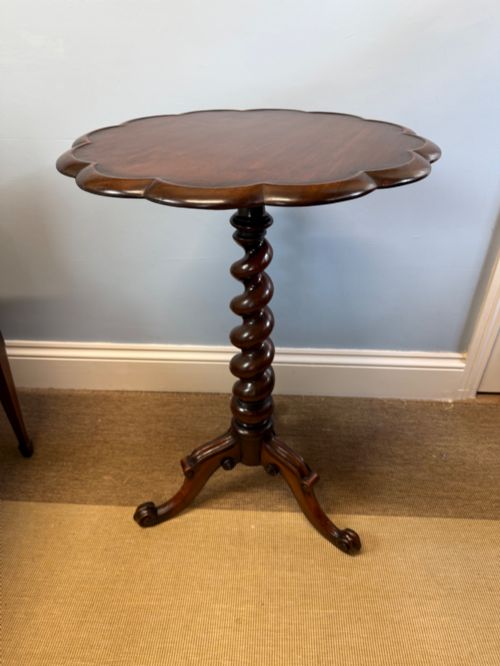
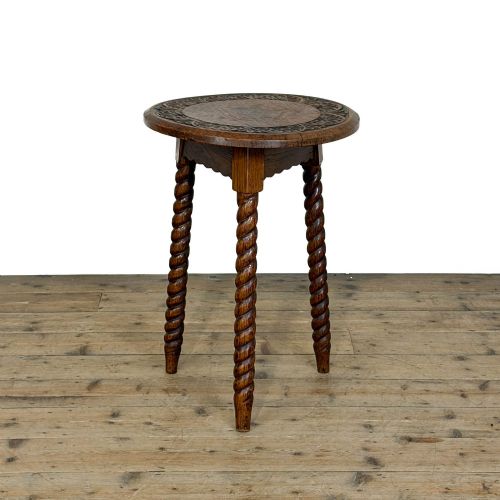
- A type of turning that creates a spiral groove resembling a twisted rope along the vertical shaft of a lamp or table pedestal. This decorative woodworking technique gains popularity during the Victorian and revival periods.
- Limed oak
- A timber finishing process where a white or pale compound is rubbed into the open grain of oak to create a pale, textured surface. This treatment appears frequently on Arts and Crafts and early twentieth-century pieces.
- Occasional table
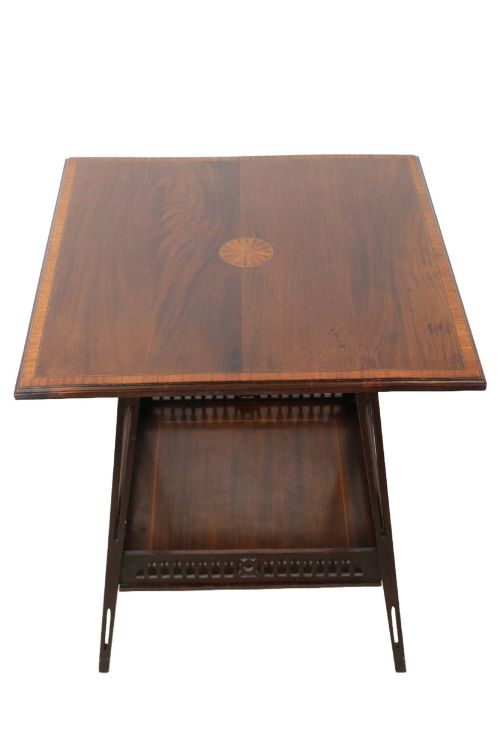
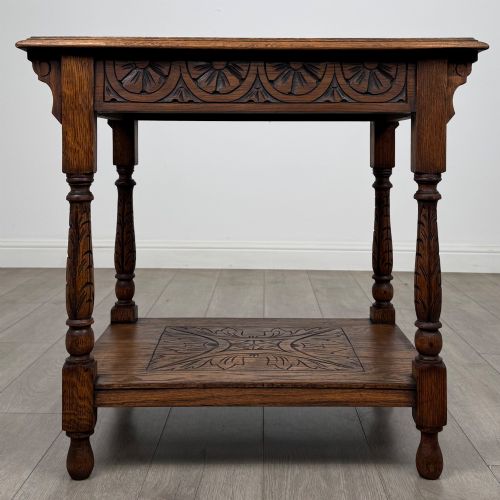
- A small, movable side table designed to sit beside seating or support a lamp, frequently sharing stylistic details with contemporary standard lamps. These companion pieces form part of standard period room layouts.
Carved Wooden Standing Lamp: Frequently Asked Questions
What is a standard lamp?
A standard lamp is a historical designation for a tall floor-standing light fixture designed to illuminate a room from a vertical post. These pieces elevate the light source above table height to provide ambient room illumination.
Such fixtures typically incorporate a weighted or tripod base to support the long wooden shaft safely. They serve as both functional lighting and architectural elements within period interiors.
How do I date a wooden floor lamp?
Dating relies on examining the timber species, turning styles, and carving motifs relative to known historical periods such as the Victorian era or the Arts and Crafts movement. Details like hand-cut joinery and original surface finishes provide further clues to age.
Comparing the turned profile to documented furniture and table designs from the same workshop helps narrow down the decade of production. Electrical wiring, if original or early, also assists in confirming the manufacturing period.
Where should I place a standing lamp?
These lamps suit corners, beside armchairs, or next to low side tables where they can cast light downward over seating areas. Their vertical profile allows them to fit into narrow spaces without taking up valuable floor area.
Positioning them near complementary period furniture, such as occasional tables or wine tables, creates a cohesive lighting arrangement. The height of the standard ensures the light source clears surrounding furniture lines.
How do I care for antique timber?
Maintenance involves applying appropriate beeswax or natural polishes to nourish the hardwood and protect the original finish from drying out. Avoiding direct sunlight and sudden temperature shifts prevents the timber from warping or splitting.
Gentle dusting with a soft cloth preserves the carved details without abrasive wear. Checking the structural stability of the base periodically ensures the upright shaft remains secure.