




Carved Wooden Platter
These carved wooden platter pieces bring rich texture and organic warmth to a room, offering functional utility paired with historical craftsmanship.
Carved Wooden Platter
A carved wooden platter takes many forms across the inventory, ranging from serving trays and tea platters to lazy susans and decorative bowls. Buyers investigating this category encounter items produced across the nineteenth and twentieth centuries, reflecting diverse regional workshops.
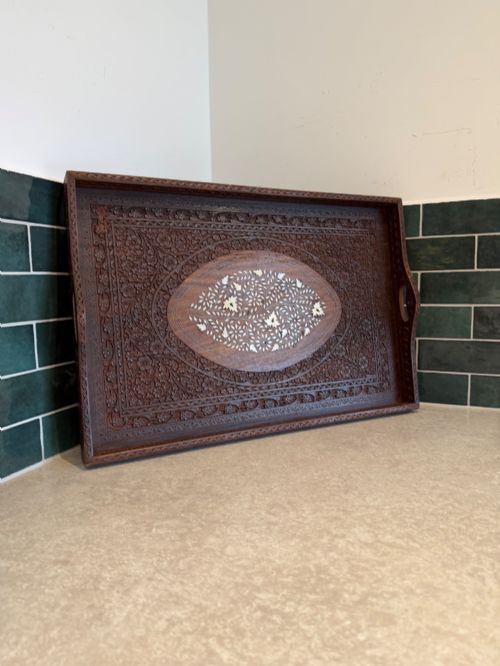
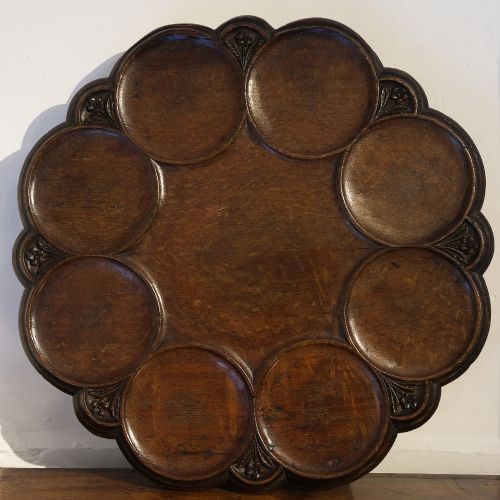
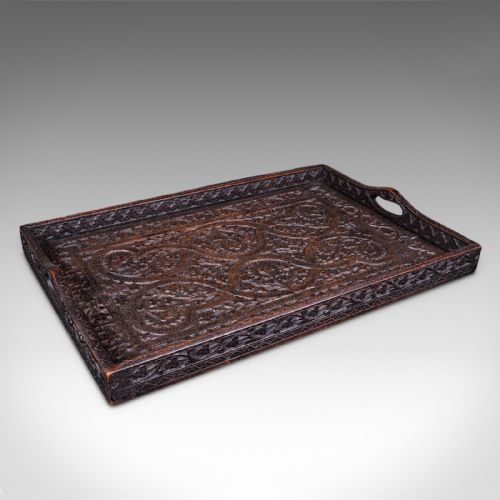
The selection on this page leans heavily toward Victorian examples and nineteenth century pieces, alongside specific regional interpretations like Anglo-Indian teak items and Swiss folk art. Forms vary from simple rustic trenchers to intricate galleried ovals and rotating serving platforms.
Origin points span domestic English country workshops to distant craft traditions in Kashmir and Italy, providing a broad spectrum of utility. Everyday serving tasks and display purposes both find suitable vessels within this varied assortment of turned and carved timber.
How these items were constructed
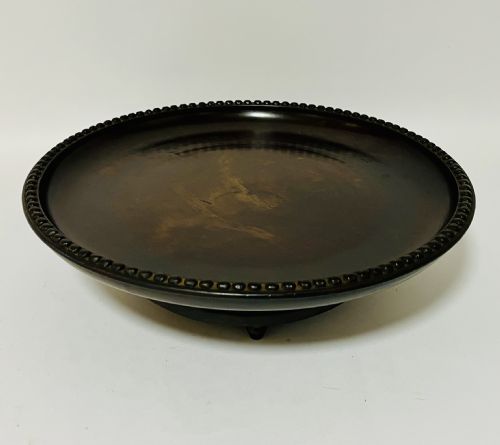
Craftsmen utilised dense hardwoods including mahogany, oak, teak, walnut, and olivewood to ensure durability during daily service. Turning on a lathe shaped the circular outlines of lazy susans and bowls, while hand chisels defined the low relief foliage and geometric borders.
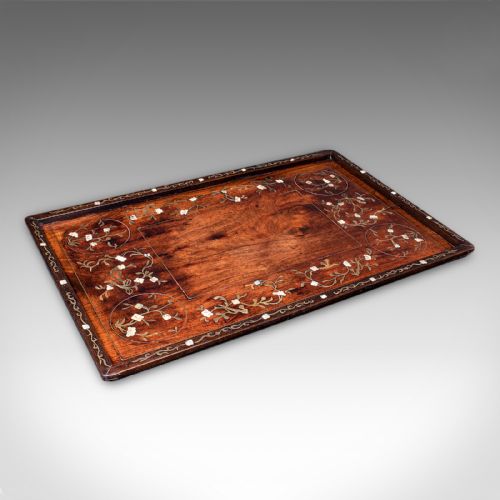
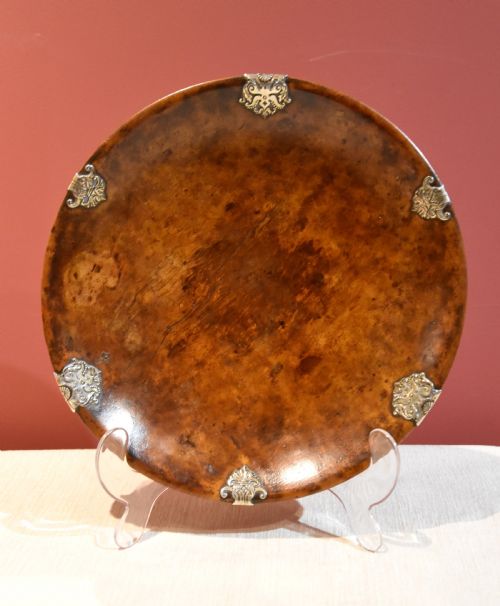
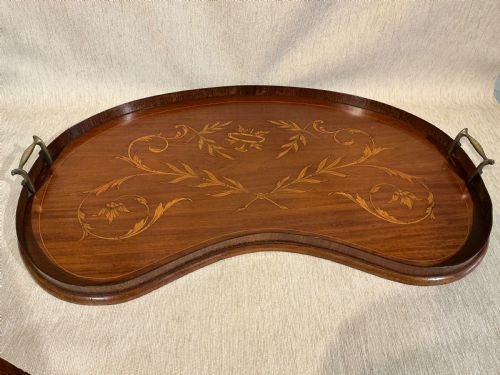
Surface embellishment frequently involved bone inlay, silver mounts, and contrasting wood veneers to accent the grain patterns. Regional makers applied distinct carving depths and finishing techniques, ranging from smooth polished edges to rustic unrefined surfaces.
Regional styles represented include Swiss folk art, Kashmiri relief carving, and Italian Sorrento ware.
What separates examples in this category
Quality rests upon the selection of timber and the crispness of the hand carving rather than mere age alone. Dense, figured hardwoods with stable construction command attention, showing careful consideration of the grain direction during the initial turning process.
Detailing such as precise galleried edges, secure bone inlay, and well-fitted brass or silver mounts elevate certain items above standard utilitarian wares. Masterful execution in regional styles, from Kashmiri floral panels to Swiss folk motifs, distinguishes superior work from basic production.
The Carved Wooden Platter Glossary
- Lazy Susan
- A rotating tray placed on a table to assist with passing food. Early versions utilise substantial oak or mahogany construction with central pivot mechanisms.
- Galleried
- Featuring an elevated pierced or solid border surrounding the perimeter of a tray. This decorative fence prevents items from sliding off during transit.
- Treen
- Small handmade wooden household objects carved for utilitarian domestic use. This broad term encompasses trenchers, platters, and bowls fashioned from various timbers.
- Sorrento Ware
- Decorative wooden items produced in the Italian town of Sorrento using intricate marquetry and inlay techniques. Pieces often incorporate olivewood and depict local scenery or flora.
- Shisham
- A durable Indian rosewood species frequently utilised for regional carved trays and platters. The timber displays rich natural grain variations and dark figuring.
Carved Wooden Platter: Frequently Asked Questions
How were these wooden platters used originally?
Most examples served practical roles at the dining table, carrying afternoon tea, meats, or cheeses. Rotating versions like lazy susans facilitated sharing dishes across larger gatherings without interrupting conversation.
Secondary uses included decorative display on sideboards or walls, particularly for intricately carved regional pieces from Kashmir or Europe. Their dual nature combined domestic utility with artistic craftsmanship suited to formal and casual settings alike.
What woods appear most frequently in these items?
Mahogany and oak dominate the nineteenth-century English domestic pieces, chosen for their structural strength and reliable turning qualities. Walnut and teak also appear regularly, especially in items originating from broader colonial trade routes.
Regional pieces introduce alternative timbers such as olivewood in Italian Sorrento wares and shisham wood in Indian platters. Each wood imparts a distinct weight, colouration, and grain texture that influences the carving style.
How do I care for an antique wooden platter?
Maintenance requires gentle cleaning with a slightly damp cloth followed immediately by thorough drying with a soft towel. Avoid soaking wooden items in water or placing them in modern dishwashing appliances.
Occasional application of food-safe mineral oil or beeswax helps preserve the moisture content of older timber and prevents cracking. Keeping pieces away from direct heat sources and extreme humidity fluctuations ensures long-term stability.
Can these platters still be used for food service?
Many sturdy nineteenth-century wooden platters and boards remain structurally sound for presenting dry foods like bread, cheese, or fruit. Untreated timber surfaces handle dry provisions safely when properly cleaned before and after use.
Items featuring delicate bone inlay, silver mounts, or historic varnishes function better as decorative display pieces or dry service trays. Assessing the integrity of the surface finish guides whether an item suits active hospitality or gentle admiration.
How do I identify Anglo-Indian carved pieces?
Anglo-Indian items typically employ dense teak or shisham wood carved with intricate dense floral and foliage patterns. These nineteenth-century pieces reflect British colonial commissions executed by local master woodcarvers.
Forms usually include afternoon tea slides, folding tables, and deep serving platters designed for British households. The combination of Western furniture forms with traditional Eastern relief carving creates a distinct aesthetic.