





Carved Wooden Chest Bench
A carved wooden chest bench is a sturdy dual-purpose seat with hidden storage, offering rustic charm and period craftsmanship for the hallway or living space.
Carved Wooden Chest Bench
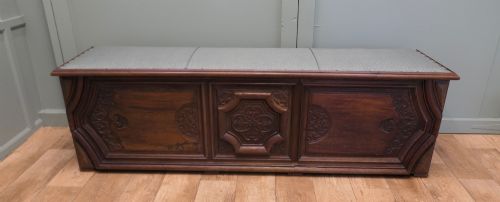
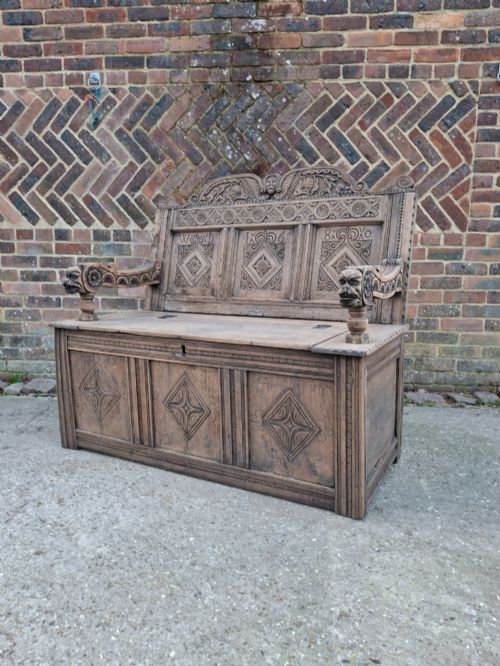
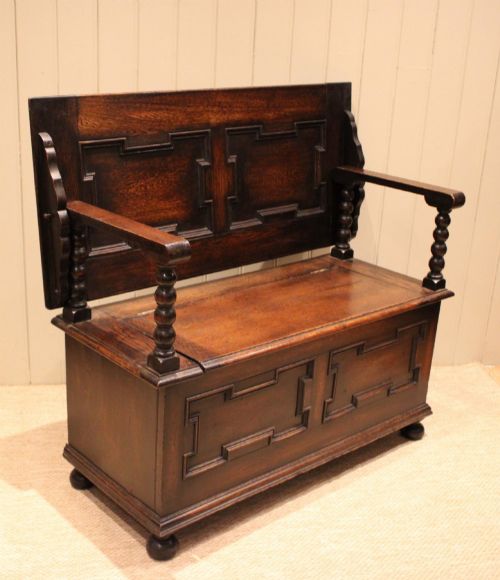
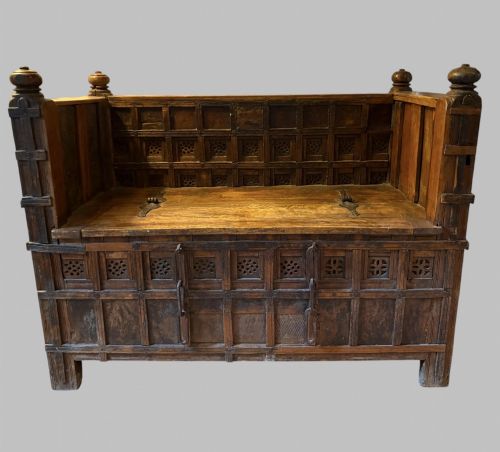
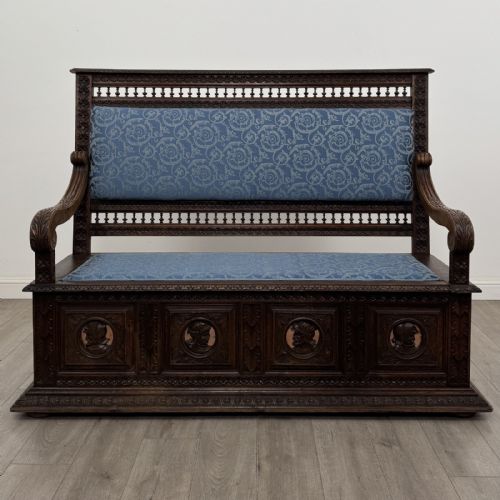
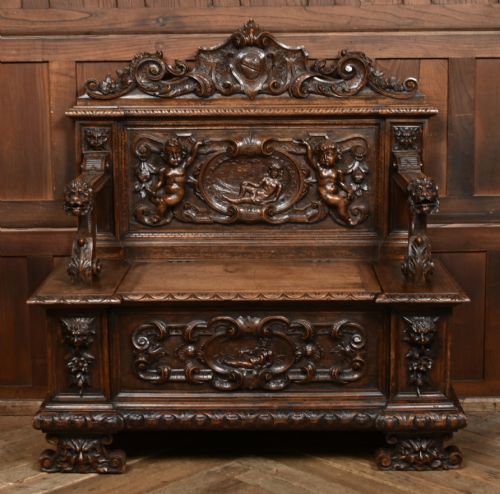
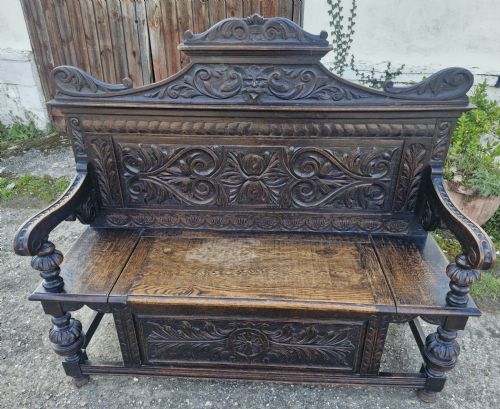
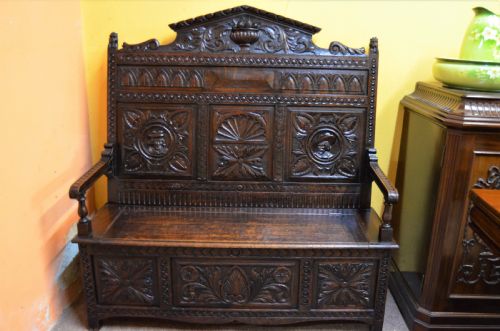
When you search for a carved wooden chest bench, you are looking at substantial seating pieces that double as enclosed storage containers beneath the seat. These versatile furnishings take several historical forms, appearing across this selection as hall settles, monks benches, blanket boxes, and cassapancas. They serve practical and decorative functions in domestic interiors.
The versions you are most likely to meet on this page hail primarily from the eighteenth and nineteenth centuries, spanning Edwardian, Victorian, and earlier periods. Common regional stylistic interpretations include English country house settles, French Renaissance revival pieces, and Colonial Indian hardwood storage seats. Each iteration displays distinct regional carving patterns and structural proportions.
Makers utilised these dual-purpose items for seating by day and secure storage for linens or outerwear by night. The forms range from straight-backed settles with hinged lids to elaborate monks benches that convert into tables. Oak remains the predominant timber, though walnut, hardwood, and painted or gilded wood also appear.
How they were made
Joiners and cabinetmakers constructed these seating chests predominantly from solid oak, walnut, and exotic hardwoods, using traditional pegged mortise and tenon joints to ensure rigidity. Panels were typically hand-carved in relief with floral motifs, linenfold patterns, or figurative designs such as Green Man carvings. Structural integrity relied on heavy timber frames that could withstand daily use and heavy lifting.
Iron and brass hardware, including strap hinges, latches, and carrying handles, were hand-forged or cast to secure the heavy lids and drop-fronts. Secondary woods might line the internal compartments of blanket chests and mule chests. Surface finishes ranged from wax-polished natural grain to painted or gilded treatments depending on the regional style and period.
Carved Wooden Chest Bench Retail Price Guide 2026
Typical asking prices for carved wooden chest bench among the pieces listed under this phrase on Sellingantiques today, from the lower quarter to the upper quarter. They describe what is for sale here now, not the wider market.
Listings feature oak predominantly, alongside walnut and exotic hardwoods, spanning the seventeenth to the early twentieth century.
What varies in quality
The distinction between standard utility furniture and superior examples lies in the depth and crispness of the hand-carving and the choice of prime timber. Pieces displaying intricate relief work, well-figured oak grain, and integrated linen panels represent a higher standard of workmanship. The complexity of the mechanism, such as a convertible monks bench top, also influences the piece's standing.
Originality of construction and hardware dictates the long-term desirability of these items. Examples retaining their initial brass hinges, iron strapwork, and unblemished internal floorboards demonstrate superior historical preservation. The harmony of proportions between the seat height and the storage base marks the hand of a skilled maker.
The Carved Wooden Chest Bench Glossary
- Cassapanca
- An Italian wooden bench featuring a high back, armrests, and a large chest base beneath the seat. It often displays Renaissance revival ornamentation.
- Monks bench
- A convertible piece of furniture designed to function as both a seat with a storage box and a table when the back is folded forward.
- Settle
- A wooden bench with a high solid back designed to block draughts, flanked by arms and incorporating a box seat for storage.
- Mule chest
- A traditional chest featuring one or more drawers at the base beneath a primary lift-lid compartment, emerging during the seventeenth century.
- Green Man
- A sculptural architectural ornament depicting a human face surrounded by or sprouting from foliage, frequently carved into Victorian oak furniture.
Carved Wooden Chest Bench: Frequently Asked Questions
What is a carved wooden chest bench used for?
These pieces function as dual-purpose items providing both a place to sit and enclosed storage space for household items. They suit hallways, living rooms, and boot rooms where space and utility matter.
Historically, families stored blankets, heavy coats, and dry goods inside the seat cavity while utilising the top for seating. Their robust construction allows them to endure heavy daily use in busy domestic settings.
How do I identify a Victorian oak monks bench?
Victorian examples often feature dark waxed oak, heavily carved panels, and characteristic motifs such as the Green Man or Gothic revival tracery. The convertible top mechanism is a defining structural element.
These pieces frequently replicate earlier styles while incorporating nineteenth-century manufacturing techniques and hardware. Examining the interior timber and the wear patterns on the seat helps confirm the period.
Are these benches comfortable to sit on?
Traditional wooden benches have rigid timber seats and upright backs designed for posture rather than lounging. Adding a loose cushion or fabric pad softens the seating surface.
The height of the seat and the angle of the backrest vary depending on whether the piece is an English settle, a French hall bench, or an Italian cassapanca.