


Carved Wooden Books
These carved wooden books and related library accessories range from Black Forest animal carvings to folding lecterns and extending book slides.
Carved Wooden Books
When buyers search for carved wooden books, they encounter functional reading accessories and decorative carvings produced across the nineteenth and early twentieth centuries. The selection on this page centres primarily on bookends, reading stands, lecterns, and book slides rather than bound volumes.
Makers ranged from Swiss woodcarvers working in the Black Forest tradition to cabinet makers producing library furniture in Victorian and Edwardian workshops. The forms serve both practical roles on desks and shelves and purely decorative display functions.
Materials and construction
The pieces rely heavily on hardwoods such as oak, mahogany, walnut, and linden wood, chosen for their grain structure and response to hand tools. Black Forest carvings utilise soft and even-grained woods like linden that allow for deep, expressive undercut detailing.
Joinery and carving techniques vary by object type, combining hand-chisel work on sculptural bookends with mortise and tenon joints on larger reading stands and book slides. Timber surfaces are typically finished with wax or polish to highlight the natural tone of the grain.
Carved Wooden Books Retail Price Guide 2026
Typical asking prices for carved wooden books among the pieces listed under this phrase on Sellingantiques today, from the lower quarter to the upper quarter. They describe what is for sale here now, not the wider market.
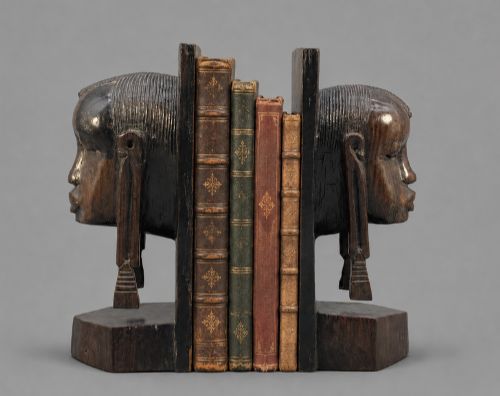
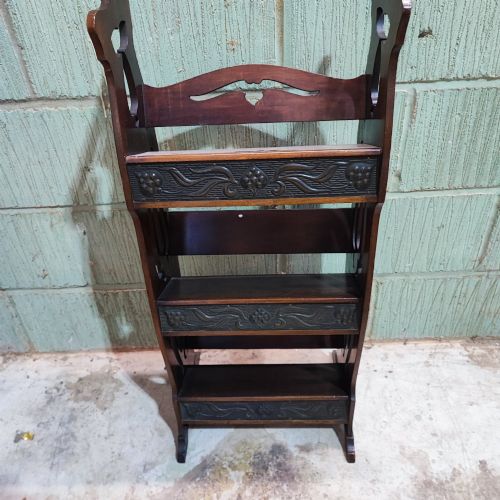
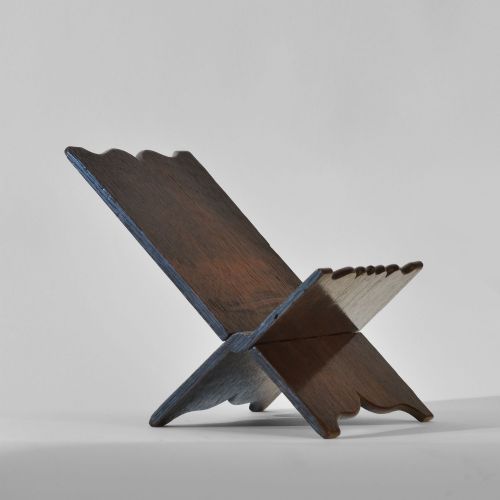
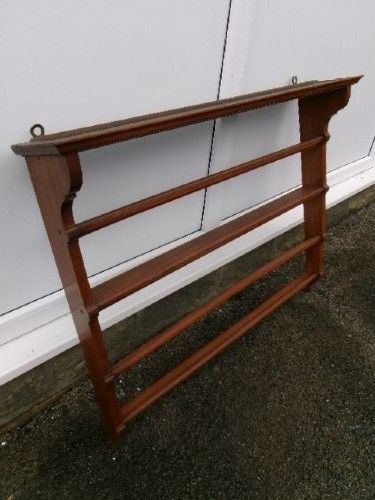
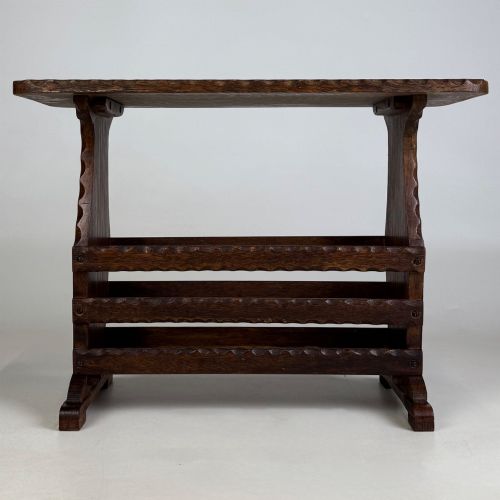
Object forms on this page include reading stands, church lecterns, extending book slides, wall shelves, and animal-carved bookends.
Assessing quality
Quality rests in the crispness and depth of the hand-carved elements, particularly in figurative work where facial expressions and feather or scale details define the piece. Finer examples display confident tool marks and balanced proportions rather than flat, mechanised shaping.
The structural integrity of extending mechanisms on book slides and the stability of hinged reading stands also separate standard items from superior workshop output. Selection of timber with pleasing grain figures adds visual merit to bookcases and architectural stands.
The Carved Wooden Books Glossary
- Book slide
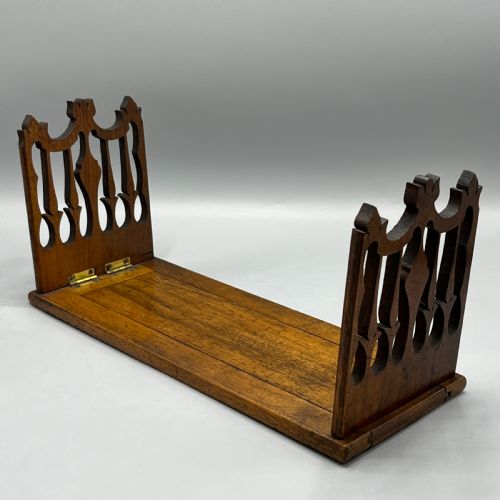
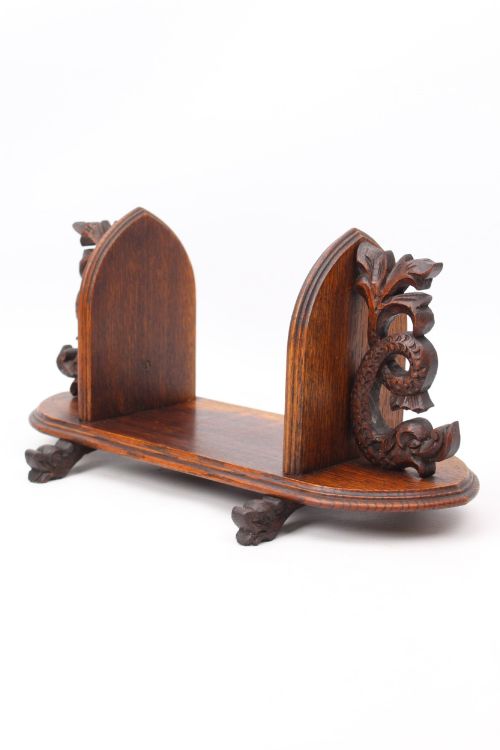
- An adjustable stand with sliding ends designed to hold a row of volumes upright on a desk or table. These often feature decorative wooden ends or pierced carving.
- Black Forest carving
- A style of wood carving originating in the Brienz region of Switzerland, known for realistic representations of animals and foliage. Pieces commonly date from the late nineteenth and early twentieth centuries.
- Lectern
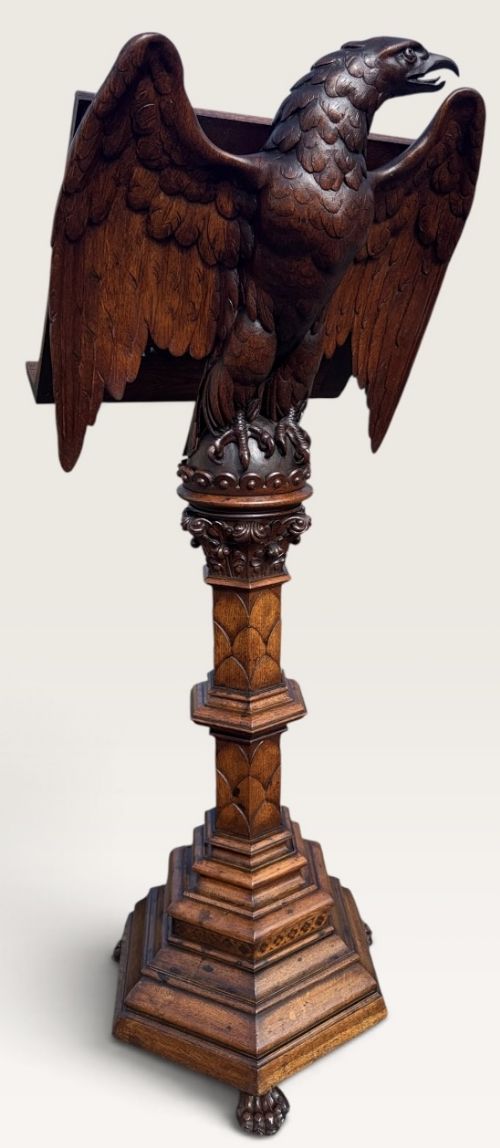
- A slanted reading desk designed to support a book at a comfortable angle for a speaker or reader. Examples in the evidence include floor-standing models with eagle motifs and smaller table rests.
- Gothic Revival
- An architectural and decorative style drawing inspiration from medieval forms, prevalent during the Victorian period. Items in this style often feature pointed arches and heavy tracery.
- Open bookcase
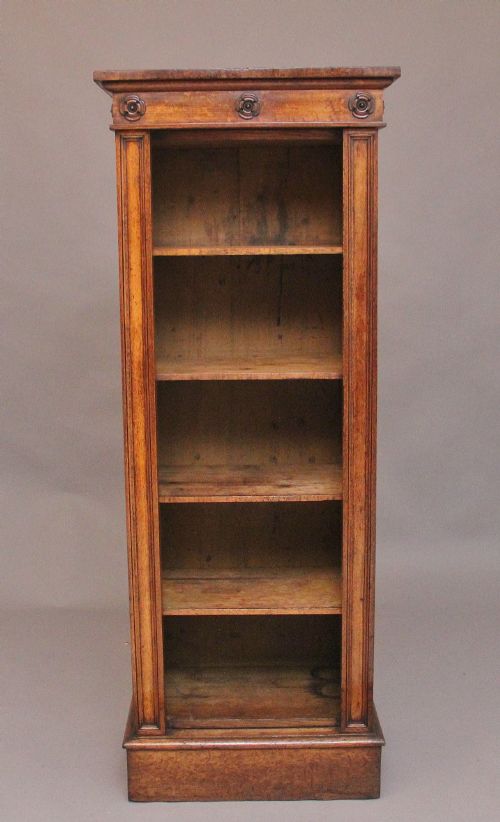
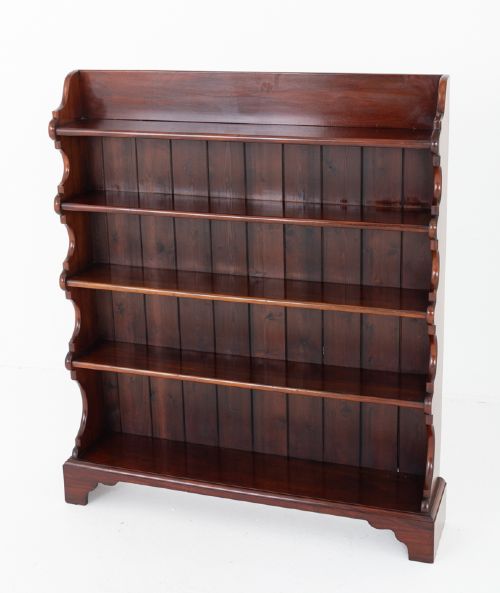
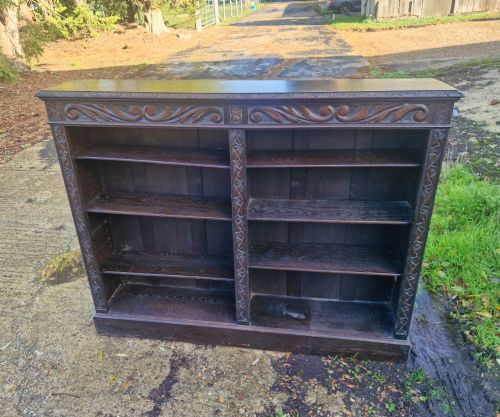
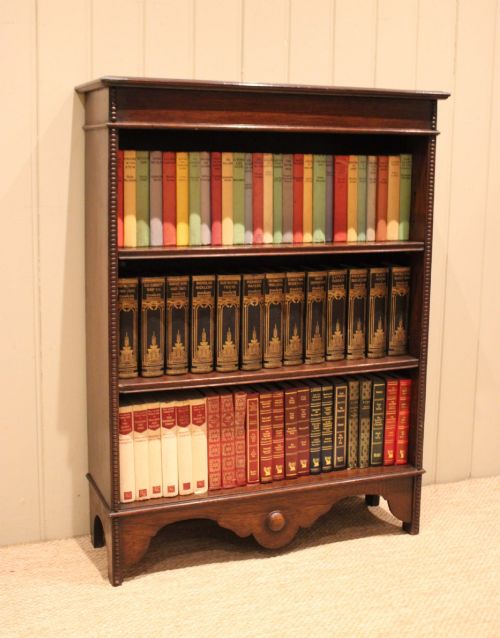
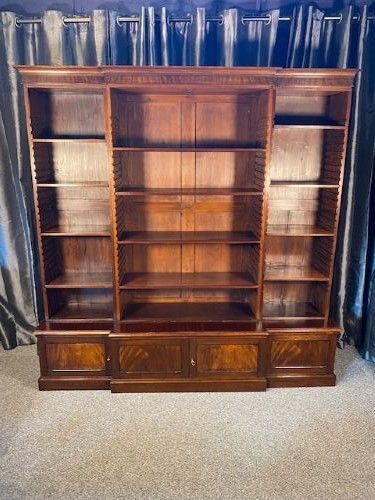
- A piece of storage furniture without doors, providing direct access to adjustable shelves. These appear in mahogany and oak across Victorian and Edwardian periods.
Carved Wooden Books: Frequently Asked Questions
What are carved wooden bookends?
Carved wooden bookends are heavy sculptural supports designed to keep rows of books upright on shelves or desks. They frequently take the form of animals, birds, or architectural motifs.
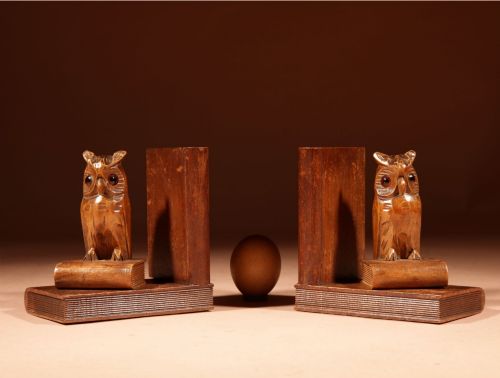
In the provided selection, Black Forest examples depict subjects like owls and goldfish with detailed hand-carving from the late nineteenth and early twentieth centuries.
How do extending book slides work?
Extending book slides feature a base track with sliding end pieces that pull apart or push together to accommodate varying numbers of volumes. They offer a flexible way to organise desk collections.
Many period examples incorporate carved wooden ends or decorative wood varieties such as olive wood.
What is a church lectern used for?
A church lectern serves as a raised stand to hold service books, Bibles, or reading material for public recitation. They often feature a slanted top supported by a column or a carved bird motif.
Historical examples recorded here include nineteenth-century oak stands depicting eagles with outstretched wings.
How do I date Black Forest carvings?
Dating Black Forest pieces involves examining the subject matter, tool work, and the type of wood finish applied. Most popular animal subjects and decorative bookends originate from the period around nineteen hundred.
Wear patterns on the underside and the style of the carving also help distinguish genuine antique production from later tourist pieces.