
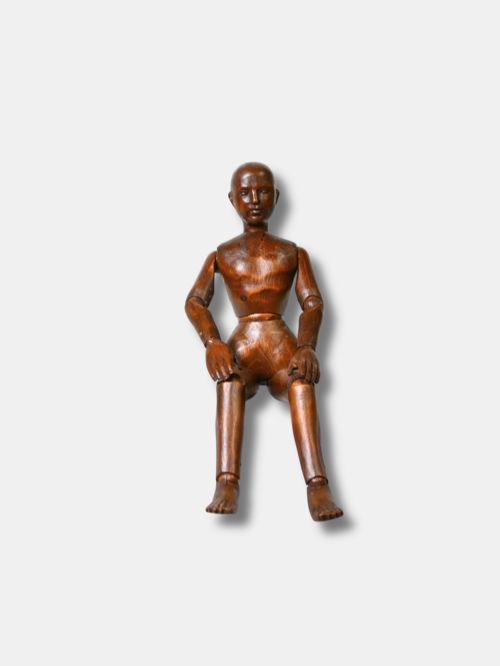
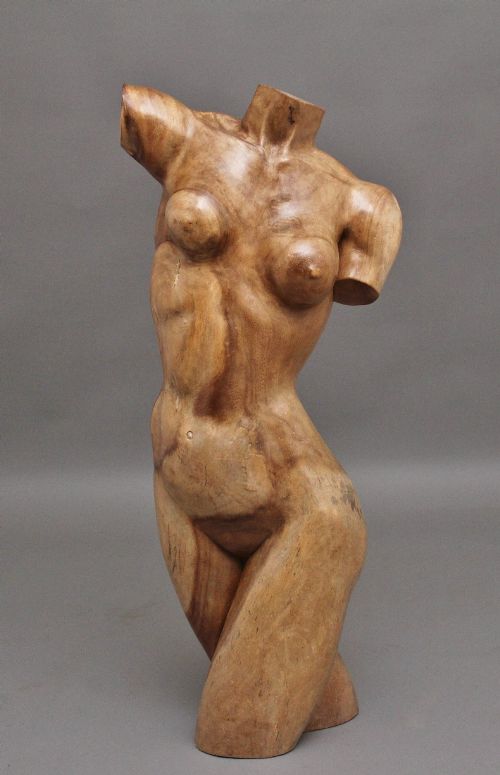




Carved Wooden Anatomical Figure
A carved wooden anatomical figure brings striking physical presence to a room, offering the sculptural grace of articulated joints and human form.
Carved Wooden Anatomical Figure
When you search for a carved wooden anatomical figure, you find sculptures shaped to depict the human body, ranging from life-size torsos to smaller articulated models. These objects originate from European workshops and span several periods, including the eighteenth century and the early twentieth century.
The versions you are most likely to meet on this page are artist lay figures and mannequins, alongside classical male nudes and memento mori skeletons. Many pieces feature movable joints designed for sketching or display.
Origins stretch across France, Germany, and Italy, reflecting different regional sculptural traditions in wood, metal, and bone.
Materials and construction
These pieces rely on carved wood and hardwood as the primary medium, shaped by hand to define musculature and skeletal structure. Artisans selected dense timbers capable of holding fine anatomical details.
Joints and inner mechanics often incorporate metal or iron components to permit articulation, allowing figures to hold specific poses for artists and sculptors.
Some nineteenth-century studio models retain traces of old oil paint on their wooden fingers from generations of artists.
Assessing quality
The distinction between ordinary and superior pieces lies in the anatomical accuracy and the fluidity of the carving. Master carvers captured musculature and proportion with realistic precision.
The complexity of the articulation mechanism also separates pieces, with fully mobile joints requiring greater technical skill than static torsos.
The Carved Wooden Anatomical Figure Glossary
- Lay figure
- A jointed wooden mannequin utilised by artists to arrange drapery and study posture. These figures range from small desk models to life-size examples.
- Memento mori
- An artistic reminder of mortality, frequently represented by skeleton figures. These objects served as contemplative desk ornaments in past centuries.
- Articulated
- Having joints that permit movement. This feature allowed nineteenth-century painters to pose models accurately in the studio.
- Santos
- A carved devotional figure originating from Catholic traditions, often mounted on a plinth. These sculptures sometimes share period characteristics with anatomical models.
Carved Wooden Anatomical Figure: Frequently Asked Questions
What is an artist lay figure?
An artist lay figure is a jointed wooden mannequin designed to help painters and sculptors study human anatomy and drapery. These models allowed studios to replicate complex lighting and poses without a live sitter.
They appear in various sizes, from small desktop items to life-size figures with metal-pinned joints.
How do I date an anatomical figure?
Dating relies on stylistic clues, tool marks, and the materials used for internal pins and joints. Eighteenth-century pieces often display hand-wrought iron details and distinct regional carving characteristics.
Later nineteenth and early twentieth-century examples shift towards modernism and industrial manufacturing techniques.
Were these figures used in medical training?
While some served educational purposes, many catalogued here were created for artists' studios rather than medical dissection. Their primary role was artistic reference rather than clinical instruction.
Craftsmen focused on outward muscular form and pose rather than internal organ systems.
How should I display a wooden figure?
These sculptures require stable indoor environments away from direct heat sources to prevent the timber from splitting. Placing them on a sturdy plinth or shelf highlights their sculptural form.
Avoid forcing stiff nineteenth-century joints into new positions to preserve the original material.