

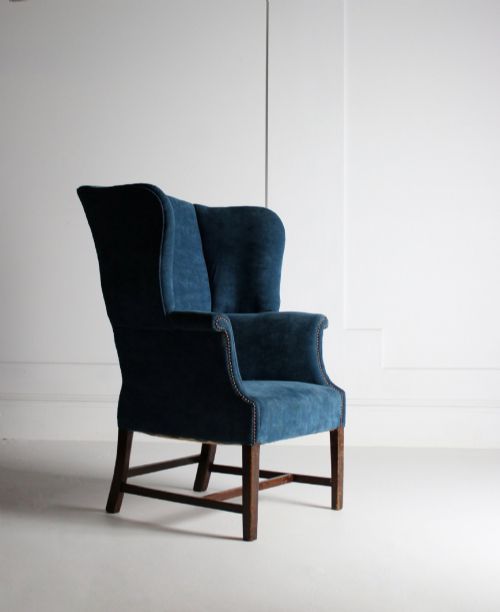


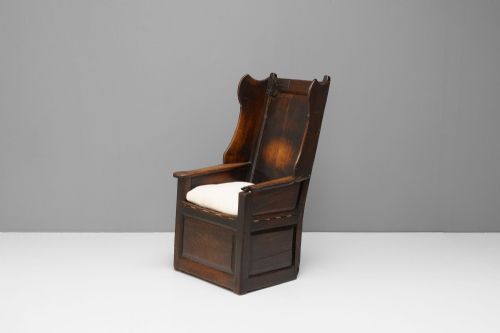
Carved Wood Wingback
These carved wood wingback armchairs offer deep-seated comfort and draught protection, uniting heavy frames with rich textile upholstery across several periods.
Carved Wood Wingback
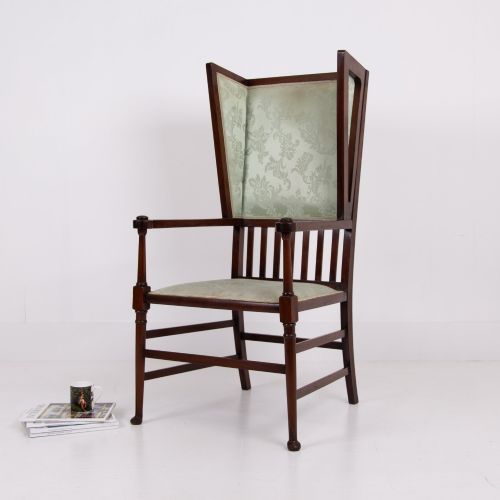
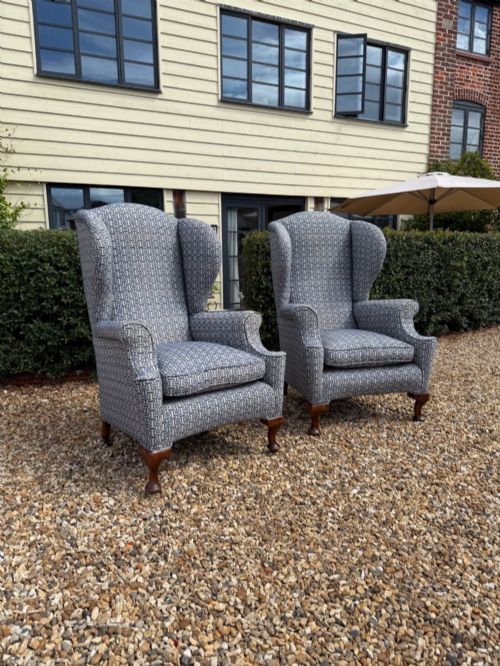
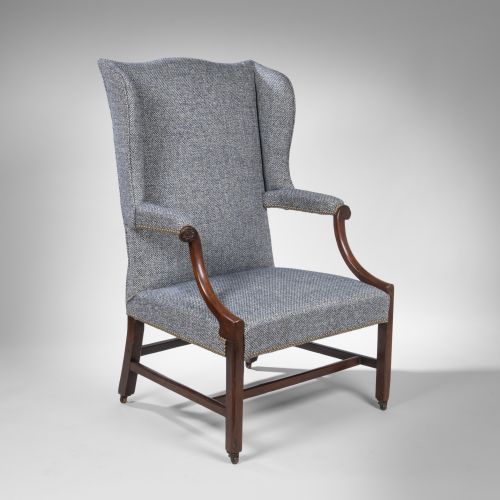
A carved wood wingback search brings up heavy upholstered armchairs and settees designed to shield the sitter from draughts by the hearth. You will most frequently meet nineteenth-century English and Continental examples alongside earlier Georgian and eighteenth-century country forms.
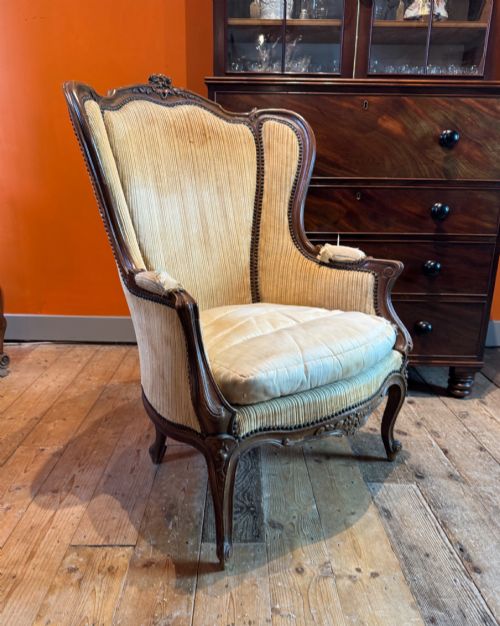
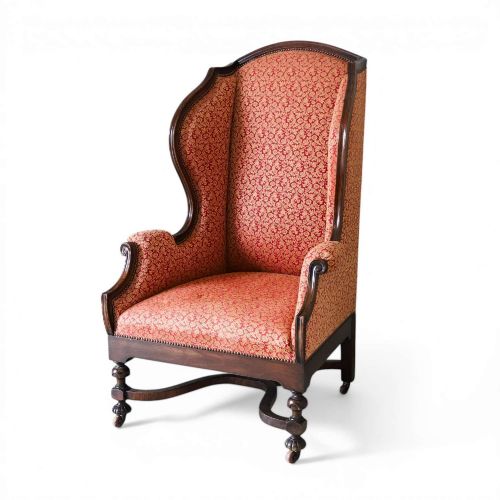
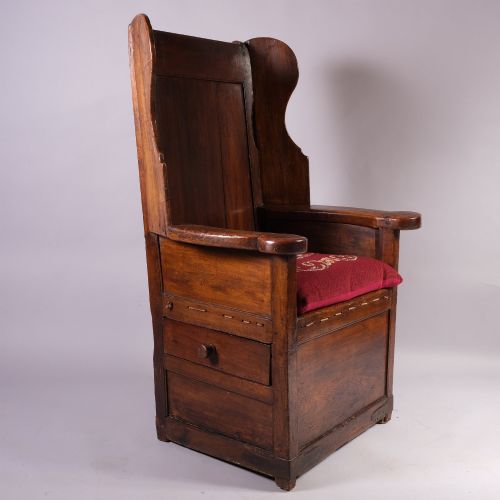
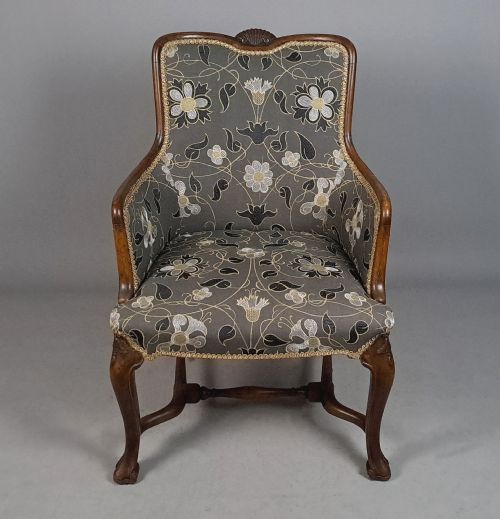
The selection ranges from revival styles such as Queen Anne, Carolean, and Louis XV to vernacular country house seating and lambing chairs. Frames take the form of armchairs and two-seater sofas upholstered in various fabrics, velvet, calico, and leather.
Makers and retailers like Liberties and Marlborough House appear among the pieces, reflecting both formal library seating and relaxed domestic furniture.
Materials and construction
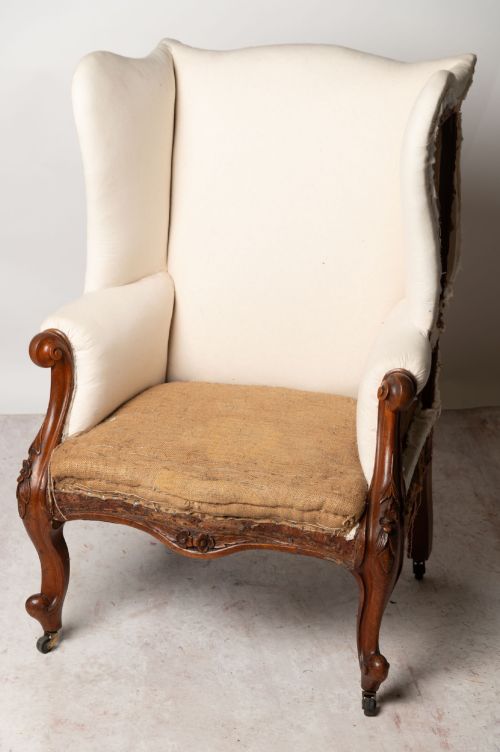
Carved wooden frames provide the structural skeleton, utilising solid timbers such as mahogany, walnut, and giltwood. Woodcarvers shaped these frames with decorative details, while some chairs incorporate brass accents.
Traditional upholstery techniques secure the internal padding beneath outer coverings of textile, velvet, fabric, calico, or leather. Frames are built to support deep seating, often featuring barrel backs or high wings designed for warmth.
Carved Wood Wingback Retail Price Guide 2026
Typical asking prices for carved wood wingback among the pieces listed under this phrase on Sellingantiques today, from the lower quarter to the upper quarter. They describe what is for sale here now, not the wider market.
The selection includes both English library armchairs and French bergere seats finished in revival styles.
What separates the tiers
The sophistication of the timber carving and the fidelity of the period revival style determine the upper tier of these armchairs. Elaborate giltwood details, period provenance, and matching pairs elevate certain pieces above standard domestic seating.
Simpler vernacular pieces rely on the character of their native timber and age rather than decorative flourishes. The condition and type of the original or period upholstery covering also influence the standing of each armchair.
The Carved Wood Wingback Glossary
- Wingback
- An armchair featuring projecting side panels designed to trap heat from a fireplace and block draughts. These wings frame the backrest and join the armrests.
- Lambing chair
- A traditional vernacular armchair featuring a high wooden back and enclosed sides, historically used by shepherds and farmers for warmth. These typically date from the eighteenth century.
- Bergere
- An enclosed upholstered armchair with wooden framing around the sides and back. French examples often follow Louis XV or related continental styles.
- Giltwood
- Timber coated with a thin layer of gold leaf or gilt pigment. This finish appears on decorative nineteenth-century French frames.
Carved Wood Wingback: Frequently Asked Questions
What is a carved wood wingback?
A carved wood wingback is a substantial upholstered armchair featuring protective side panels attached to the backrest and a decorative wooden frame. These chairs originated to shield sitters from cold draughts in large rooms.
Today, they serve as prominent fireside or library seating, combining functional woodwork with soft textile or leather upholstery.
How do I date a wingback chair?
Dating relies on examining the timber species, the style of the carved woodwork, and the structural framing methods. Eighteenth-century pieces often show vernacular country construction, while nineteenth-century examples frequently revive earlier Queen Anne or Louis XV aesthetics.
Provenance notes and retail labels can also provide specific historical context for individual pieces.
Where should I place a wingback chair?
These armchairs suit living rooms, studies, and libraries where their high backs and enclosed sides create a private seating area. They function well beside fireplaces or reading corners, echoing their original domestic purposes.
Due to their substantial proportions, they require sufficient surrounding space to display the carved wooden frames.
What is a lambing chair?
A lambing chair is an eighteenth-century vernacular seating form constructed mainly from solid wood with enclosed sides and a high back. They were traditionally used by shepherds during cold lambing seasons.
Unlike standard upholstered wingbacks, these rely primarily on wooden construction with simple squab cushions.