

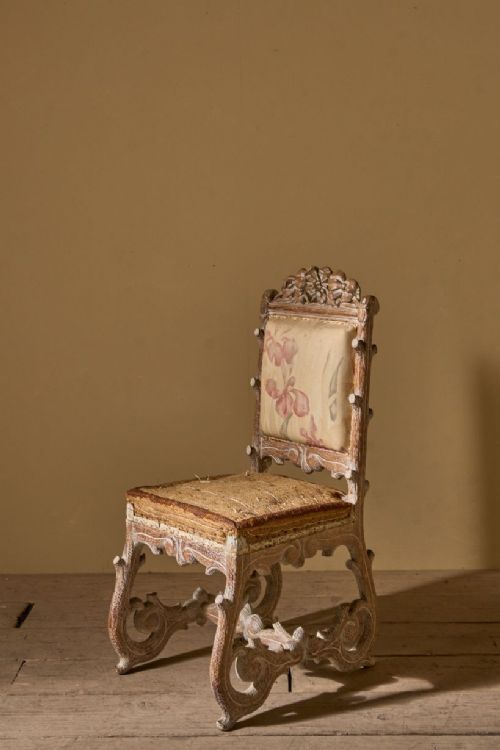
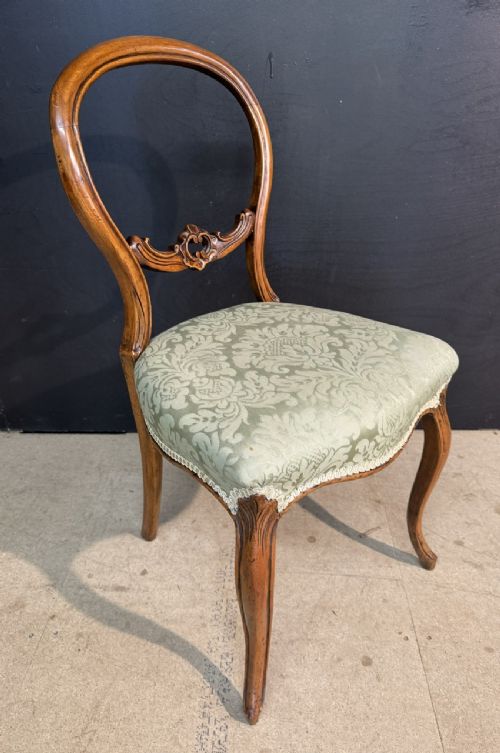


Carved Wood Vanity Chair
A carved wood vanity chair brings intimate scale and detailed craftsmanship to a dressing room, offering a low seat designed for comfort during morning routines.
Carved Wood Vanity Chair
A carved wood vanity chair encompasses low bedroom seating, dressing table stools, and boudoir chairs designed for personal grooming spaces. These small-scale seats appear across the nineteenth century, including Victorian, Edwardian, and Georgian periods, alongside revival influences like French Rococo and Louis XVI styles.
The selection on this page relies heavily on compact forms such as slipper chairs, nursing chairs, and footstools rather than large armchairs. Walnut, rosewood, and mahogany provide the primary timber structures, frequently paired with textile upholstery including velvet and new fabric covers.
What varies in quality
The definition and depth of the hand-carving separate standard production pieces from finer examples, particularly on exposed wooden backs and cabriole legs. Crisp lines and balanced proportions indicate greater skill in the workshop.
The choice of primary timber and the integrity of the frame construction determine longevity, while the quality of upholstery materials and webbing affects both comfort and appearance.
Carved Wood Vanity Chair Retail Price Guide 2026
Typical asking prices for carved wood vanity chair among the pieces listed under this phrase on Sellingantiques today, from the lower quarter to the upper quarter. They describe what is for sale here now, not the wider market.
Listings feature walnut, rosewood, and mahogany timbers across nineteenth-century and Edwardian periods.
Lamb of Manchester
The Carved Wood Vanity Chair Glossary
- Cabriole leg
- A furniture leg that curves outward and then tapers inward, ending in a pad or foot. This form draws inspiration from animal legs and appears frequently on period seating.
- Slipper chair
- A low-seated upholstered chair originally designed for bedrooms to assist with putting on footwear. These pieces lack arms and sit close to the floor.
- Giltwood
- Wood that has been coated with gold leaf or a gold-coloured finish. It provides a bright decorative surface on ornamental frames.
- X-framed stool
- A piece of seating supported by intersecting diagonal legs forming an X shape. This sturdy structural design dates back centuries and offers compact support.
- Nursing chair
- A low-slung Victorian chair built with an accommodating seat height and supportive back. These items were traditionally used in nurseries and dressing rooms.
Carved Wood Vanity Chair: Frequently Asked Questions
What is a vanity chair?
A vanity chair is a low, compact seat designed specifically for use at a dressing table or in a bedroom. These pieces prioritise a comfortable sitting height for grooming and personal care.
They often feature decorative carved wooden frames and upholstered seats that complement bedroom furniture of the nineteenth and early twentieth centuries.
Where were vanity chairs used?
These chairs found their primary home in private dressing rooms, boudoirs, and bedrooms. Their diminutive size allowed them to tuck neatly beneath dressing tables when not in use.
They also served as occasional seating in parlours or drawing rooms where space was limited.
How do I date a wooden vanity chair?
Dating relies on examining the timber species, joinery techniques, and stylistic revival markers present in the frame. Victorian and Edwardian examples often display characteristic hand-carving and upholstery styles.
Reference points such as cabriole legs or X-frames help narrow down the period of manufacture alongside the type of wood used.
How do I care for antique upholstery?
Preserving the fabric requires regular gentle dusting and protection from direct sunlight to prevent fading. Professional cleaning helps maintain delicate textiles without damaging the underlying structure.
For pieces with newer covers, standard gentle fabric care keeps the material fresh while preserving the historic wooden frame underneath.