


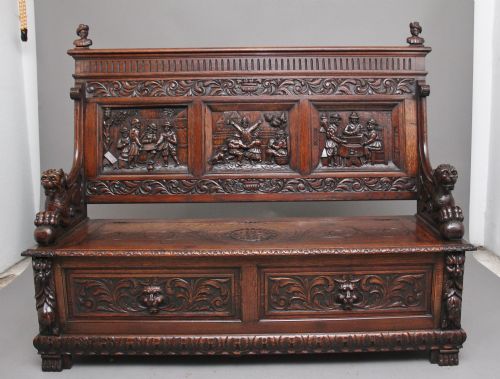

Carved Wood Settle
A carved wood settle brings solid architecture and deep seating into a hallway or living space.
Carved Wood Settle
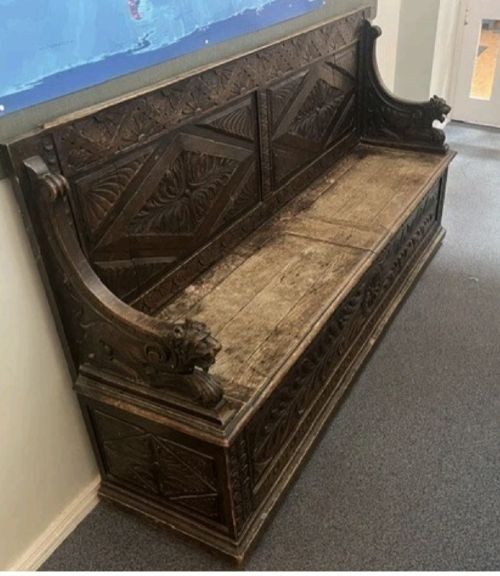
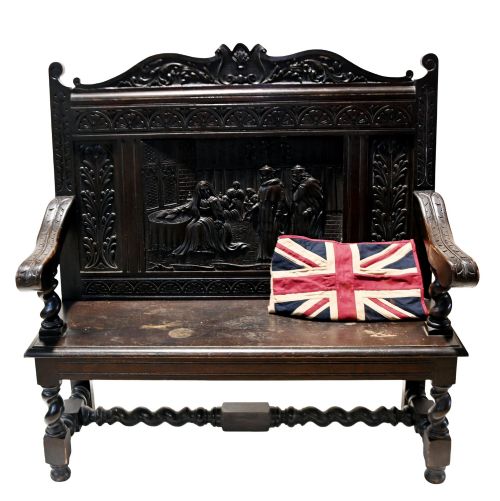
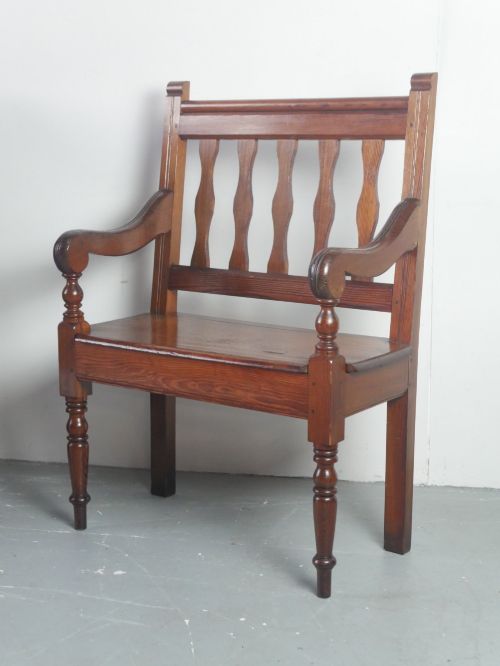
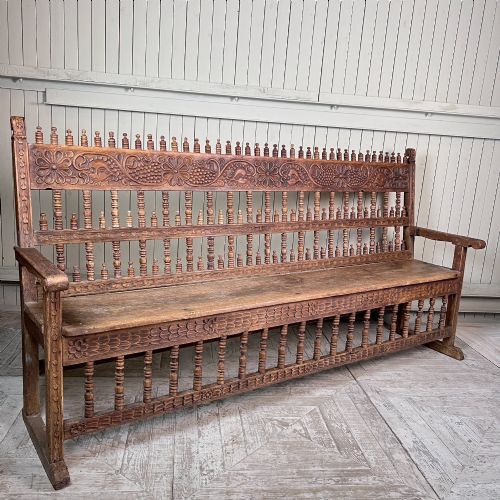
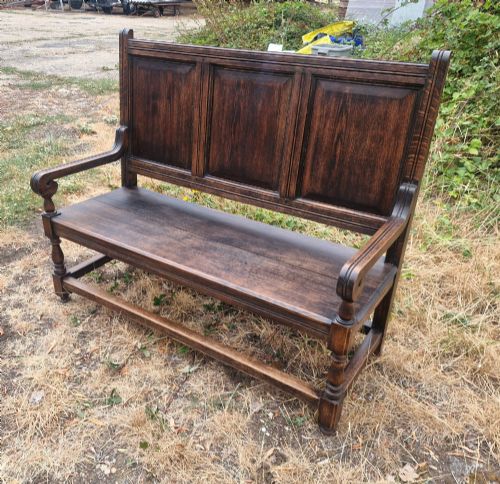
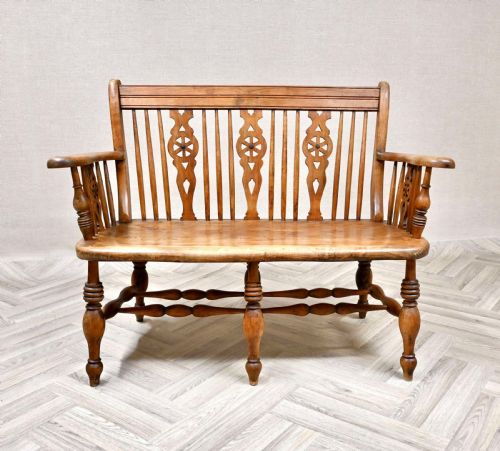
When you search for a carved wood settle, you are looking at substantial wooden benches featuring high backs, enclosed lower sections, and armrests designed to block draughts. The pieces appearing most frequently span the eighteenth, nineteenth, and early twentieth centuries, rendered predominantly in oak with occasional examples in mahogany, hardwood, and pine.
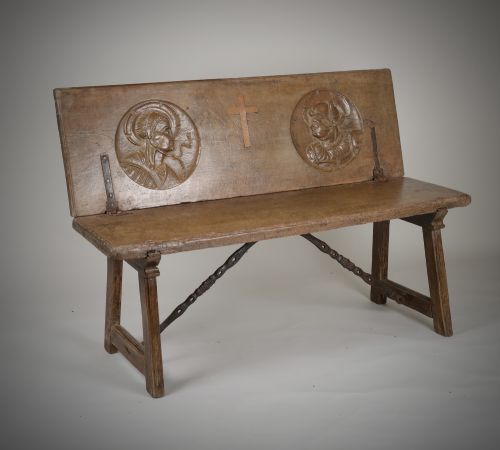
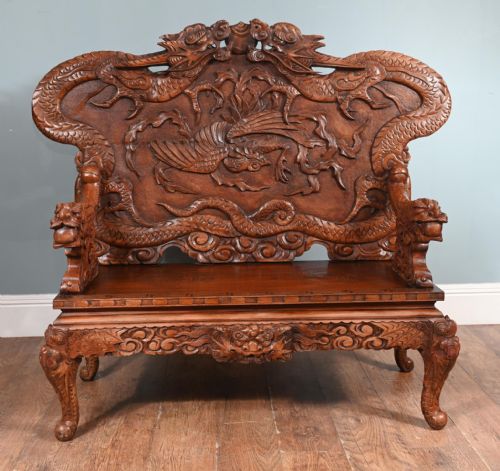
Formations range from straight-backed hall benches and box settles with lift-up seats to monastic variants and Chinese export designs inlaid with mother-of-pearl or finished in cinnabar lacquer. Regional styles also surface, including English country pieces, Spanish colonial work, and Flemish carvings, reflecting diverse domestic and institutional origins.
Materials and Construction
Carpenters built these sturdy seats using solid timber, relying chiefly on oak alongside mahogany, rosewood, and regional hardwoods. Panels were frequently joined using traditional pegged framing and mortise-and-tenon joints to support the high backrests and heavy bases.
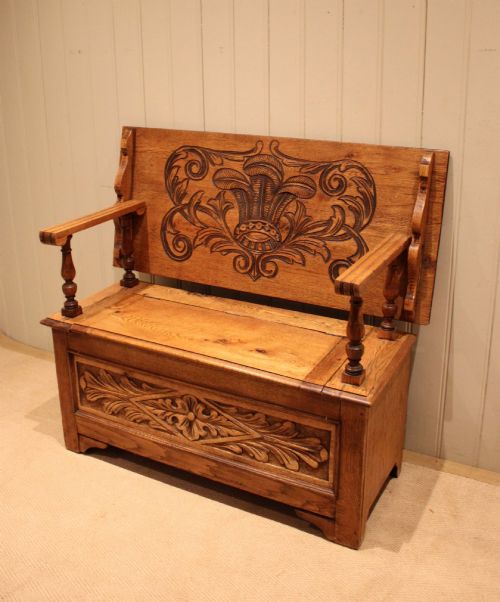
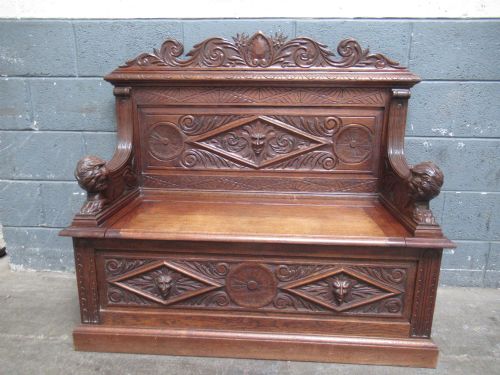
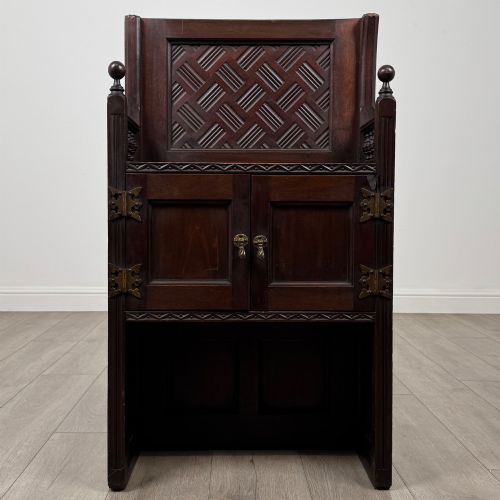
Surface decoration relies heavily on hand chiselling, producing deep relief panels featuring geometric motifs, floral patterns, and figural elements such as Green Man carvings. Structural elements like hinged lift-up lids reveal integrated box storage compartments beneath the seats.
Keep an eye out for carved Green Man faces glaring out from the oak woodwork to keep unwanted spirits away.
Assessing Craftsmanship
Quality in a carved wood settle rests on the crispness of the hand-carved detail and the selection of figured timber grain. Superior examples display deep, deliberate chiselling rather than shallow mechanical stamping, maintaining sharp contours across high-relief panels and arm terminals.
Structural integrity also separates standard utility items from finer pieces, evident in thick timber boards, robust internal framing for box seats, and the honest integration of drawers or hinged lids that operate smoothly within the overall architectural design.
The Carved Wood Settle Glossary
- Settle
- A wooden bench with a high back, solid arms, and often a closed base or box seat designed to keep out cold draughts. These pieces historically stood near hearths in large halls and farmhouses.
- Monks Bench
- A convertible piece of furniture featuring a hinged back that flips forward to transform the seat into a table. This dual-purpose form appears frequently in twentieth-century and revival oak iterations.
- Jacobean Revival
- A nineteenth-century stylistic movement copying seventeenth-century British furniture characteristics. Pieces in this style often feature heavy turned legs, strapwork, and geometric panel carving.
- Lambing Chair
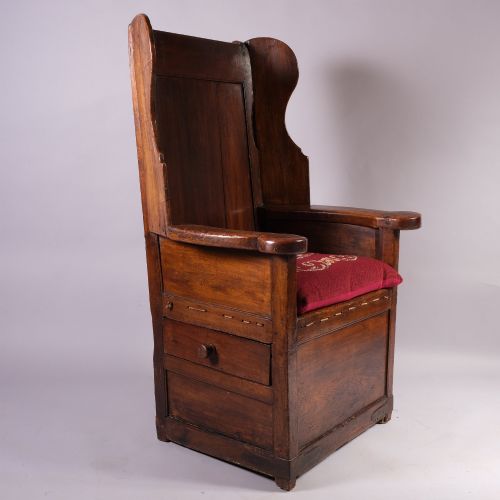
- An enclosed armchair or settle featuring hooded wings and a skirt extending near the floor to retain heat. Eighteenth-century examples were traditionally used by shepherds tending newborn livestock.
- Cinnabar Lacquer
- A decorative technique applying multiple layers of red lacquer to a wooden base before carving intricate designs into the surface. This technique appears on nineteenth-century Chinese export benches.
Carved Wood Settle: Frequently Asked Questions
What is a carved wood settle?
A carved wood settle is a traditional high-backed bench featuring solid wooden sides and armrests designed to shield sitters from draughts. Many incorporate enclosed storage compartments or lift-up lids beneath the seat.
These versatile seats served practical functions in draughty hallways, farmhouses, and grand reception rooms across centuries of domestic life.
How were settles used historically?
Settles were primarily placed near fireplaces or in entrance halls to provide sheltered seating away from cold floor drafts. The high back and enclosed base trapped warmth around the sitter.
Some variants, known as monks benches, featured pivoting backs that converted the seating unit into a table for dining or working.
Where should I place a settle?
A settle suits an entrance hall, large landing, or spacious living room where its substantial architectural back can be appreciated against a wall. The enclosed lower base also provides discreet storage for shoes, blankets, or household items.
Because of their depth and high backs, they require adequate floor space and work best away from tight walkways.
How do I date an antique settle?
Dating relies on examining construction marks, timber types, and stylistic carving details that match known periods like the eighteenth or nineteenth century. Tool marks, joint construction, and timber shrinkage offer clues to the age of the wood.
Revival pieces from the Victorian and Edwardian eras often borrow seventeenth-century motifs, so interior joinery and hardware help clarify the true manufacturing period.