





Carved Wood Secretaire
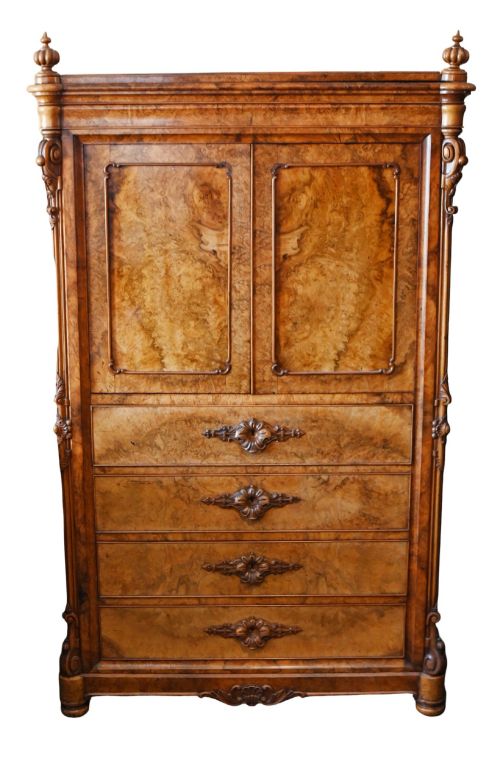
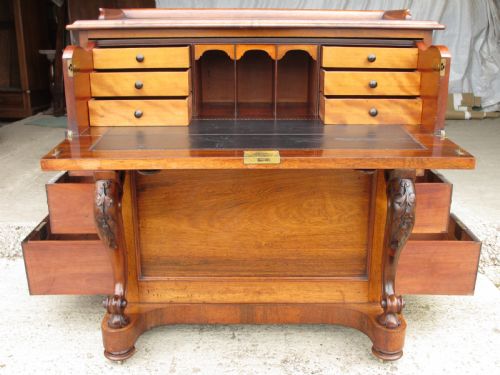
A carved wood secretaire brings a drop-front writing surface together with hidden drawers, offering both a neat facade and a practical workspace.
Carved Wood Secretaire
When searching for a carved wood secretaire, buyers encounter a variety of forms including bureau bookcases, campaign chests, side tables, and sideboard variations. These pieces combine a surface for writing with concealed compartments, drawers, and pigeonholes.
The selections span multiple eras such as the 18th century, Victorian period, Regency, and Arts & Crafts movement. Woods range from mahogany and walnut to rosewood and camphor wood.
Bureau bookcases and writing desks dominate the selection, often featuring drop-front mechanisms known as abattants or cylinder fronts. These establish a classic profile suitable for studies and living spaces alike.
How they were made
Cabinet makers utilised dense hardwoods like mahogany, walnut, and rosewood, often applying veneers of amboyna, birds-eye maple, or maple. Solid timbers formed the structural carcases, while decorative grains faced the drawer fronts and drop-down writing panels.
Brass hardware, leather writing inserts, and glass doors frequently supplemented the woodwork, providing functional contrast and structural support. Campaign chests integrated recessed brass handles and corner brackets designed for portability.
Carved Wood Secretaire Retail Price Guide 2026
Typical asking prices for carved wood secretaire among the pieces listed under this phrase on Sellingantiques today, from the lower quarter to the upper quarter. They describe what is for sale here now, not the wider market.
Listings feature mahogany, walnut, rosewood, and camphor wood across Victorian, Regency, and 18th century periods.
What varies in quality
The distinction between standard examples and finer items rests upon the precision of the joinery and the selection of timber veneers. Finely matched grain patterns and well-executed carving elevate the appearance of the cabinetwork.
Internal organisation reveals the maker's care, with intricate arrangements of small drawers, secret compartments, and fitted pigeonholes indicating higher grade craftsmanship.
Gregory & Co. of London·Thomas Hope
The Carved Wood Secretaire Glossary
- Secretaire
- A desk or cabinet featuring a pull-down or drop-front writing flap that conceals internal drawers and pigeonholes. This form allows a piece of furniture to serve as a concealed writing desk while maintaining the appearance of a chest or cabinet.
- Abattant
- A vertical fall-front writing panel hinged at the bottom edge. When lowered, it forms a horizontal surface for writing.
- Bureau bookcase
- A tall piece of furniture combining a lower writing desk with an upper shelving section enclosed by glass or wooden doors. It provides both workspace and storage for books.
- Campaign chest
- A modular chest of drawers split into sections with recessed brass fittings, originally designed for military travel. These pieces often incorporate a secretaire drawer equipped with a writing surface.
Carved Wood Secretaire: Frequently Asked Questions
What is a carved wood secretaire?
A carved wood secretaire is a piece of furniture equipped with a drop-front writing flap that opens to reveal internal compartments and drawers. These items range from side tables and campaign chests to tall bureau bookcases.
They provide a dedicated writing surface that can be concealed when not in use, maintaining a tidy room appearance.
How do you use a secretaire desk?
To use the desk, you unlock and lower the fall-front flap to create a horizontal writing platform. Inside, you will find small drawers and pigeonholes designed for stationery and letters.
Many examples include internal secret compartments behind the main tier of stationary drawers.
Where should I place a secretaire in my home?
These pieces suit studies, living rooms, and bedrooms where a compact writing desk is required. Their enclosed front keeps working materials out of sight when the flap is closed.
Ensure placement allows adequate clearance for the drop-front panel to lower completely.
How do I identify the period of a secretaire?
Period identification relies on observing the prevailing wood choices, hardware styles, and decorative carving details. Georgian and Regency pieces often showcase flame mahogany, while Victorian items favour rosewood and walnut.
Arts and Crafts examples display simpler lines, whereas Louis Philippe and Louis XVI styles incorporate specific continental carving motifs and veneering techniques.