



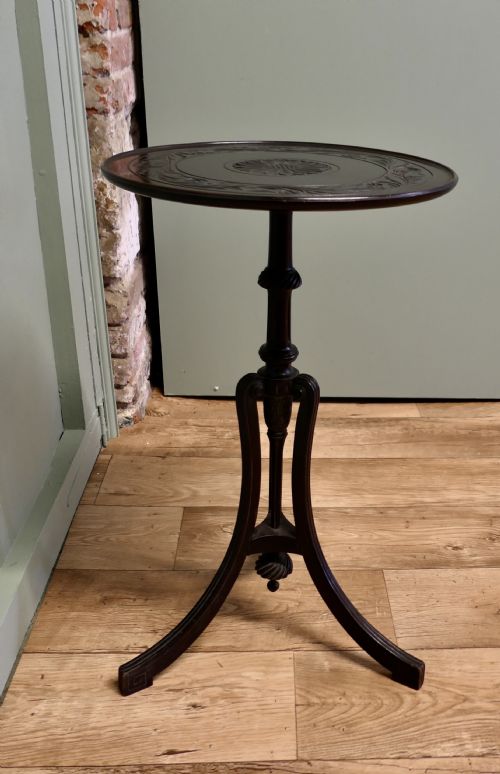
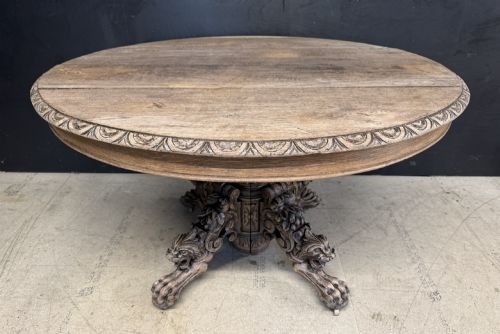
Carved Wood Round
A carved wood round offers substantial presence through circular proportions and detailed carving, appearing across dining, breakfast, and occasional table forms.
Carved Wood Round
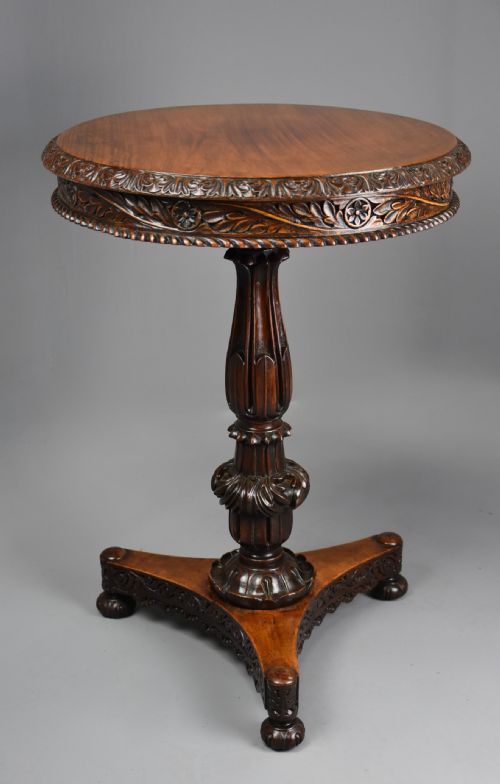
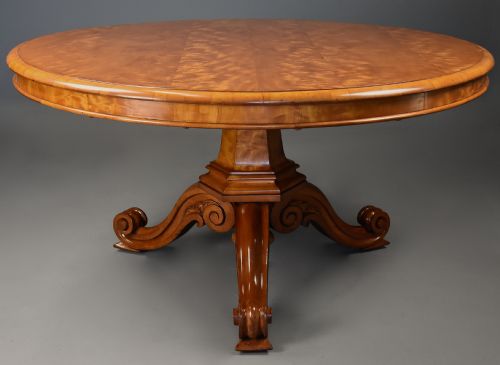
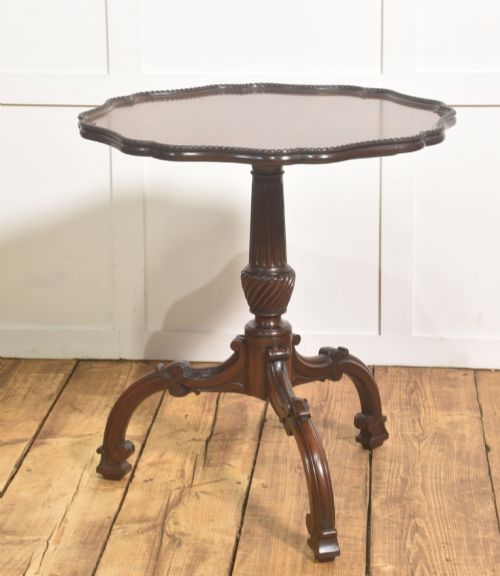
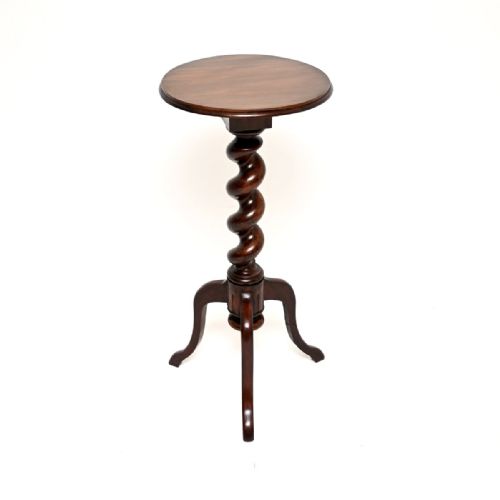
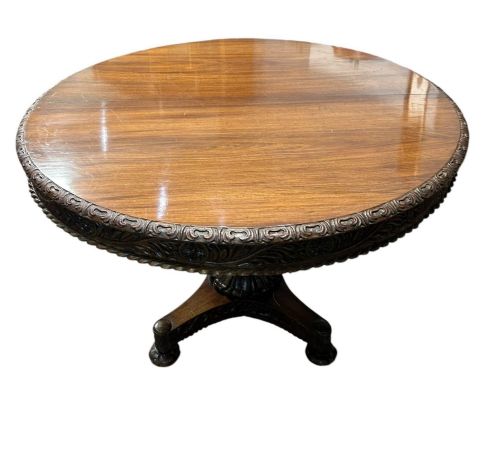
When you search for a carved wood round, you encounter a variety of circular tables and occasional furnishings originating predominantly from the nineteenth century. These items span dining tables, breakfast tables, centre tables, and smaller coffee, wine, or lamp tables built for domestic utility.
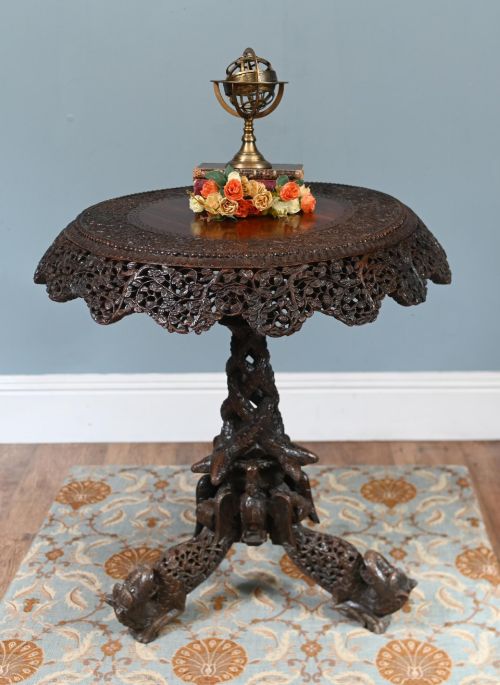
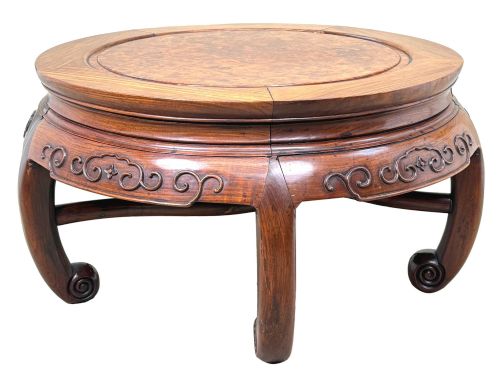
The pieces on this page draw from distinct design movements including Victorian, William IV, Regency, and Chippendale Revival styles. Alongside British and European examples, the selection includes Anglo-Indian, Burmese, and Chinese export pieces carved from rich timbers.
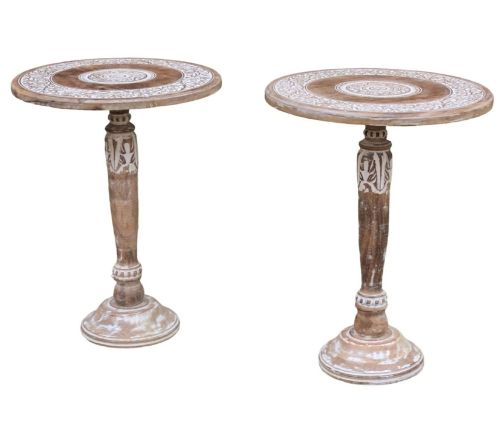
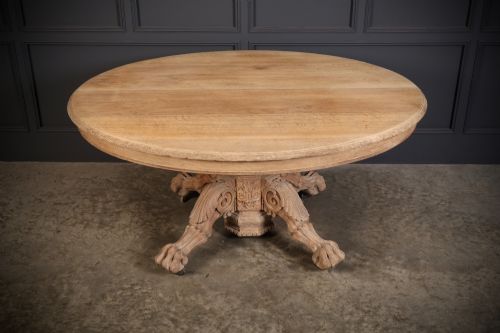
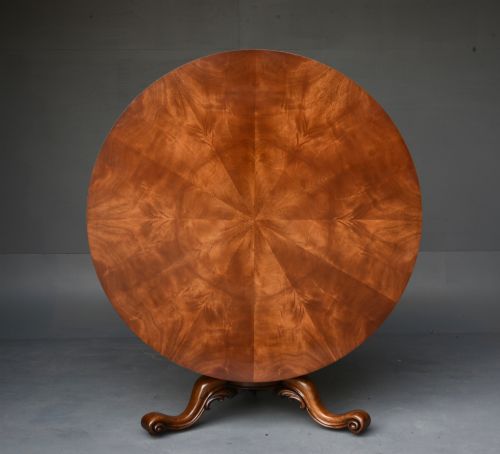
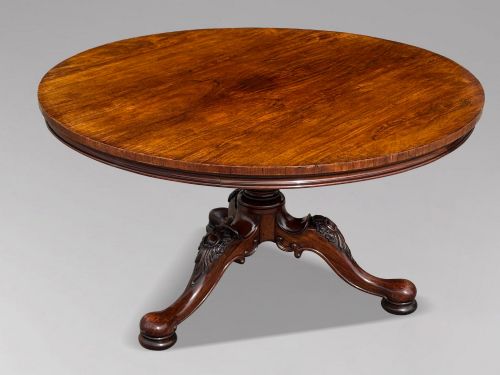
Circular formats dominate the selection, often featuring tilt mechanisms, pedestal bases with tripod supports, or triform designs. Occasional and side tables appear alongside larger dining and breakfast surfaces, providing versatile options for room layouts.
How they were made
Cabinet makers utilised dense hardwoods such as mahogany, rosewood, walnut, padouk, and oak, frequently selecting figured veneers like burr walnut or burr birch for prominent top surfaces. These materials provided the necessary structural stability for large circular tops while accepting intricate hand carving along borders, pedestals, and legs.
Construction techniques combined solid timber framing with specialised joinery to accommodate circular tops, including tilt-top mechanisms fitted with brass catches and sturdy central pillars resting on tripod or triform bases. Certain regional pieces incorporate inset marble tops or integrated storage drawers within the apron.
Carved Wood Round Retail Price Guide 2026
Typical asking prices for carved wood round among the pieces listed under this phrase on Sellingantiques today, from the lower quarter to the upper quarter. They describe what is for sale here now, not the wider market.
Listings feature circular tables spanning mahogany, rosewood, walnut, and padouk, alongside marble-topped and tilt-top variants from the nineteenth century.
What varies in quality
Quality rests in the depth and crispness of the hand carving and the selection of the timber figures, where finely figured satin birch or burr walnut elevates a simple occasional table. The integrity of the pedestal base and the smooth operation of tilt mechanisms indicate superior cabinet making.
Proportion and balance distinguish finer examples, particularly in larger dining and breakfast tables where a heavy circular top requires a robust triform or tripod support. The quality of secondary timbers and the precision of joinery separate standard production pieces from workshop commissions.
Bulstrode Cambridge
The Carved Wood Round Glossary
- Gueridon
- A small French circular table supported by a central pillar or figures, originating in the seventeenth century. These frequently serve as lamp or occasional tables.
- Triform base
- A three-sided pedestal support base commonly found on nineteenth-century breakfast and centre tables. It often rests on carved paw feet or castors.
- Padouk
- A heavy tropical hardwood with a reddish hue used in Anglo-Indian and colonial furniture. It accepts deep, detailed carving without splitting.
- Barley twist
- A turning technique resembling a spiral rope, popular on nineteenth-century table legs and pedestals. This decorative feature adds texture to vertical supports.
Carved Wood Round: Frequently Asked Questions
What is a tilt top table used for?
A tilt top table functions as a standard circular surface for dining or display during daily use. When hinged vertically, the top allows the table to be tucked against a perimeter wall to clear floor space.
This space-saving mechanism was particularly popular in nineteenth-century parlours and drawing rooms where room layouts changed frequently throughout the day.
How do I identify a Victorian round table?
Victorian round tables typically feature dense timbers like mahogany and rosewood, often mounted on heavy central pedestals with tripod or platform bases. Look for characteristic details such as barley twist stems or carved leaf motifs along the borders.
Many examples from this period incorporate tilt mechanisms or polished veneer surfaces designed to showcase the natural grain of the wood.
What is a gueridon table?
A gueridon is a French circular occasional table supported by a single central column or pedestal. These pieces were traditionally used to hold lamps, candlesticks, or decorative objects in reception rooms.
Nineteenth-century versions frequently feature walnut or bleached woods, combining French styling with compact proportions suited for modern seating areas.