

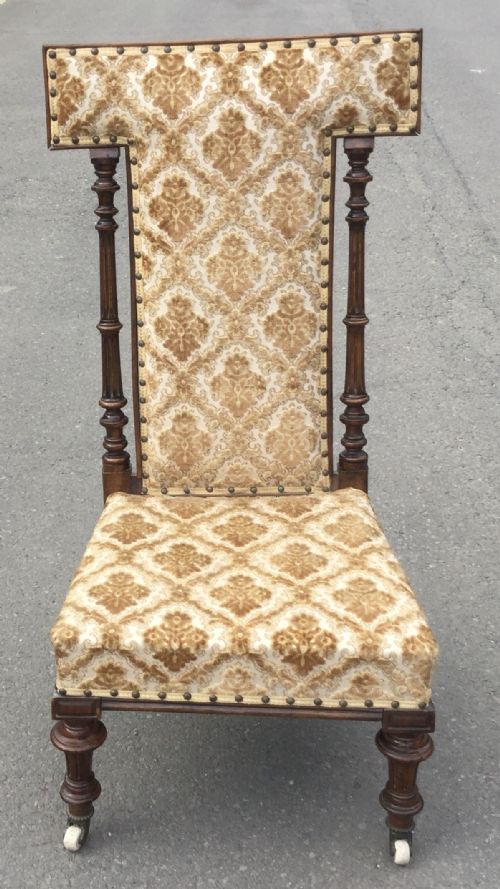
Carved Wood Prie-dieu
These carved wood prie-dieu are devotional prayer chairs and statues designed for kneeling and prayer, offering both history and decorative presence.
Carved Wood Prie-dieu
A carved wood prie-dieu is a devotional seat designed specifically for prayer, featuring a low seat and a high upper shelf or rest for the arms and knees. When you search for this phrase, you will find pieces primarily from the Victorian period alongside earlier examples.
The versions you are most likely to meet on this page belong to the Victorian era and the Gothic Revival style. They take forms such as prayer chairs, hall chairs, and accent chairs, often displaying deep historical inspiration.
Beyond the standard chairs, the selection extends to earlier devotional forms including a 15th-century carved oak statue representing the Virgin of the Annunciation. These items bring tangible centuries of craftsmanship and ecclesiastical heritage directly into a domestic interior.
How they were made
Makers fashioned these pieces from substantial timbers including oak, walnut, rosewood, and mahogany. Skilled artisans shaped the wood using traditional hand-carving techniques to produce the intricate ornamentation characteristic of the Gothic Revival style.
Upholstery formed an integral part of the construction, utilising materials like green velvet, tapestry fabric, and needlepoint. Additional detailing incorporated elements such as brass work, ebonised finishes, and giltwood accents to enhance the visual depth of the woodwork.
Carved Wood Prie-dieu Retail Price Guide 2026
Typical asking prices for carved wood prie-dieu among the pieces listed under this phrase on Sellingantiques today, from the lower quarter to the upper quarter. They describe what is for sale here now, not the wider market.
One remarkably pious chair comes equipped with a built-in spot for your knees and a quiet confidence that survives every interior design trend.
What varies in quality
The standard of carving defines the upper tier of these pieces, where depth, sharpness, and theological accuracy in the ornamentation show superior handiwork. Lesser examples display shallower, more repetitive machine finishing that lacks the sculptural weight of bespoke commissions.
The choice of primary timber and secondary materials also dictates value, with dense hardwoods like rosewood and walnut supporting finer detail than softer or lesser woods. Furthermore, the originality and execution of period upholstery fabrics dictate whether a piece retains its intended decorative integrity.
R Whytock of Edinburgh
The Carved Wood Prie-dieu Glossary
- Prie-dieu
- A devotional piece of furniture intended for prayer, typically comprising a kneeling platform and an upper desk or armrest. They became particularly popular during the Victorian Gothic Revival.
- Gothic Revival
- An architectural and design movement drawing inspiration from medieval forms, featuring pointed arches, tracery, and rich wood carvings. It heavily influenced nineteenth-century ecclesiastical furniture.
- Ebonised
- Wood treated with a chemical stain or finish to imitate ebony, providing a deep black surface often contrasted with bright upholstery. This technique was favoured in Victorian manufacturing.
- Barley twist
- A type of furniture turning resembling a twisted rope, carved into chair legs or structural uprights. It adds dynamic visual movement to nineteenth-century seating.
- Needlepoint
- Stitched textile work using canvas ground, frequently applied to the kneelers and back panels of prayer chairs. It offers durable and colourful decorative patterns.
Carved Wood Prie-dieu: Frequently Asked Questions
What is a prie-dieu chair used for?
A prie-dieu chair is a specialised piece of devotional furniture designed for personal prayer and contemplation. The upper rest supports the arms while kneeling on the lower section.
Today, these pieces function primarily as decorative accent chairs or hall chairs within domestic settings. Their distinct silhouettes bring a strong historical character to modern interiors.
How do I identify a Victorian Gothic Revival piece?
Victorian Gothic Revival pieces typically feature architectural motifs inspired by medieval churches, such as pointed arches, quatrefoils, and heavy wood carving. Makers utilised dense timbers like oak, rosewood, and walnut to achieve this solemn aesthetic.
These designs often incorporate turned elements like barley twists alongside rich upholstery materials such as velvet and tapestry. The overall construction reflects nineteenth-century revivals of medieval ecclesiastical design.
What woods were used for these chairs?
Makers constructed these devotional chairs using a variety of hardwoods suited to detailed carving and structural support. Common timber choices recorded in the evidence include oak, walnut, rosewood, and mahogany.
Some examples also feature ebonised wood surfaces or giltwood highlights to contrast with the primary timber. The selection of wood frequently aligns with the specific period and stylistic preferences of the workshop.
Are all prie-dieu chairs from the Victorian era?
While the majority of standard prayer chairs date from the Victorian period and the nineteenth century, the broader category encompasses other eras. Surviving examples can occasionally trace back to earlier centuries.
Objects associated with this category also include ecclesiastical sculptures and statues from pre-sixteenth-century periods. Each era brings distinct manufacturing techniques and stylistic interpretations to the pieces.