


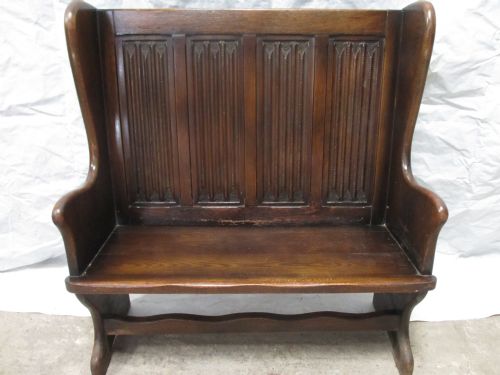


Carved Wood Pew
These carved wood pew examples bring historic architectural seating and robust settles into domestic spaces, offering enduring utility alongside rich surface detail.
Carved Wood Pew
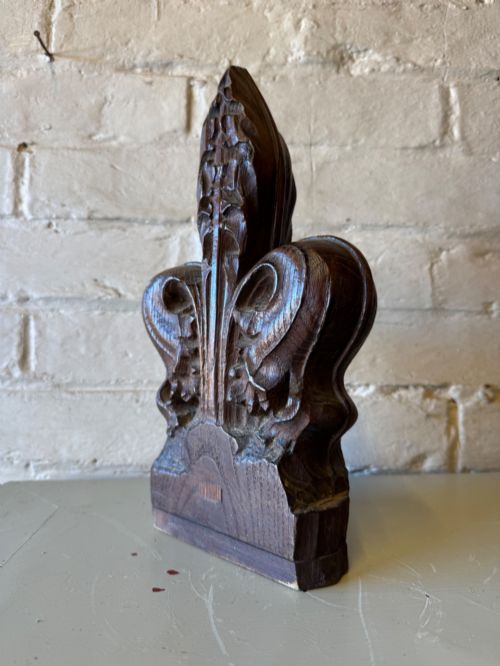
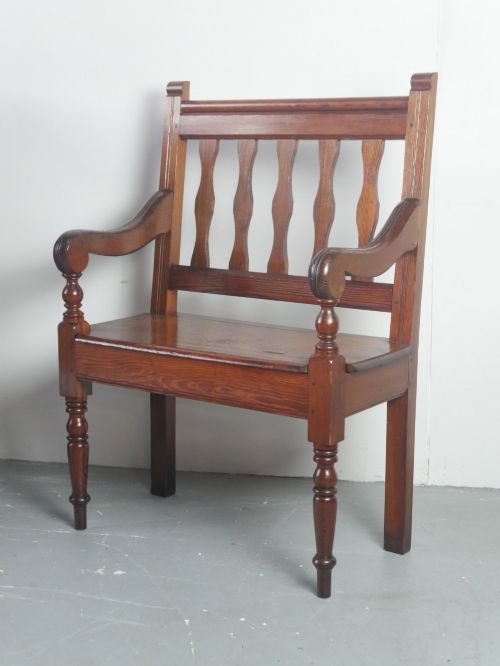
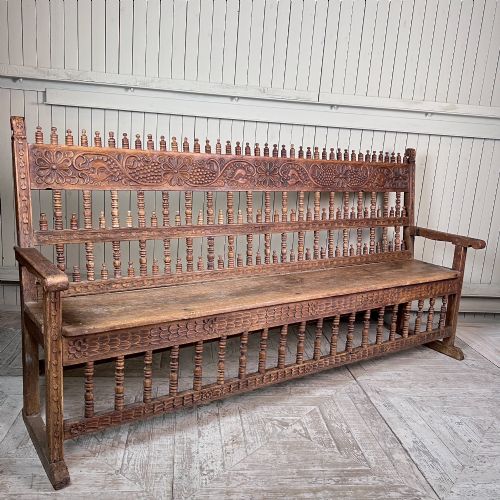
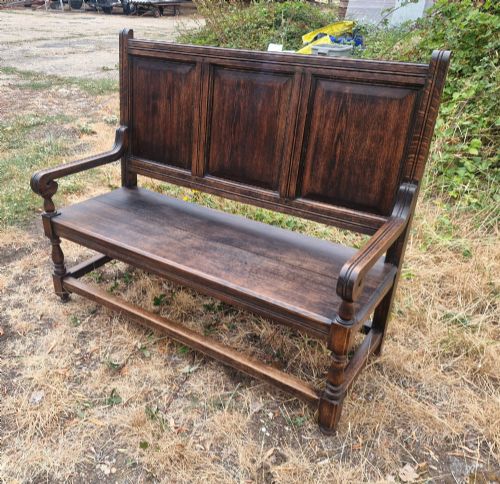
When searching for a carved wood pew, buyers encounter substantial seating forms including settle seats, hall benches, and architectural finials originating from the seventeenth, eighteenth, and nineteenth centuries. These pieces reflect diverse regional origins, ranging from English oak benches to Spanish colonial examples and French country seating.
The most common examples on this page are sturdy oak and pine hall benches or high-backed settles from the Victorian and Edwardian eras. Many incorporate panelled construction and traditional carved details such as floral motifs or Gothic poppy heads.
How they were made
Makers utilised solid timbers including oak, pitch pine, ash, and elm, relying on traditional joinery methods suited to heavy daily use. Panels were frequently hand-carved with floral patterns, linenfold designs, or architectural finials.
Surfaces were finished with natural wax over hard timber or occasionally treated with original paint, preserving the tool marks and grain variations characteristic of period craftsmanship.
Carved Wood Pew Retail Price Guide 2026
Typical asking prices for carved wood pew among the pieces listed under this phrase on Sellingantiques today, from the lower quarter to the upper quarter. They describe what is for sale here now, not the wider market.
Current listings demonstrate a strong representation of nineteenth-century oak furniture alongside eighteenth-century regional pieces.
What varies in quality
Quality rests in the integrity of the timber selection and the crispness of the hand-carved elements, such as poppy head finials or panel relief work. Pieces retaining their original structural joinery and unblemished surface patination command greater interest.
The depth of historical character, evident in untouched surface wear and genuine period provenance rather than later modifications, defines the distinction between standard utilitarian seating and finer examples.
The Carved Wood Pew Glossary
- Settle
- A wooden bench with a high back, solid arms, and often a storage compartment beneath the seat, designed to keep out drafts.
- Poppy head
- An ornamental carved finial topping the end of a pew or bench, typically taking a stylized leaf or bud shape.
- Hall bench
- A sturdy seat placed in an entryway or hallway, frequently featuring panelled backs and substantial wooden construction.
- Gothic Revival
- An architectural and decorative style drawing inspiration from medieval forms, prominent in nineteenth-century church and domestic furnishings.
Carved Wood Pew: Frequently Asked Questions
Where were carved wood pews typically used?
These seating forms served primarily in churches, large halls, and domestic entryways where durable seating was required.
High-backed settles also provided practical shelter from cold drafts in older stone and timber buildings.
How do I care for antique oak furniture?
Maintain the wood by applying a natural beeswax polish occasionally to nourish the dry timber.
Keep pieces away from direct heat sources and strong sunlight to prevent the wood from splitting.
How can I identify a Victorian Gothic piece?
Look for pointed arch motifs, trefoils, and heavy carved ornamentation that mimic medieval ecclesiastical architecture.
These details became widely popular during the nineteenth-century revival movements across Britain.