

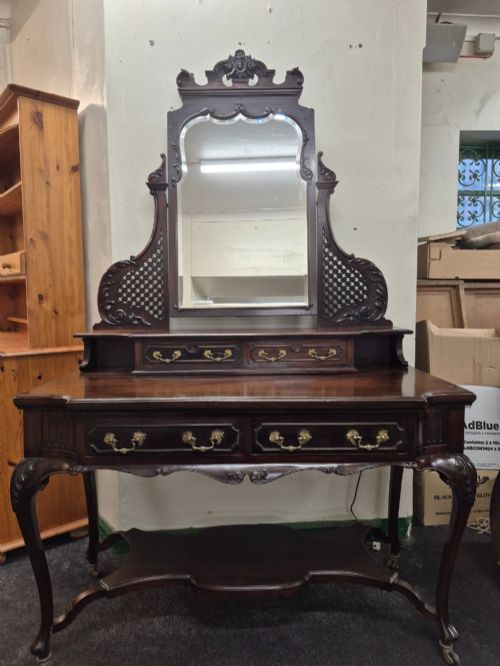
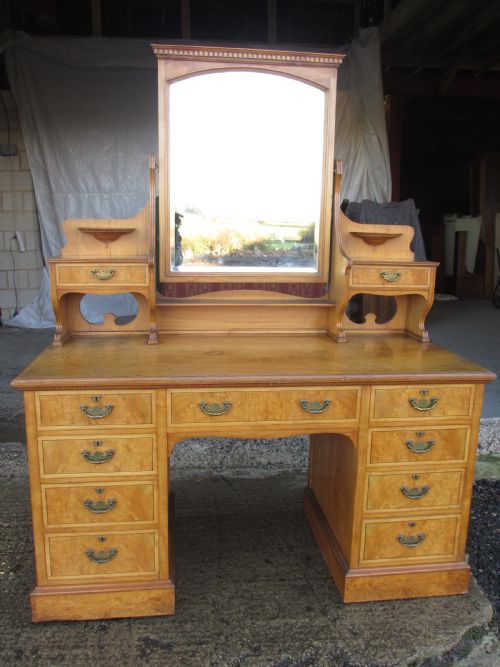
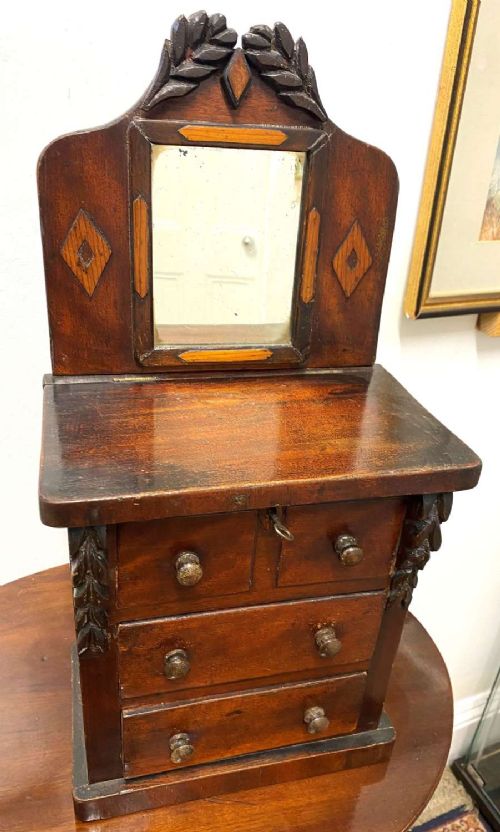
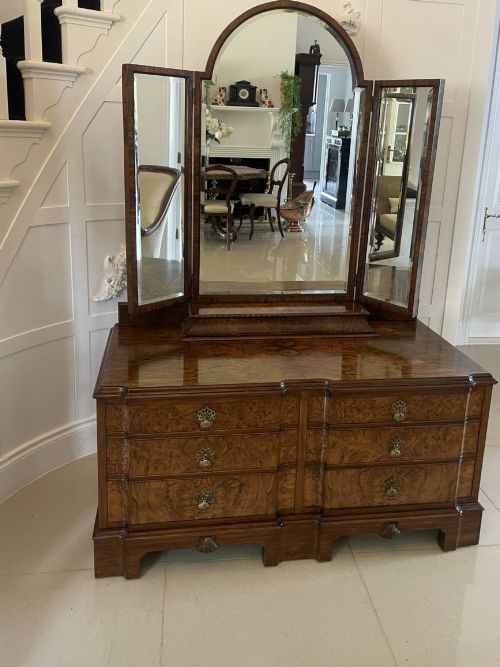
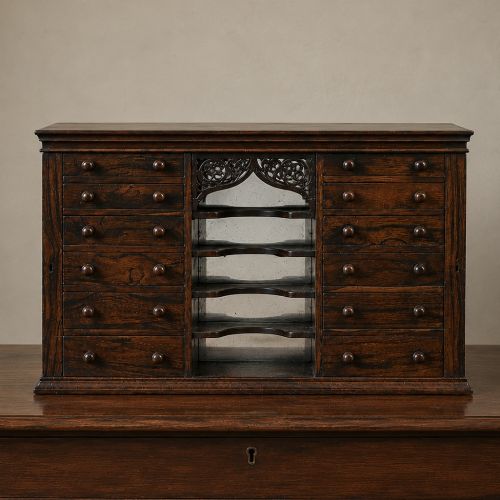


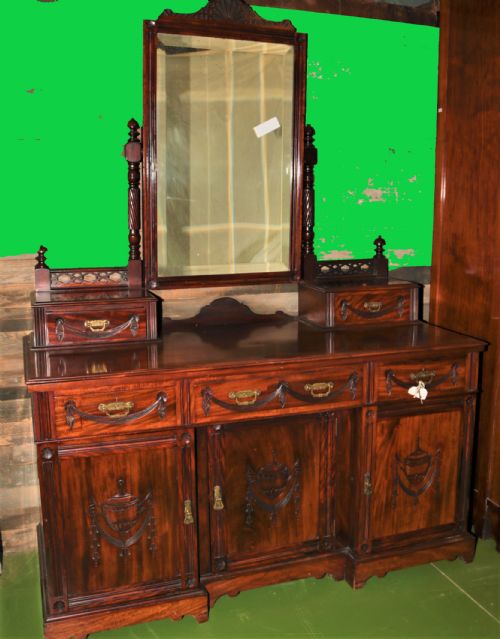


Carved Wood Mirror Chest
These carved wood mirror chest items bring practical elegance to a room, offering clever storage alongside functional glass surfaces.
Carved Wood Mirror Chest
A carved wood mirror chest combines timber cabinetry with integrated reflective glass, encompassing forms such as dressing chests, dressing tables, and mirrored cabinets. These pieces predominantly date from the Victorian and Edwardian eras, alongside examples from the Regency period, the eighteenth century, and the early twentieth century.
Buyers frequently encounter variations like mahogany dressing chests, burr walnut dressing tables, and oak washstands within this selection. Smaller items such as miniature furniture, collector cabinets, and music cabinets also appear among the listed object types.
Materials and construction methods
Cabinet makers utilised a range of substantial timbers including mahogany, oak, burr walnut, satin wood, maple, and birds eye maple to construct these frames. Wood inlay and marquetry techniques frequently decorate the surfaces, showing precise handcraftsmanship across the panels and drawer fronts.
Functional elements incorporated glass for the mirrors alongside brass hardware for handles and fittings. Marble surfaces also feature on specific washstand pieces, demonstrating the variety of durable materials employed by period artisans.
Carved Wood Mirror Chest Retail Price Guide 2026
Typical asking prices for carved wood mirror chest among the pieces listed under this phrase on Sellingantiques today, from the lower quarter to the upper quarter. They describe what is for sale here now, not the wider market.
Apprentice pieces allowed young woodworkers to demonstrate their mastery by building tiny, perfectly scaled cabinets.
Distinctions in craftsmanship and design
The choice of timber underpins the distinction between standard items and superior examples, particularly where figured veneers like burr walnut or birds eye maple are deployed. Finer pieces demonstrate intricate wood inlay, marquetry, and precise carving that elevate the aesthetic presence of the cabinetry.
Proportion and stylistic cohesion also define the upper tier of these items. Pieces that successfully integrate period revival motifs, such as Chippendale style details or Art Nouveau lines, showcase a higher degree of design ambition.
The Carved Wood Mirror Chest Glossary
- Burr walnut
- A highly prized timber harvested from the wart-like growths on walnut trees, yielding rich, swirling grain patterns across furniture panels.
- Marquetry
- The art of applying decorative pieces of veneer to a structure to form intricate ornamental designs, often utilising contrasting woods.
- Washstand
- A dedicated piece of bedroom furniture designed to hold a basin and pitcher, frequently fitted with marble tops and mirrored backs.
- Dressing chest
- A low chest of drawers equipped with an attached mirror, serving the combined purpose of clothes storage and personal grooming.
Carved Wood Mirror Chest: Frequently Asked Questions
Where should I place a carved wood mirror chest?
These items suit bedrooms, dressing rooms, and hallways where a reflective surface and storage are both useful. Placing them near natural light helps maximise the function of the mirror.
Ensure the floor is level so the timber frame and doors settle correctly without twisting over time.
How do I care for antique wood and mirror glass?
Dust the timber regularly with a soft, dry cloth and apply occasional appropriate wax to nourish the grain. Avoid using abrasive cleaners on the wood or harsh liquids near the antique mirror plate.
Keep the pieces away from direct heat sources and strong sunlight to prevent the timber from warping or fading.
What periods do these mirrored chests come from?
The available examples span several decades, with a strong representation from Victorian and Edwardian workshops. You will also find pieces originating from the Regency era and the eighteenth century.
Each period brings distinct stylistic traits, from heavy mahogany mouldings to lighter marquetry and Art Nouveau flourishes.
Are these chests suitable for daily use?
Solid construction in hardwoods like oak and mahogany makes many of these items robust enough for everyday storage and grooming routines. Drawers and doors operate smoothly when maintained properly.
Careful placement and gentle handling ensure the antique joinery and mirrors remain in good working order for years.