



Carved Wood Hallstand
A carved wood hallstand turns an entrance space into a display of character, offering practical storage for coats and hats while setting the tone for the entire house.
Carved Wood Hallstand
A carved wood hallstand serves as a functional piece of furniture designed for hallway placement, combining coat hooks, umbrella wells, and often a central mirror. The examples appearing here span the Victorian era, the Edwardian period, and the early twentieth century.
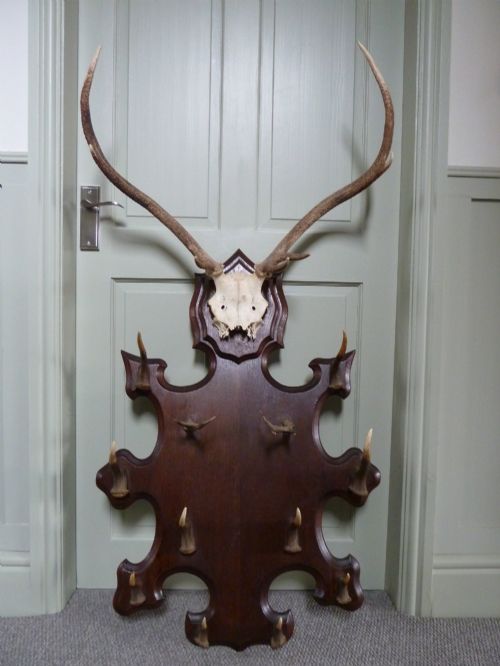
Buyers encounter distinct regional and stylistic interpretations within this category, ranging from the rustic imagery of Black Forest carving to the formal lines of Victorian Gothic Revival and Renaissance Revival pieces. Materials vary from dense oak and rich mahogany to mixed media featuring stag horn, bone, and glass.
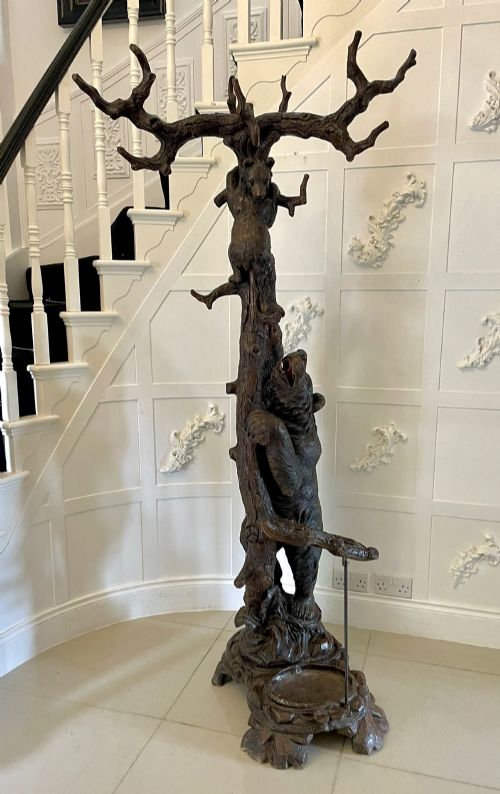
Forms extend from narrow configurations suited for tight corridors to substantial country house variants equipped with animal motifs like bears. Each iteration reflects the domestic habits of the nineteenth and early twentieth centuries, prioritising immediate utility upon entry.
Materials and construction methods
Carpenters utilised solid hardwoods including oak and mahogany to build the structural frameworks, ensuring stability to support heavy garments and wet umbrellas. Secondary elements incorporate brass for hanging hooks and integrated metal drip pans below the umbrella sections.
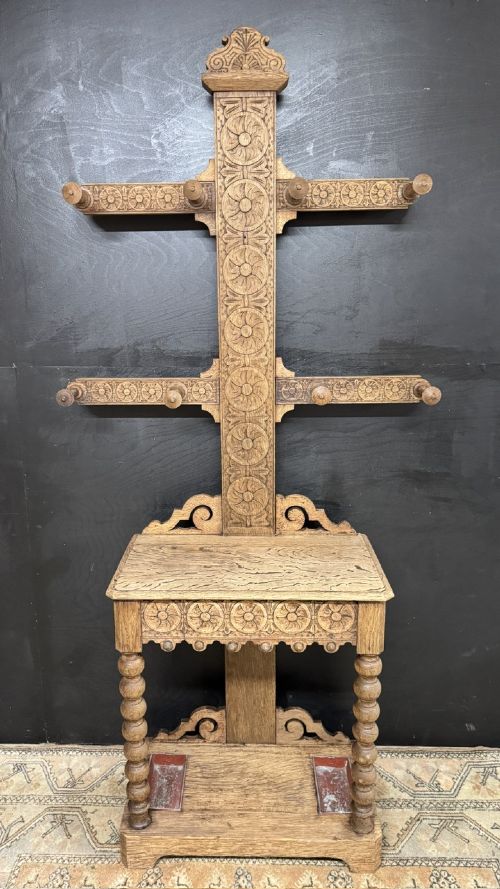
Decorative impact relies on hand-carved ornamentation, visible particularly in Black Forest bear motifs, Dutch or Flemish relief panels, and foliate scrolls. Glass forms the backing for central wall mirrors, whilst organic insertions like stag horn and bone provide contrasting surface textures.
Carved Wood Hallstand Retail Price Guide 2026
Typical asking prices for carved wood hallstand among the pieces listed under this phrase on Sellingantiques today, from the lower quarter to the upper quarter. They describe what is for sale here now, not the wider market.
The selection covers items from the 1850s through the Edwardian era, predominantly featuring oak and mahogany alongside Black Forest carvings.
Judging quality in carved wood hallstands
Depth and crispness of the hand-carving distinguish finer pieces from simpler commercial output, particularly in animal figures and architectural mouldings. The integration of high-grade materials such as heavy oak, cast brass hardware, and original bevelled mirror glass elevates a piece.
Structural integrity depends on the original joining methods and the retention of complete functional elements like drip trays and removable hooks. Consistency in period details, such as matching stag horn or cohesive Renaissance Revival styling, marks the more ambitious commissions.
The Carved Wood Hallstand Glossary
- Black Forest carving
- A style of wood carving originating in Brienz, Switzerland, famous for realistic depictions of bears and wildlife, commonly seen in nineteenth-century hall stands.
- Renaissance Revival
- A nineteenth-century architectural and decorative style drawing inspiration from fifteenth- and sixteenth-century Italian and French design, featuring bold mouldings and heavy relief work.
- Drip tray
- A metal receptacle placed at the base of a hall stand to catch water from wet umbrellas and walking sticks.
- Foliate
- Ornamentation shaped like leaves, flowers, or foliage, frequently carved into the wooden panels of Victorian furniture.
- Bevelled mirror
- A plate glass mirror with an angled or slanted edge perimeter, often found inset into the upper framework of hall furniture.
Carved Wood Hallstand: Frequently Asked Questions
What is a hall stand used for?
A hall stand provides an all-in-one storage solution for heavy outer garments, hats, and scarves immediately upon entering a home.
They also incorporate compartments or trays for walking sticks and umbrellas, keeping hallways tidy and organised.
How do I place a hall stand in a small hallway?
Narrow configurations and wall-mounted styles are specifically designed to fit compact corridors without obstructing foot traffic.
Measuring available floor space and checking the depth of the umbrella well ensures the piece sits comfortably against the wall.
How do I date a carved wood hall stand?
Dating relies on identifying period characteristics such as Victorian Gothic Revival details, Edwardian proportions, or nineteenth-century timber choices.
Examining secondary materials like brass hooks, mirror types, and carving depth also helps narrow down the decade of manufacture.
How do I care for antique hall furniture?
Maintain the wood surfaces by applying appropriate wax polish periodically to nourish the grain and prevent drying out.
Keep metal components like brass hooks and drip pans clean and dry to avoid tarnishing or moisture damage.