



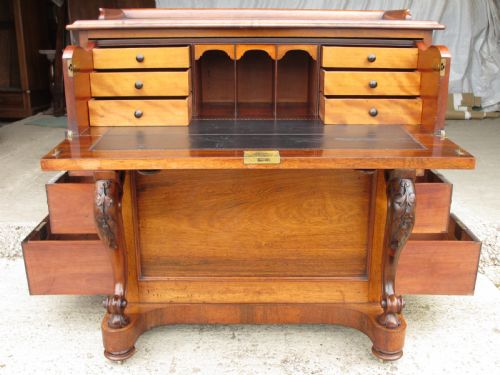


Carved Wood Davenport
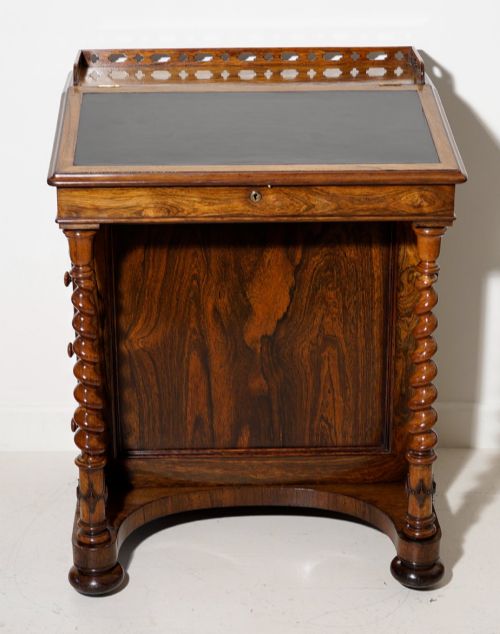
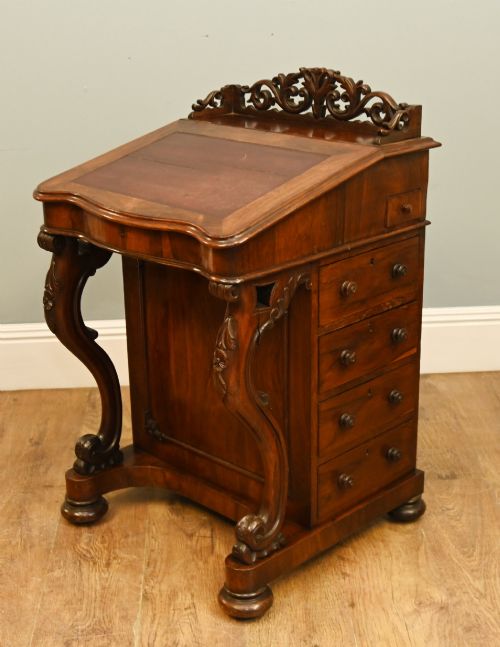
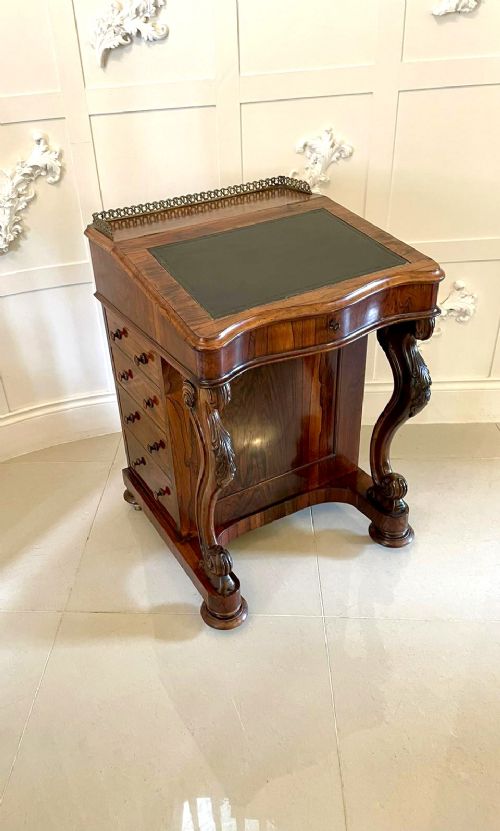
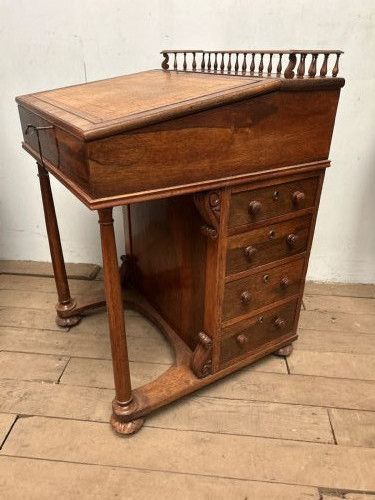
A carved wood davenport is a compact, sloping writing desk with concealed drawers that brings serious nineteenth-century utility and presence into a room.
Carved Wood Davenport
When you search for a carved wood davenport, you encounter nineteenth-century writing desks defined by a sloping top and pedestal drawer configuration. These compact pieces were originally designed for maritime use or small parlours where space was at a premium.
The versions you are most likely to meet on this page span the Victorian and Regency periods, rendered in rich timbers with hinged writing slopes. Many incorporate sliding tops, pop-up compartments, and side drawers accessed while seated.
Origin variations range from standard British Victorian cabinetmaking to Anglo-Indian interpretations and Italian Renaissance Revival forms. These regional expressions show distinct decorative carvings that separate them from standard domestic desks.
How they were made
Cabinetmakers constructed these desks using dense foundational timbers like mahogany, walnut, and rosewood, often choosing burr veneers for the primary writing surfaces and drawer fronts. Boxwood inlay frequently provides linear contrast along the borders and interior compartments.
Working mechanisms involve brass hardware, such as pivoting side drawer locks and caster wheels, alongside leather writing inserts tooled with gold leaf. Pop-up stationery boxes utilise internal weighted or spring-assisted wooden linkages hidden within the superstructure.
Carved Wood Davenport Retail Price Guide 2026
Typical asking prices for carved wood davenport among the pieces listed under this phrase on Sellingantiques today, from the lower quarter to the upper quarter. They describe what is for sale here now, not the wider market.
Some nineteenth-century davenports hide miniature inkwells that vanish entirely into the desk crown like secret compartments on a miniature ship.
What varies in quality
The calibre of a davenport rests primarily in the selection of its timber figures, particularly the grain matching across burr walnut and rosewood surfaces. Superior examples demonstrate continuous grain patterns that flow seamlessly across moving panels and drawer banks.
Carpentry execution defines the durability of the pedestal structure, visible in the precision of dovetail joints on internal drawers and the smooth action of slide-top mechanisms. Relief carving depth and crispness separate standard workshop production from exceptional exhibition pieces.
Gillows Designed·James Winter And Son
The Carved Wood Davenport Glossary
- Davenport
- A compact writing desk featuring a sloping desktop above a pedestal of side drawers, originating in the early nineteenth century. The form typically includes a stationery box mounted on the upper rear section.
- Burr walnut
- Timber taken from the wart-like growth on a walnut tree, yielding highly ornamental swirling grain patterns. Cabinetmakers sliced this wood into thin veneers for decorative desk surfaces.
- Pop-up davenport
- A desk variant containing a concealed superstructure that rises from the rear of the cabinet when released. This mechanism houses pigeonholes and small inkwell drawers.
- Palisander
- A dense tropical hardwood akin to rosewood, prized for its dark purple-brown hues and oily lustre. It appears on prominent nineteenth-century desks.
- Secretaire
- A piece of furniture containing a built-in writing drawer or fold-down writing flap. It conceals pigeonholes and small compartments for correspondence.
Carved Wood Davenport: Frequently Asked Questions
What is a davenport desk used for?
These desks served as compact writing stations where individuals could manage correspondence without occupying an entire room. The sloping top provided a comfortable writing angle while stationary compartments kept ink and paper close at hand.
Today, they function effectively as standalone writing spots in studies or living areas. Their enclosed storage keeps modern writing supplies and small laptops neatly out of sight.
How do I date a davenport?
Dating relies on stylistic markers, timber choices, and construction methods associated with specific nineteenth-century design periods. Regency examples often feature sleeker lines and rosewood surfaces, while heavier Victorian iterations showcase elaborate burr veneers and deeper mouldings.
Examining secondary woods inside the drawer linings also helps establish age. Oak and mahogany secondary framing typically points to earlier British manufacture before softer woods became common.
Are davenport drawers locked from the side?
Many traditional davenports feature a clever locking mechanism where the side access door secures all the internal drawers simultaneously. When the top lid or side door is closed and locked with a key, the individual drawers cannot be pulled out.
This system kept private papers secure in busy Victorian households. Collectors should check whether the original brass lock remains functional within the cabinet frame.
How do I care for rosewood and walnut surfaces?
Historic timber finishes respond best to gentle cleaning with a soft, dry cloth to remove dust. Periodic application of quality beeswax feeds the dry wood and enhances the natural grain without building up synthetic residues.
Keep these desks away from direct sunlight and heat sources to prevent the burr veneers from drying out and lifting. Stable indoor humidity protects both the timber substrate and the delicate boxwood inlay.