



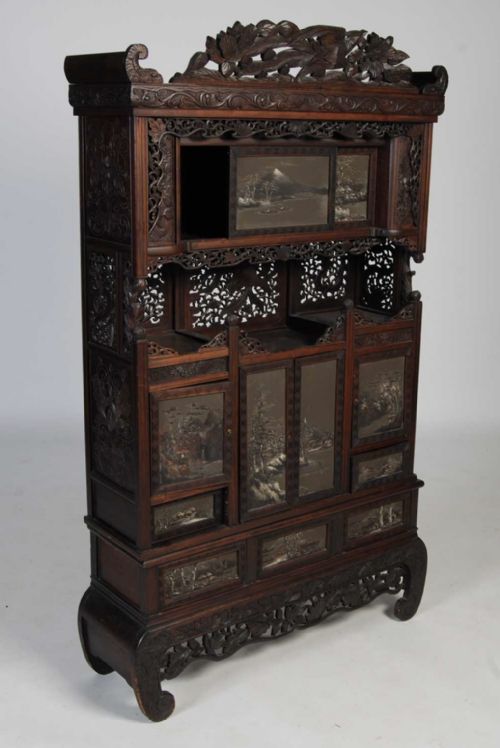
Carved Wood Curio
These carved wood curio pieces bring historic display cabinets and stands together to house your collections.
Carved Wood Curio
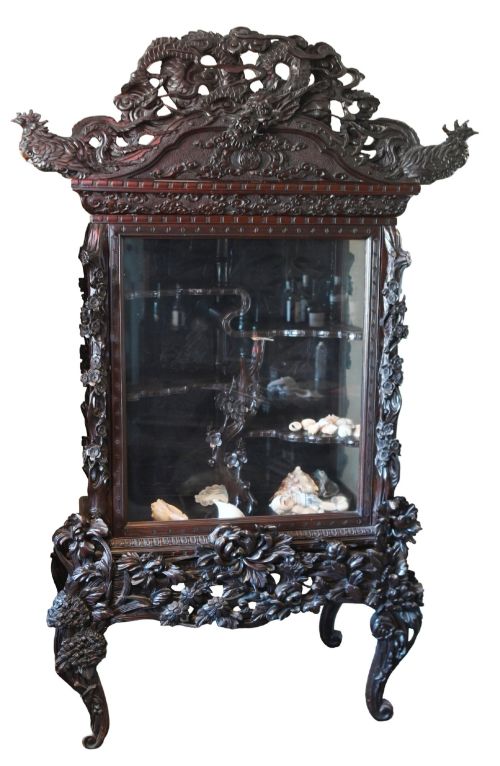
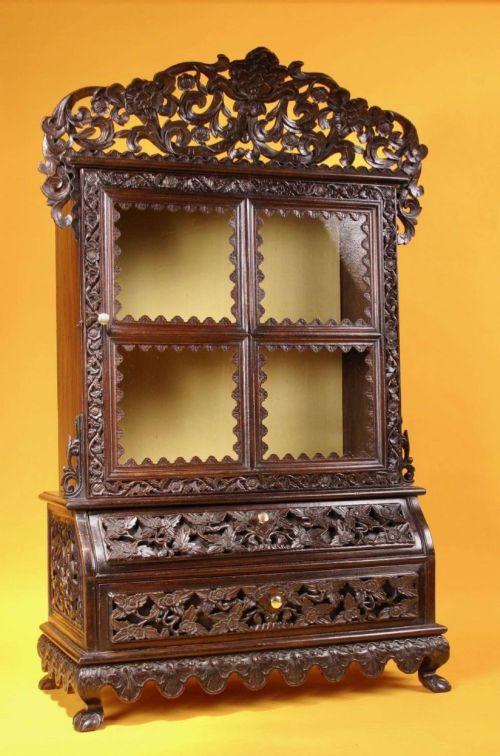
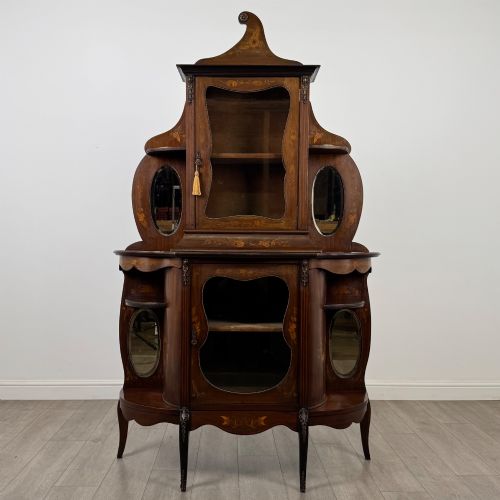
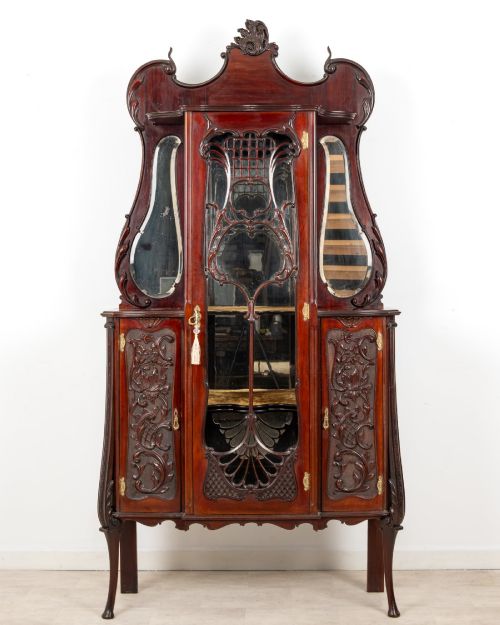
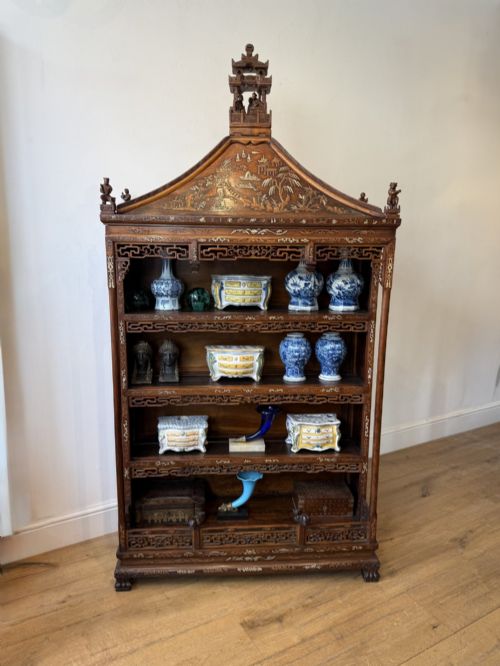
A carved wood curio encompasses wooden display cabinets, wall cabinets, and display stands designed to showcase small possessions. You encounter various regional interpretations, from British Victorian mahogany cabinets to Chinese hardwood display cabinets.
Periods span across the nineteenth and early twentieth centuries, incorporating styles such as Chippendale Revival, Edwardian, and French Chateau designs. These items serve a practical function for domestic display while reflecting historical cabinet-making traditions.
Materials and construction methods
Makers utilised solid mahogany and carved hardwoods as structural foundations, frequently incorporating glass panels for visibility. Joinery methods included traditional framing to support glazed sides and doors securely.
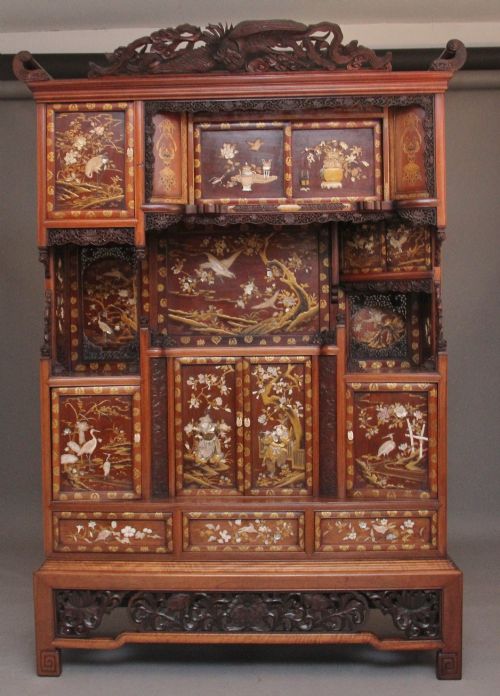
Surface ornamentation relies heavily on hand carving, lacquer work, and inlays, particularly visible on pieces influenced by Japanese Meiji and Chinese Qing aesthetics. Giltwood and painted finishes appear on specific continental and French style examples.
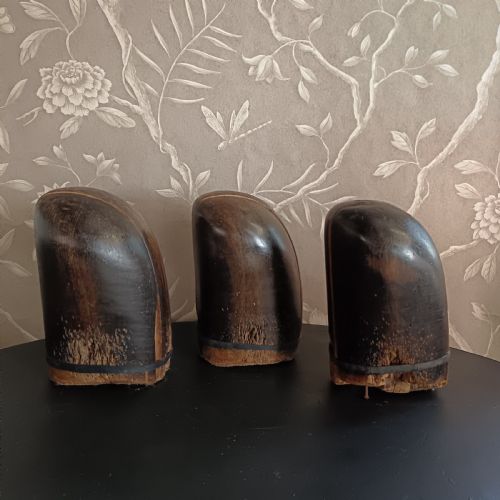
Military bearskin caps once relied upon utilitarian millinery hat blocks now repurposed as odd decorative wooden sculptures.
Factors determining quality
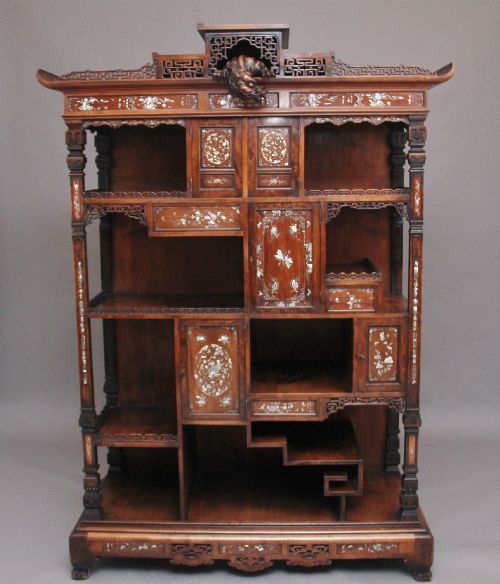
Depth and precision of the wood carving distinguish standard production from superior examples, especially on Chinese hardwood and Japanese shodona pieces. Crisp relief work requires skilled hand labour rather than mechanical shaping.
Quality also depends on the integration of materials such as clear glass panes, sturdy brass hardware, and sound internal shelving. Timber selection plays a part, with dense mahogany and seasoned hardwoods holding structural integrity over time.
Waring and Gillow
The Carved Wood Curio Glossary
- Shodona
- A Japanese ornamental cabinet featuring asymmetrical shelving and compartments. These pieces often incorporate detailed carving and are raised on stands.
- Vitrine
- A glass-sided display cabinet designed for objects of virtue. The term originates from the French word for glass.
- Hongmu
- A category of dense Chinese hardwood used for fine furniture and display stands. It translates literally to red wood.
- Bijouterie
- A small display cabinet or table specifically intended for jewellery and trinkets. Glazed tops and sides allow optimal viewing from multiple angles.
Carved Wood Curio: Frequently Asked Questions
What is a shodona cabinet?
A shodona is a traditional Japanese display cabinet featuring staggered shelves and compartments for ornaments. They emerged as prominent export pieces during the late nineteenth century.
These cabinets display intricate woodwork and often sit upon matching stands. They provide unique compartments compared to standard western furniture.
How do I clean a carved wood curio?
Dust surfaces regularly with a soft, dry cloth to prevent dirt accumulation within carved recesses. Avoid commercial silicone sprays which can damage older timber finishes.
Apply traditional beeswax sparingly to nourish hardwood and mahogany surfaces. Ensure glass panels are cleaned with a mild solution that does not splash onto the surrounding wood.
Where should I place a wall cabinet?
Wall cabinets require secure fixings into structural wall studs due to the combined weight of timber and glass. Position them away from direct sunlight to protect internal contents and wood colour.
Consider eye-level placement to properly view the displayed items inside. Adequate clearance prevents accidental knocks in busy household walkways.
What fits inside a bijouterie cabinet?
Bijouterie cabinets suit small collectables such as medals, pocket watches, and ceramics. The glass-topped design permits overhead lighting and viewing of flat items.
Fabric-lined bases frequently cushion delicate items against the wooden structure. Avoid overloading shallow shelves to maintain stability.