






Carved Wood Castors Armchair
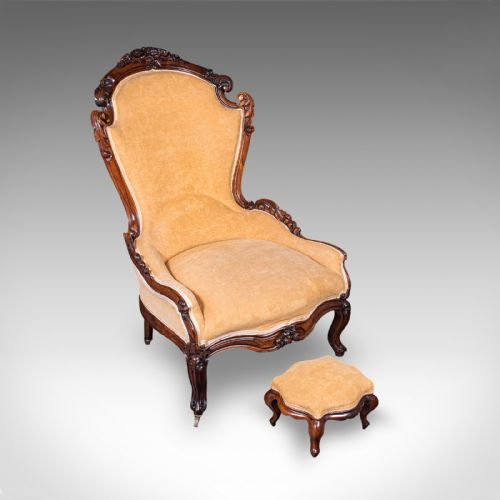
These carved wood castors armchair selections offer substantial seating rooted in the nineteenth century, built for libraries and parlours.
Carved Wood Castors Armchair
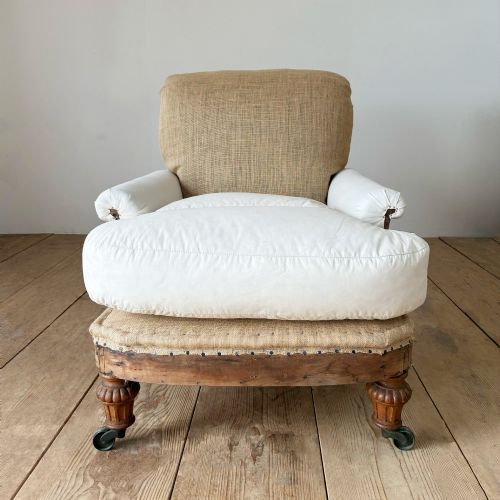
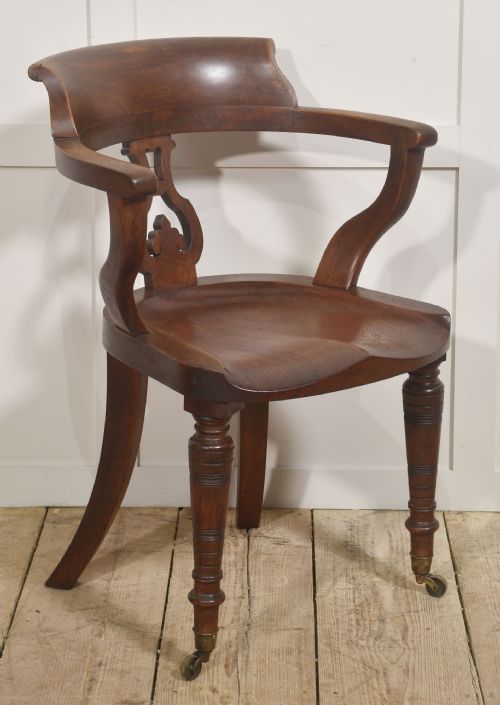
A carved wood castors armchair brings together sturdy timber frames and small wheel attachments for easy movement across nineteenth century floors. The listings present various interpretations ranging from Regency library chairs to heavy Victorian gentleman's seats and desk chairs.
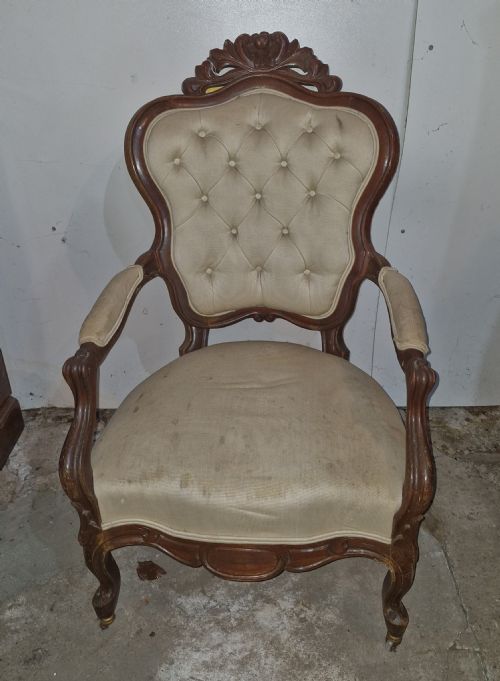
Buyers will encounter multiple styles spanning the Regency, William IV, and Victorian periods, alongside specific forms such as bergere chairs and salon seating. Mahogany and rosewood dominate the material palette, often shaped with open arms or high backs.
The exact iteration most commonly met combines a robust timber frame with upholstered elements like velvet, calico, or needlework covers. These pieces served as functional furniture in studies and drawing rooms rather than purely decorative items.
Materials and construction methods
Makers utilised dense native and imported timbers, notably mahogany and rosewood, carved into ornate shapes for the structural frames. Brass components appear primarily in the castor fittings attached to the feet for mobility.
Upholstery techniques involved traditional stuffing covered in fabrics such as velvet, hessian, and calico, occasionally secured over intricate needlework. Frames relied on robust joinery to support the weight of heavy cushioning and daily use.
Carved Wood Castors Armchair Retail Price Guide 2026
Typical asking prices for carved wood castors armchair among the pieces listed under this phrase on Sellingantiques today, from the lower quarter to the upper quarter. They describe what is for sale here now, not the wider market.
Some nineteenth-century sitters enjoyed rolling their chairs away from the hearth with surprising speed thanks to well-oiled brass wheels.
Judging build and execution
The refinement of the timber carving distinguishes simpler utility seating from superior parlour and library armchairs. Sharpness in the woodwork and the integrity of the original frame construction set the baseline for a piece.
The integration of brass castors and the choice of primary timber, such as figured rosewood versus standard hardwoods, indicate the original workshop's ambition. Finer examples retain their balanced proportions and uncompromised structural joints.
Gillows
The Carved Wood Castors Armchair Glossary
- Castor
- A small wheel mounted on a swivel attached to the legs of furniture for ease of movement. These metal fittings typically incorporate brass elements.
- Bergere
- An enclosed upholstered armchair with wooden framing exposed around the sides and back. This French-influenced form appears frequently in Regency rooms.
- Library chair
- A heavy, substantial armchair designed for reading rooms, often featuring upholstered armrests and sturdy timber construction. They prioritise comfort during extended periods of study.
- Rococo Revival
- A nineteenth-century stylistic movement marked by exuberant, organic curves and naturalistic floral carvings. This aesthetic heavily influenced Victorian seating design.
Carved Wood Castors Armchair: Frequently Asked Questions
What periods do these armchairs cover?
The pieces span the nineteenth century, encompassing Regency, William IV, and various Victorian eras. Makers produced these chairs to suit shifting domestic fashions from the early eighteen hundreds onward.
Each period introduced distinct stylistic flourishes, moving from clean Regency lines to ornate Victorian revival curves.
How were library armchairs used?
Library armchairs provided heavy, supportive seating for reading and writing in private studies and large domestic libraries. Their robust frames and upholstered arms catered to prolonged daily use.
They functioned as primary desk or reading seats, often positioned near bookshelves and writing tables.
How do I identify a Regency armchair?
Regency seating often displays classical restraint, utilising dark timbers like mahogany or rosewood alongside specific details such as lyre-shaped arm supports. These pieces frequently incorporate brass castors for mobility.
Proportions tend to reflect classical architectural principles rather than the heavy elaboration of later Victorian work.
Where should I place an antique armchair?
These armchairs suit studies, drawing rooms, and hallways where their timber frames and upholstery can be appreciated without overcrowding. They function effectively as reading seats or standalone accent furniture.
Ensure placement avoids direct sunlight to protect sensitive nineteenth-century fabrics and polished wood surfaces.