



Carved Wood Book Rack
A carved wood book rack keeps volumes tidy on a desk, and you meet these portable or expanding designs across Victorian and Edwardian centuries.
Carved Wood Book Rack
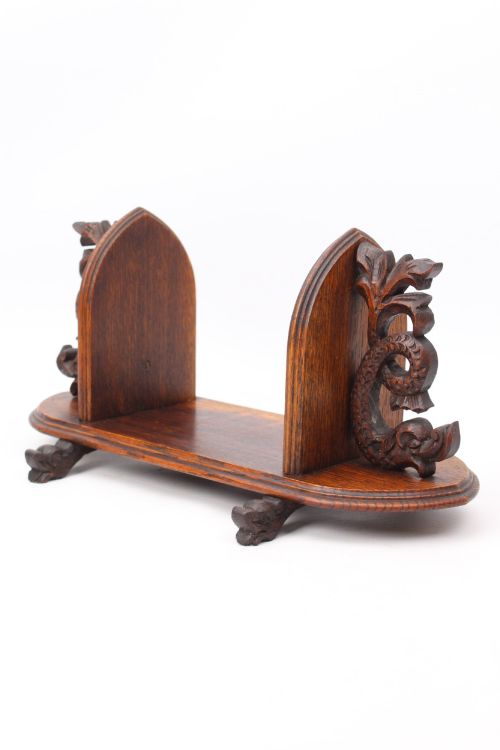
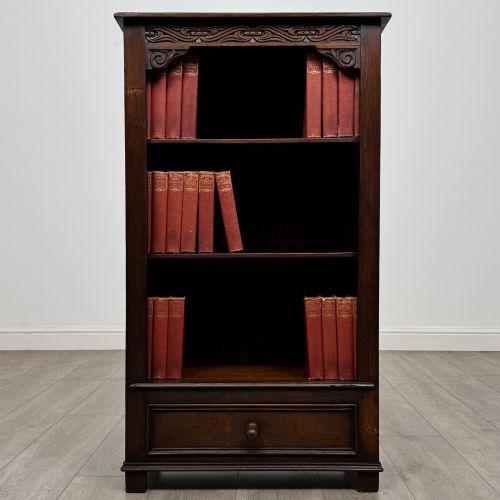
A carved wood book rack brings order to a desktop or side table, serving as a practical resting place for everyday reading. When searching for a carved wood book rack, you encounter extending book slides, stationary stands, and folding carriers designed for easy tabletop placement.
The pieces appearing here span the nineteenth and early twentieth centuries, drawing on Victorian and Edwardian periods as well as Arts and Crafts, Gothic Revival, and Anglo-Indian styles. Many examples rely on extending mechanisms, allowing the wooden ends to slide apart and accommodate varying numbers of volumes.
Assessing quality and execution
Superior examples show crisp, deep hand-carving that retains sharp definition along the edges and corners of the timber. Lesser pieces exhibit softer, shallow incisions with mechanical regularity.
The smoothness of the extending action in sliding racks distinguishes finer construction from rigid or binding mechanisms. Quality is further evident in the selection of figured wood grains and the careful integration of brass or inlaid elements.
Carved Wood Book Rack Retail Price Guide 2026
Typical asking prices for carved wood book rack among the pieces listed under this phrase on Sellingantiques today, from the lower quarter to the upper quarter. They describe what is for sale here now, not the wider market.
Some Victorian slides incorporate hidden novelty rests designed to keep your place while you fetch tea.
The Carved Wood Book Rack Glossary
- Book slide
- An adjustable desktop rack with two upright ends that move along a base to hold volumes upright. These often feature accordion actions or simple sliding channels.
- Extending mechanism
- The internal or external linkage allowing a book rack to expand in length. It ensures volumes remain supported as the collection grows or shrinks.
- Gothic Revival
- A nineteenth-century design style emulating medieval architecture. Pieces in this manner display pointed arches, trefoils, and heavy structural oak.
- Arts and Crafts
- A movement prioritising visible handcraftsmanship and simple construction. Items from this tradition emphasise natural wood textures over heavy ornamentation.
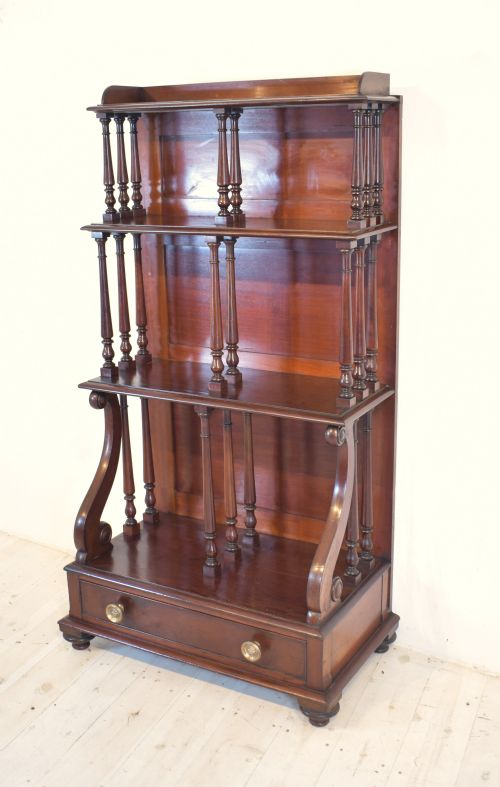
- Whatnot
- A multi-tiered set of open shelves used for displaying books and small ornaments. These pieces typically feature slender upright supports and graduated tiers.
Carved Wood Book Rack: Frequently Asked Questions
What is an extending book slide?
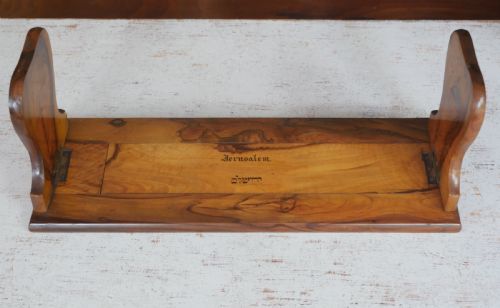
An extending book slide is a desktop rack designed to hold a row of volumes securely between two upright ends. The base expands or contracts to fit the exact number of books placed within it.
These pieces were common on Victorian and Edwardian desks where space was at a premium. They allowed readers to keep current reference materials close at hand without requiring a full bookcase.
How do I date a wooden book rack?
Dating relies on observing the timber species, construction methods, and stylistic details present in the piece. Victorian examples often incorporate Gothic Revival motifs or heavy carved oak, while Edwardian versions lean towards simpler forms.
Mechanisms also offer clues, as nineteenth-century slides frequently utilise brass hinges and extending scissor actions. The presence of specific regional styles, such as Anglo-Indian teak carvings, helps narrow down the origin.
Where should I place a book stand?
A book stand suits tabletops, desks, side tables, and open shelving units where quick access to reading material is desired. Portable bookshelves and folio stands fit neatly into studies or living rooms.
Keep wooden items away from direct heat sources and strong sunlight to protect the finish. Regular dusting preserves the carved details and the natural lustre of the timber.
What woods were used for these racks?
Makers relied on robust timbers such as oak, mahogany, walnut, and teak to withstand the daily weight of books. Olive wood and maple also appear, particularly in decorative or regional pieces.
Inlays of mother of pearl and contrasting woods frequently enhanced the primary timber. Metal components like brass were chosen for strength in extending mechanisms.