





Carved Wood Bed Posts
These carved wood bed posts are architectural remnants and structural timber components offering grand scale and rich surface detail for imaginative interior schemes.
Carved Wood Bed Posts
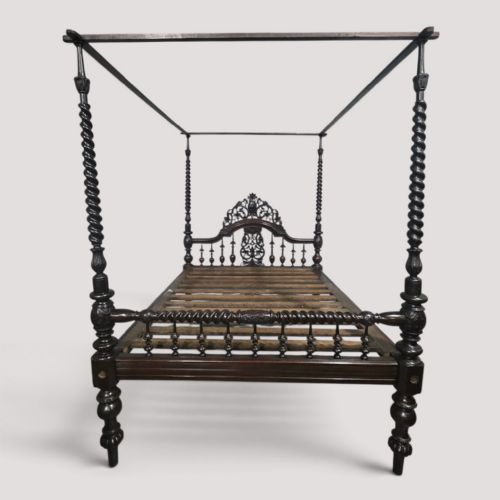
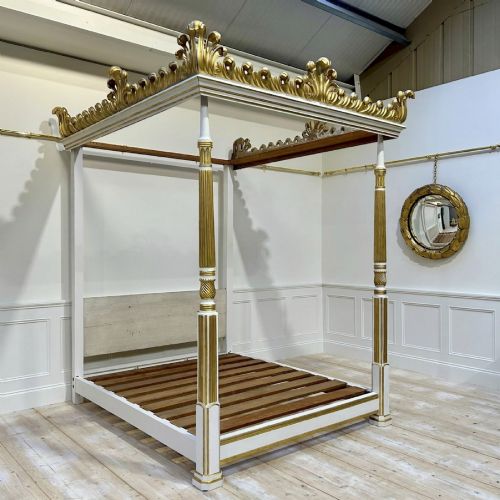
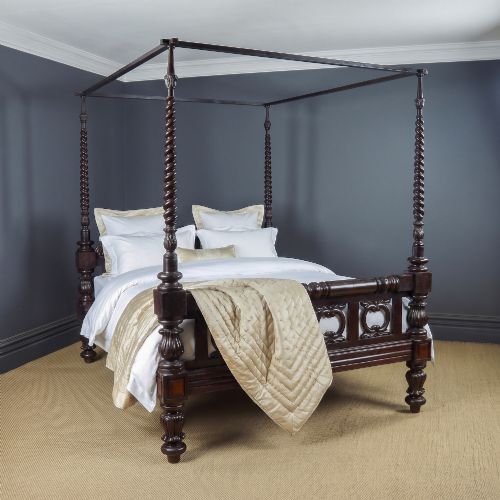
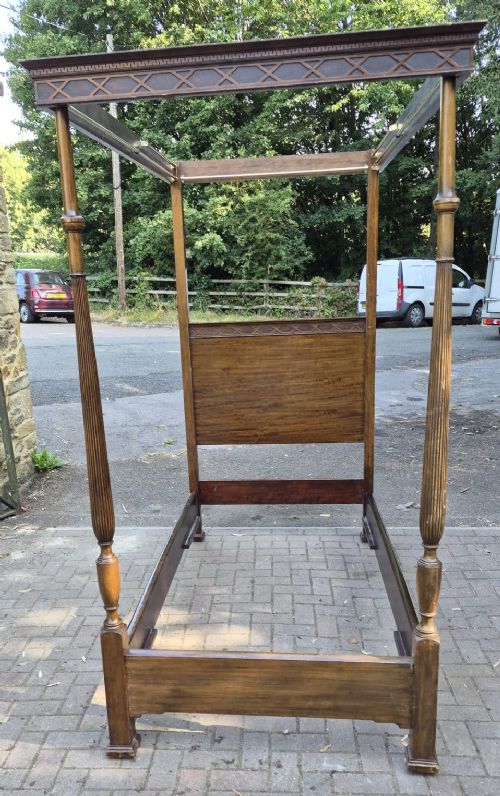
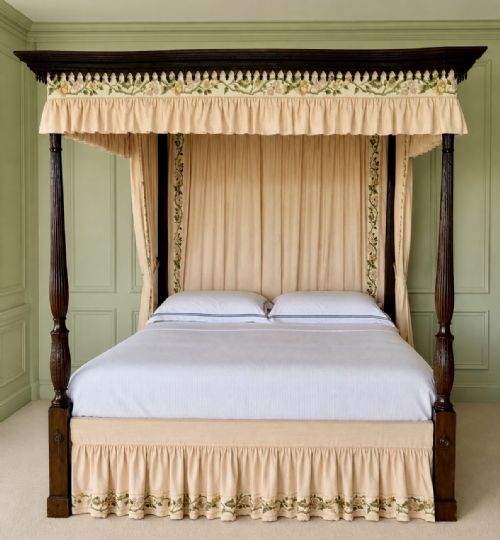
When you search for carved wood bed posts, you encounter substantial vertical supports and column sections removed from historical four-poster and tester beds. The selection draws primarily from nineteenth-century pieces, spanning Regency, Victorian, and Edwardian interpretations of earlier Georgian and continental styles.
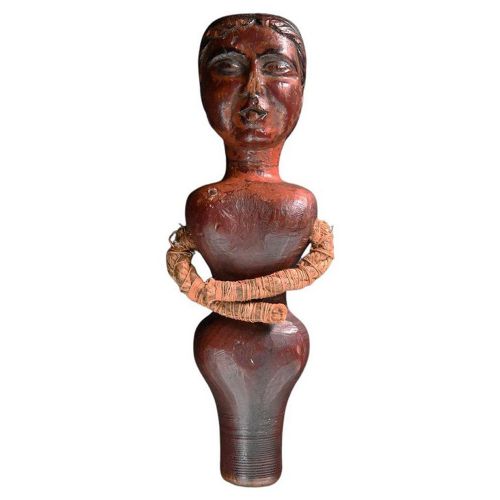
Many of these elements arrive as matched pairs salvaged from dismantled full-size bedsteads, while others appear converted into independent column stands or architectural ornaments. The forms range from heavy classical mahogany orders to more ornate regional interpretations including Anglo-Indian and Portuguese Baroque Revival designs.
Buyers select these items to anchor interior architecture, function as decorative pedestals, or incorporate into bespoke furniture projects. Their presence introduces immediate verticality and historical weight to domestic spaces through time-tested timber construction.
How they were made
The construction relies on dense timbers including mahogany, walnut, teak, oak, and rosewood, selected for their structural stability and capacity to hold crisp detail. Craftsmen turned these hardwoods on large lathes before executing intricate hand-carvings such as reeding, fluting, spiral twists, and acanthus leaf motifs.
Surfaces received various treatments ranging from polished French polish on rich mahogany grains to painted, gilded, or folk-art finishes depending on the regional origin and period taste. Joinery elements at the top and base often retain original tenons or iron fixings used to secure the heavy tester frames of the parent beds.
Carved Wood Bed Posts Retail Price Guide 2026
Typical asking prices for carved wood bed posts among the pieces listed under this phrase on Sellingantiques today, from the lower quarter to the upper quarter. They describe what is for sale here now, not the wider market.
Current listings demonstrate timber varieties including mahogany, walnut, teak, oak, and rosewood across periods from the eighteenth century to the Edwardian era.
What varies in quality
Quality in carved wood bed posts depends on the depth and sharpness of the hand-carving relative to the density of the chosen timber. Finer examples display undercut foliage and clean, uninterrupted turning lines that reflect confident execution by skilled cabinetmakers rather than mechanical production.
The integrity of the original wood surface, whether through deep patination on unblemished mahogany or the survival of early painted and gilded decoration, distinguishes superior decorative elements from later or heavily stripped alternatives.
Howard & Sons
The Carved Wood Bed Posts Glossary
- Tester
- The wooden canopy framework suspended above a four-poster bed, supported directly by the bed posts.
- Reeding
- A decorative series of parallel convex mouldings carved directly into the shaft of a column or post.
- Acanthus
- A classical carved leaf ornamentation derived from Mediterranean flora, frequently used to decorate the capitals or bases of heavy wooden posts.
- Turned
- Shaped on a rotating lathe by cutting away wood to form cylindrical, baluster, or spiral profiles.
- Pedestal
- A base or upright support structure, often created when taller bed posts are shortened for display use.
Carved Wood Bed Posts: Frequently Asked Questions
How were carved wood bed posts originally used?
These heavy vertical timbers formed the structural corners of grand four-poster and tester beds, supporting overhead wooden canopies and heavy fabric hangings.
In domestic interiors, they provided both essential load-bearing support for large sleeping platforms and a prominent surface for displaying fine cabinetmaking skills.
What woods were commonly used for these posts?
Cabinetmakers primarily utilised dense hardwoods such as mahogany, walnut, oak, and rosewood because they resisted splitting under heavy structural loads.
These timbers accepted deep hand-carving and took rich finishes like French polish, developing a dark patina over decades of handling.
How do I distinguish Regency posts from Victorian ones?
Regency era posts often display clean classical influences with precise reeding, spiral twists, and restrained brass or mahogany ornament reflecting architectural trends of the early nineteenth century.
Victorian and later revival examples tend toward heavier proportions, deeper relief carvings, and denser groupings of botanical motifs such as acanthus leaves.