




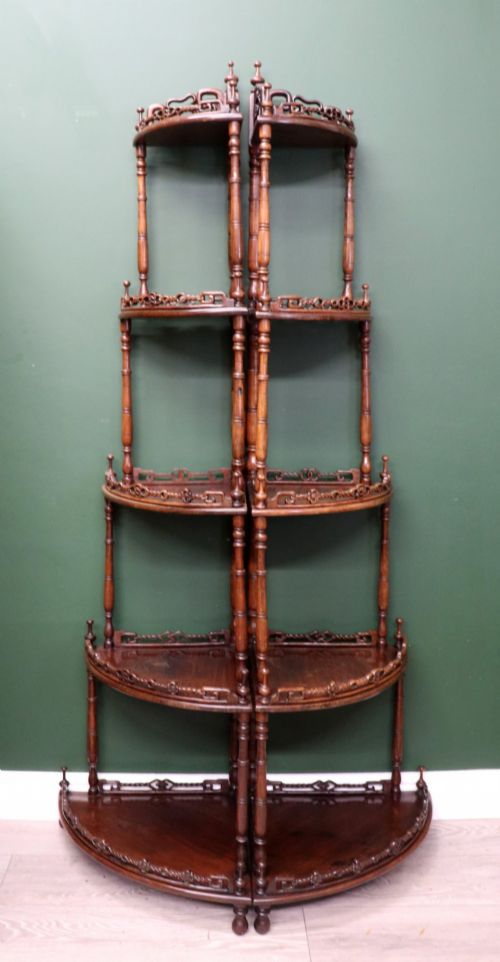
Carved Walnut Tier Stand
A carved walnut tier stand brings architectural display space to a room, using stacked tiers to hold books, ceramics and ornaments.
Carved Walnut Tier Stand
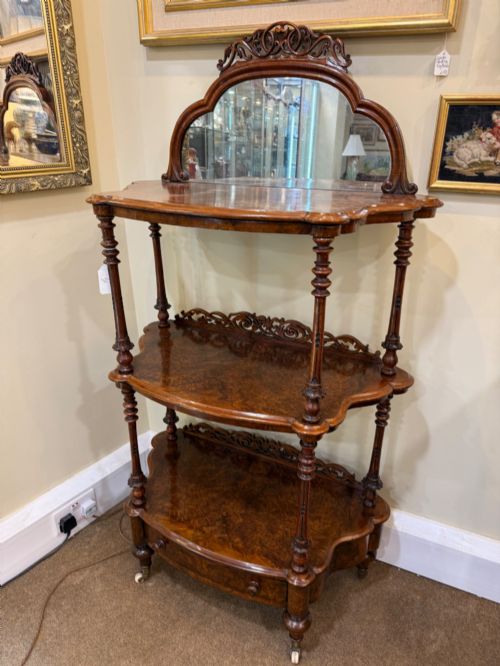
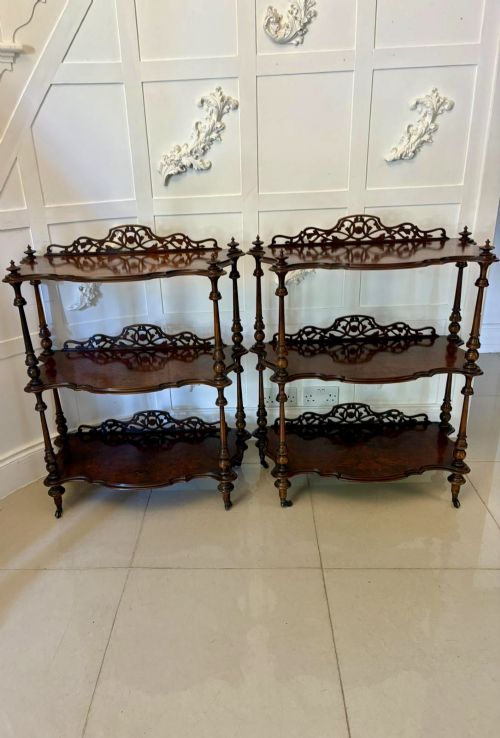
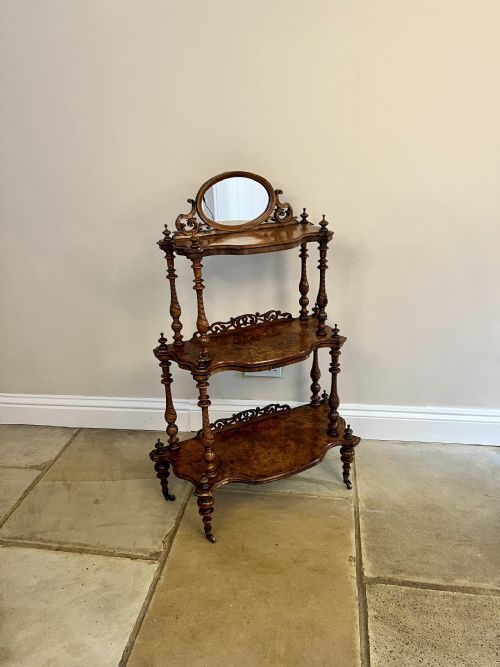
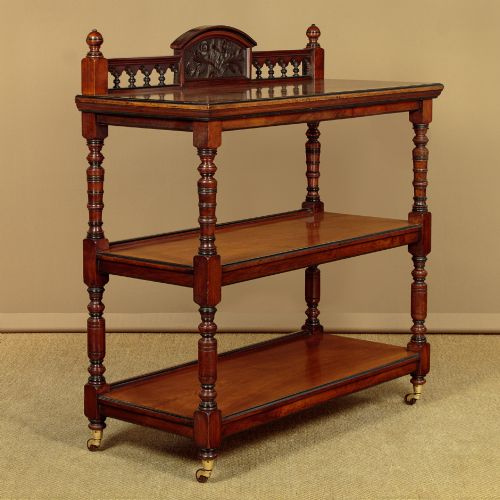
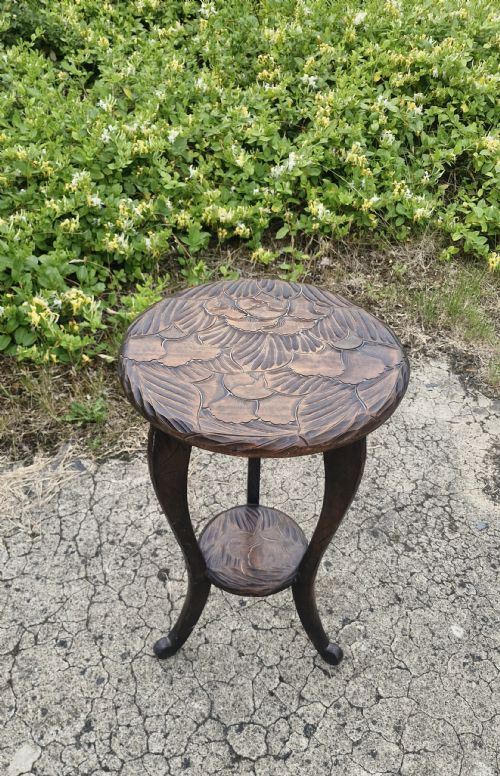
When you search for a carved walnut tier stand, you encounter multi-tiered display furniture designed primarily during the Victorian and Edwardian eras. These pieces take forms such as whatnots, etageres, corner shelves and occasional tables, serving practical display functions in period interiors.
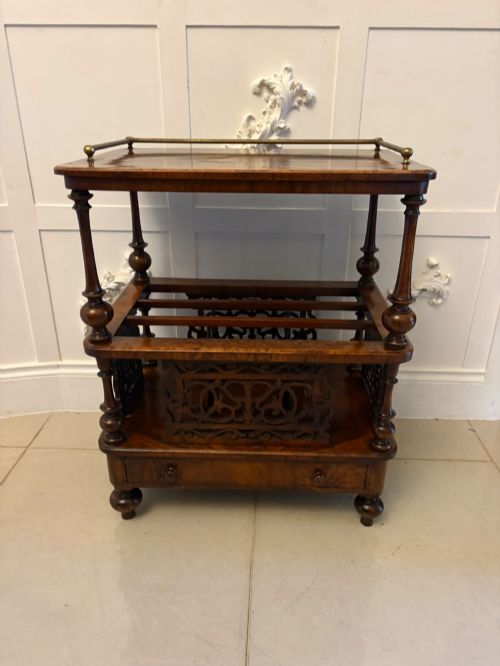
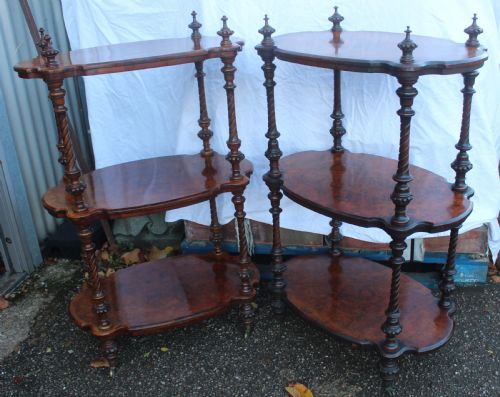
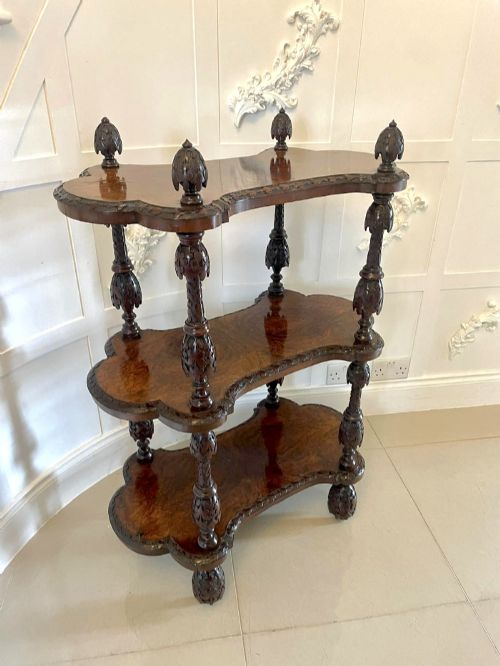
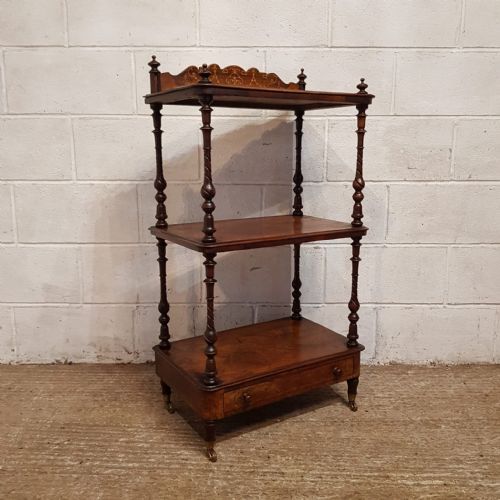
The version you are most likely to meet on this page is the Victorian burr walnut whatnot, often featuring three shaped tiers supported by turned columns. Examples range from serpentine corner units to freestanding multi-tier display stands incorporating marquetry inlay.
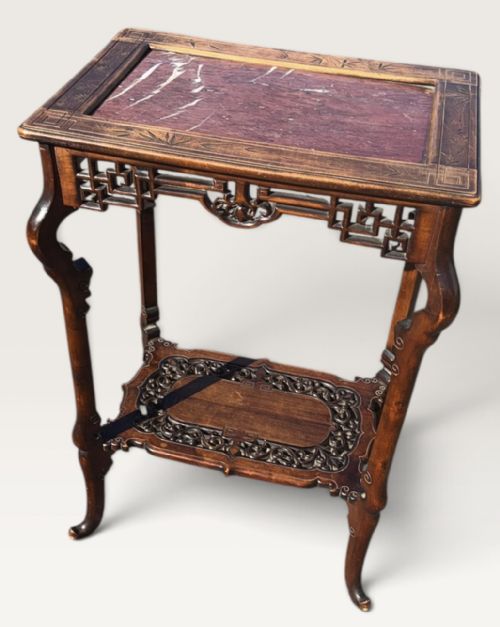
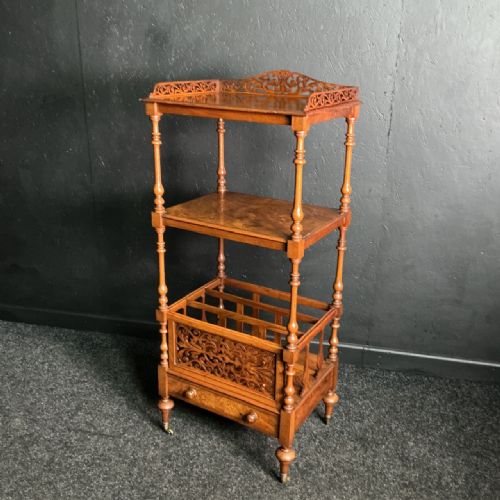
Makers and workshops of the nineteenth and early twentieth centuries produced these stands in various configurations, including side tables, music cabinets and demi-lune display consoles. Walnut remains the defining timber across these diverse forms, frequently enriched with burr figuring.
What varies in quality
Quality reveals itself in the selection of burr walnut veneer and the precision of the marquetry inlay across the tiers. Superior examples demonstrate crisp carving to the galleries and substantial turned supports rather than mechanical mass-produced profiling.
Exhibition pieces and items attributed to notable workshops display refined proportions, superior timber figuring and intricate detailing. Lesser examples rely on plain walnut veneers with simpler turned uprights and minimal ornamentation.
Carved Walnut Tier Stand Retail Price Guide 2026
Typical asking prices for carved walnut tier stand among the pieces listed under this phrase on Sellingantiques today, from the lower quarter to the upper quarter. They describe what is for sale here now, not the wider market.
Current listings demonstrate materials spanning walnut, burr walnut, mahogany, oak, brass, ceramic, glass and marquetry inlay.
The Carved Walnut Tier Stand Glossary
- Whatnot
- An open set of multi-tiered shelves designed for displaying ornaments, books and decorative objects. These pieces emerged in the Victorian period in various freestanding and corner formats.
- Etagere
- A piece of furniture consisting of a series of open shelves for holding small objects or ornaments. French and English cabinet makers produced them in walnut and other fine timbers.
- Burr Walnut
- Timber taken from a growth deformation on a walnut tree, yielding highly figured grain patterns. Makers prized this material for veneering prominent surfaces on top-tier furniture.
- Marquetry Inlay
- The art of applying pieces of veneer to a structure to form decorative patterns and pictures. Craftsmen utilised contrasting woods to create detailed motifs on tabletops and shelves.
- Canterbury
- A low stand featuring partitions for holding sheet music, magazines or folios, often combined with a whatnot tier. Victorian makers frequently incorporated this function into walnut occasional furniture.
Carved Walnut Tier Stand: Frequently Asked Questions
What is a walnut whatnot?
A walnut whatnot is a multi-tiered open shelving unit designed for displaying decorative objects in nineteenth-century interiors. These pieces typically feature three or more levels supported by turned columns.
Cabinet makers produced them in freestanding rectangular, serpentine and corner formats to suit different drawing room layouts.
How were tier stands used?
Victorians utilised tier stands to display porcelain, silver, books and curiosities in principal reception rooms. They provided accessible vertical storage without enclosing items behind cabinet doors.
Smaller variants also served as lamp tables, occasional surfaces or music storage units beside seating.
What distinguishes Victorian from Edwardian stands?
Victorian tier stands frequently showcase rich burr walnut veneers, elaborate marquetry inlay and dense turned or carved ornamentation. The proportions tend to be robust, reflecting high-status parlour furniture.
Edwardian examples often exhibit lighter construction, simpler outlines and understated carving, aligning with evolving domestic tastes at the turn of the twentieth century.
Where should I place a corner whatnot?
A corner whatnot fits into unused room angles, transforming dead space into a functional display area. These triangular units maximise floor space while offering multiple tiers for ornaments.
They pair well with period seating arrangements and complement architectural corners in traditional interiors.