

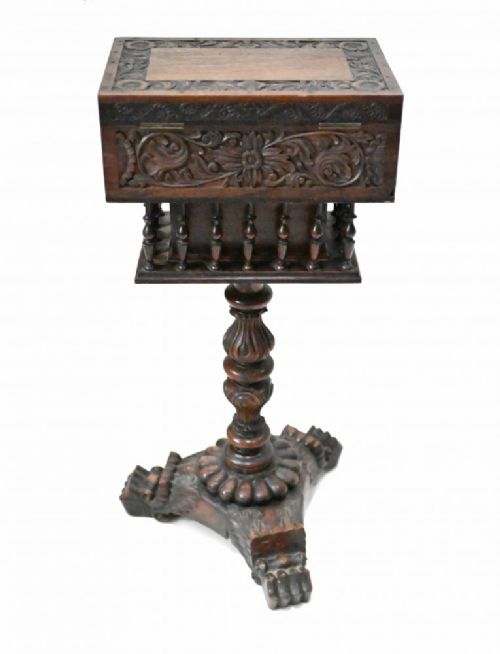
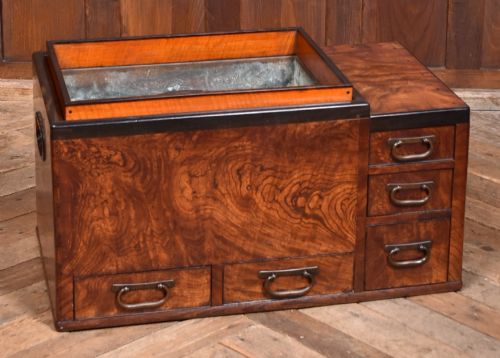


Carved Tea Chest
A carved tea chest is a secure wooden box designed to store precious tea leaves, bringing period craftsmanship and fine timber into a modern interior.
Carved Tea Chest
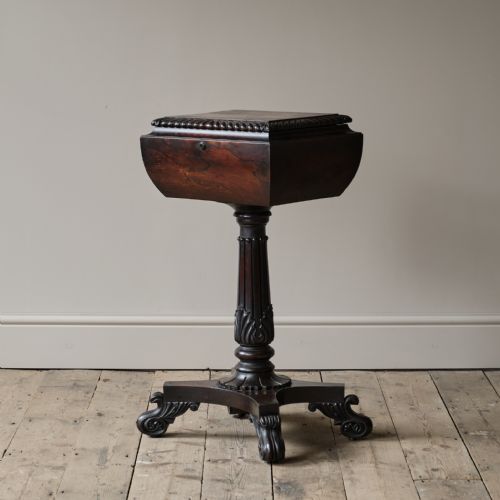
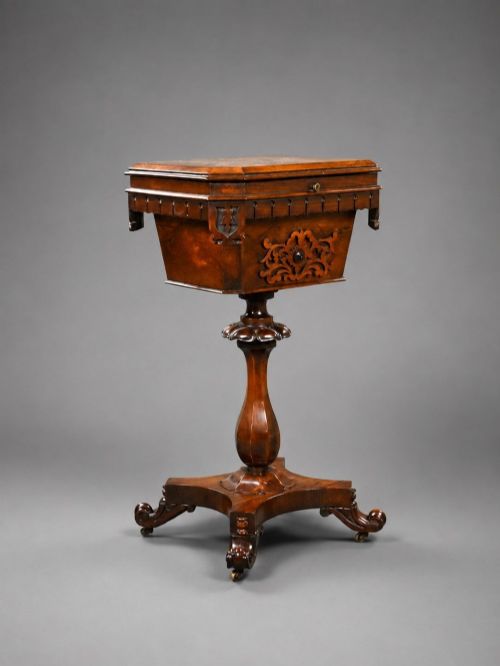
When searching for a carved tea chest, buyers encounter a variety of antique forms including tea caddies, teapoys, and miniature sideboards originating from the eighteenth and nineteenth centuries.
The pieces on this page span several distinct periods such as Georgian, Regency, William IV, and Victorian, alongside regional styles like Anglo-Indian Colonial and Traditional Japanese.
Common material selections include mahogany, rosewood, walnut, burr walnut, and oak, frequently paired with brass or bone details.
How they were made
Cabinet makers utilised dense hardwoods such as mahogany, rosewood, and walnut, shaping them into sarcophagus forms, miniature sideboards, and freestanding teapoys.
Surfaces were frequently embellished with intricate carving, brass inlays, parquetry, and ebony stringing to highlight the natural grain of the timber.
Carved Tea Chest Retail Price Guide 2026
Typical asking prices for carved tea chest among the pieces listed under this phrase on Sellingantiques today, from the lower quarter to the upper quarter. They describe what is for sale here now, not the wider market.
Some nineteenth-century makers included secret compartments to ensure the family tea supply remained safely hidden from light-fingered staff.
What varies in quality
The caliber of a piece rests upon the crispness of the carving, the selection of figured veneers like burr walnut, and the integrity of the timber joints.
Makers such as Gillows and Tahan applied meticulous attention to internal compartments, brass fittings, and structural stability, separating standard production from exceptional workshop output.
Tahan of Paris·Strahan of Dublin·Gillows
The Carved Tea Chest Glossary
- Tea caddy
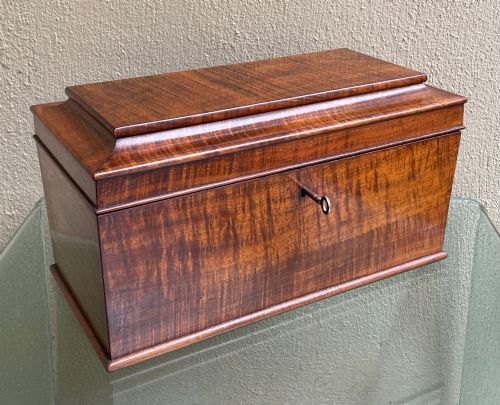
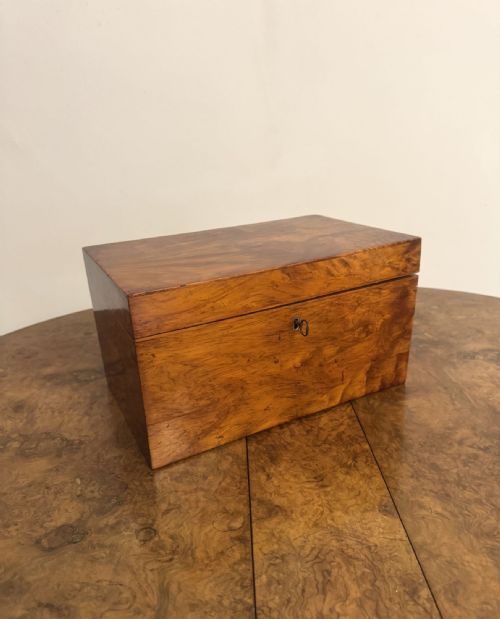
- A small box or chest designed for storing loose tea leaves securely under lock and key. These containers often featured internal lidded canisters.
- Teapoy
- A pedestal table or stand specifically designed to support a tea caddy, frequently featuring carved columns and fitted interiors.
- Sarcophagus
- A box shape with a sloping lid resembling a stone coffin, popular for large tea caddies and teapoys during the Regency and Victorian periods.
- Padouk
- A heavy, durable tropical timber with a reddish hue used in colonial furniture and eighteenth-century caddies.
- Parquetry
- A geometric mosaic of wood pieces used for decorative surface patterning on boxes and tables.
Carved Tea Chest: Frequently Asked Questions
What is a teapoy?
A teapoy is a freestanding table with a lidded box on top, designed to hold tea canisters and serving equipment in the drawing room.
During the nineteenth century, these pieces evolved from stationary chests on low stands into elegant pedestal tables placed beside seating.
How do I use a tea caddy today?
These lidded wooden boxes provide functional storage for small keepsakes, jewellery, or collections on a desk or dressing table.
The divided interior compartments make them useful for organising modern accessories while displaying period timber in the home.
How do I distinguish Regency from Victorian pieces?
Regency chests typically display neoclassical restraint, architectural brass inlay, and clean lines inspired by classical antiquity.
Victorian examples lean towards heavier proportions, elaborate carving, and figured veneers such as burr walnut.
What woods were commonly used?
Cabinet makers relied heavily on imported tropical hardwoods like mahogany and rosewood for their durability and rich colour.
Burr walnut and oak also appear frequently across eighteenth and nineteenth-century examples.