


Carved Scroll Leg Armchairs
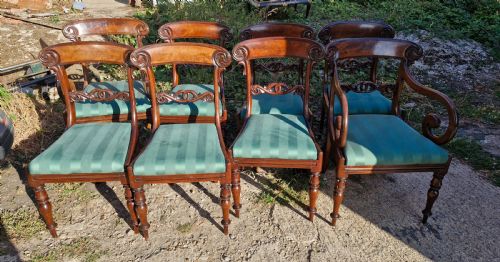
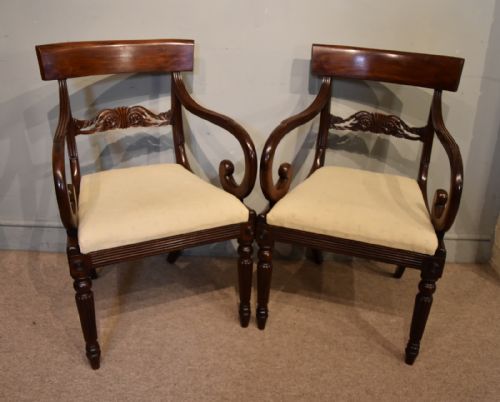
Carved scroll leg armchairs bring striking nineteenth-century presence to a room, offering robust framing alongside generous upholstered comfort.
Carved Scroll Leg Armchairs
Carved scroll leg armchairs encompass a range of nineteenth-century seating, from Regency and William IV formats to robust Victorian iterations. These chairs appear as desk armchairs, dining chairs, occasional chairs, and wing armchairs designed for various domestic rooms.
The most common examples on this page are mahogany frames from the Regency and Victorian periods, often featuring distinctive scroll work upon the arms and legs. French provincial and rococo revival influences also emerge through giltwood and occasional chair formats.
Makers and workshops across Britain and France produced these pieces using hardwoods such as mahogany and rosewood, incorporating sophisticated scrolling elements into the structural woodwork. Buyers find both pairs and single seating options spanning the 1800s to the late nineteenth century.
How they were made
Cabinet makers utilised dense hardwoods like mahogany and rosewood to construct the primary frames, ensuring structural integrity for heavy carving. Wood turners and carvers shaped the scroll work on forelegs and arm supports directly from the solid timber.
Giltwood and gesso techniques appear on French nineteenth-century occasional pieces, applying metallic leaf or plaster finishes over carved wooden foundations. Upholstery fabrics, tapestry, and brass castors complete the construction of functional desk and parlour seating.
A high scroll and splayed back nursing chair in rosewood provides a remarkably dramatic silhouette for quiet moments.
What varies in quality
The definition and depth of the wood carving distinguish finer frames from simpler production, particularly where scroll work meets the leg. Crisp execution in the timber moulding reflects the skill of the original workshop.
Coherence of timber selection and original framing integrity dictate the standing of a piece within its period. Matched pairs and complete sets demonstrate superior original design intent compared to assembled groupings.
The Carved Scroll Leg Armchairs Glossary
- Regency
- A British design period spanning the early nineteenth century, characterised by classical restraint and revival influences. Furniture from this era often incorporates dark mahogany and clean architectural lines.
- William IV
- A transitional British style period bridging late Regency and early Victorian aesthetics. Pieces typically feature heavier proportions and robust scroll carving.
- Giltwood
- Timber coated with gold leaf or metallic paint for decorative effect. This finish appears frequently on nineteenth-century French occasional chairs.
- Showwood
- Exposed polished timber framing on an upholstered chair. This term describes chairs where the wooden structure remains visible around the padded elements.
- Castor
- A small wheel attached to the base of furniture legs to aid movement. Brass fittings of this type commonly support nineteenth-century desk and armchairs.
Carved Scroll Leg Armchairs: Frequently Asked Questions
Where did people use these armchairs?
These armchairs served various domestic functions in nineteenth-century homes, appearing around dining tables, beside desks, and within parlours or drawing rooms. Different forms catered to specific tasks, such as low nursing chairs for the nursery or robust desk chairs for the study.
Pairs and single occasional chairs also furnished reception rooms where guests gathered. Their substantial scroll framing suited formal interior spaces rather than casual seating areas.
How do I identify a Regency chair?
Regency chairs generally date from the early nineteenth century, displaying classical proportions and dark mahogany timbers. Look for restrained carving and architectural lines that distinguish them from later Victorian excess.
Scroll legs and arms on these pieces often exhibit precise, sharp detailing. Comparing the timber grain and joinery helps separate genuine Regency examples from later nineteenth-century revivals.
Are these chairs suitable for daily use?
Nineteenth-century armchairs provide sturdy seating constructed from dense hardwoods like mahogany and rosewood. Their robust frames handle regular sitting when structural joints remain sound.
Upholstery and internal webbing can be renewed to suit modern comfort preferences while preserving the historic timber frame. Brass castors also allow these heavy chairs to move smoothly across floor surfaces.