


Carved Scroll Chaise
A carved scroll chaise combines sweeping woodwork with generous daybed proportions, offering a comfortable place to recline that anchors a room with period character.
Carved Scroll Chaise
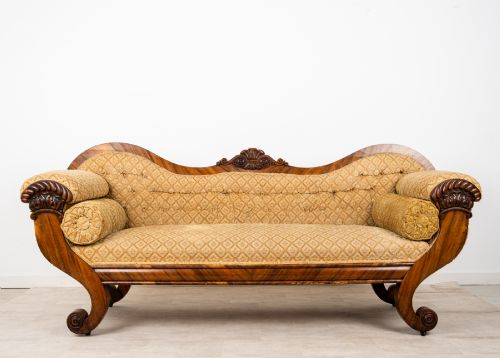
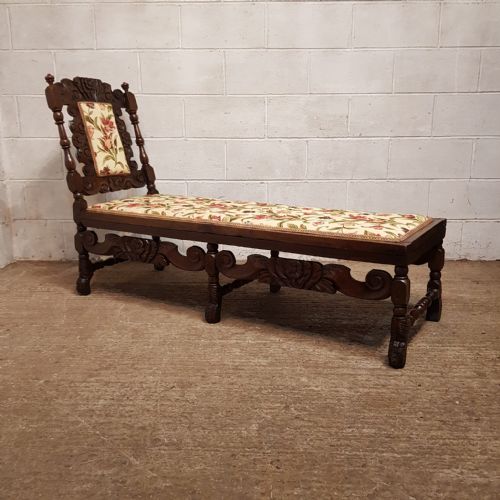
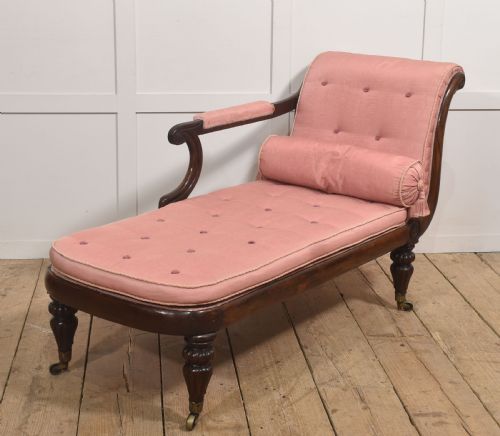
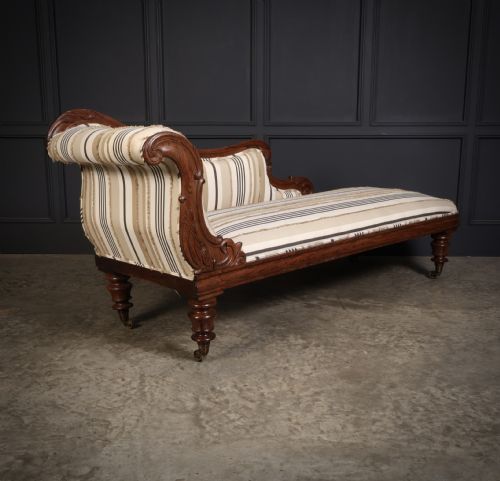
A carved scroll chaise takes several forms across the nineteenth century, appearing as single-ended daybeds, double-ended settees, and deep Récamier couches. These pieces serve primarily for reclining, combining the backrest of a sofa with the extended seat of a bed.
The versions most commonly found here date from the Regency and Victorian periods, with rosewood and mahogany frames predominating. Examples range from formal country house sofas to smaller boudoir daybeds and miniatures.
How they were made
Cabinetmakers constructed the structural frames of these pieces using solid timbers such as mahogany, rosewood, walnut, oak, and pitch pine. The scrolling ends and structural details feature carved woodwork, often shaped into volutes and floral motifs.
Upholstery forms a major component of construction, utilising traditional fabrics like velvet, damask, and modern replacement textiles over sprung or stuffed bases. Brass castors frequently appear on the feet to assist in moving the heavy wooden frames.
Listings span the nineteenth and early twentieth centuries, featuring Regency, Victorian, William IV, and Empire Revival styles executed in mahogany, rosewood, and oak.
What varies in quality
The crispness and depth of the timber carving set superior examples apart from plainer workshop pieces. Hand-sculpted scrollwork on the arm terminals shows an artist's hand, whereas routine production appears flatter and more mechanical.
Timber selection dictates the baseline quality of the frame, with dense, figured rosewood and rich mahogany commanding greater attention than common pine or oak. The structural integrity of the curved back joint determines how well the frame survives centuries of pressure.
The Carved Scroll Chaise Glossary
- Chaise Longue
- A long reclining chair or daybed designed for one person to stretch out. The form combines a chair back with an extended seat.
- Récamier
- A type of daybed with two raised ends, usually symmetrical or with one end higher than the other. It is named after the French socialite painted by Jacques-Louis David.
- Scroll End
- A wooden terminal shaped into a spiral or scroll volute. This feature defines the profile of the arms or backrests on nineteenth-century couches.
- Showwood
- Exposed polished timber framing that is not covered by upholstery. It allows the grain and carving of the wood to remain visible.
- Double Ended Settee
- A sofa with matching scrolled ends at both sides, allowing a person to recline against either end. These pieces function as both a settee and a daybed.
Carved Scroll Chaise: Frequently Asked Questions
How do I use a chaise in a modern room?
Place the carved scroll chaise away from walls to let the timber profile stand out in the space.
Position it opposite a fireplace or beside a large window to create a dedicated reading and resting zone.
Are these daybeds comfortable for sleeping?
Most nineteenth-century designs feature a raised end that supports the head while leaving the body extended.
While they suit daytime resting, the shorter lengths compared to modern beds mean they work best for lounging rather than full night sleep.
How do I distinguish Regency from Victorian pieces?
Regency frames from the early nineteenth century tend to show cleaner classical lines, often using rosewood with restrained brass inlay or carving.
Victorian examples from the mid to late nineteenth century typically display heavier proportions, darker walnut or mahogany timbers, and more exuberant floral carving.
What fabrics are historically correct for upholstery?
Original upholstery frequently employed heavy woven textiles like damask, velvet, or patterned wool fabrics.
Many surviving pieces have been recovered in modern textiles, allowing buyers to choose fabrics that match contemporary interiors while preserving the historic frame.