

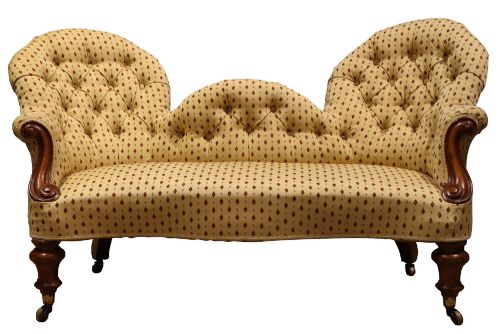
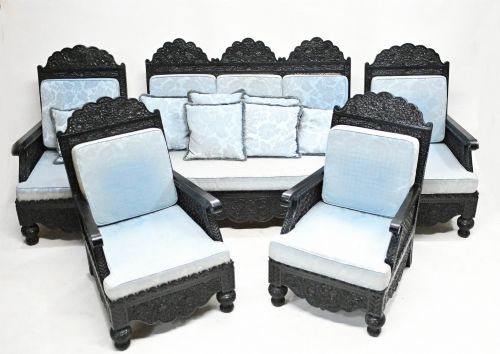
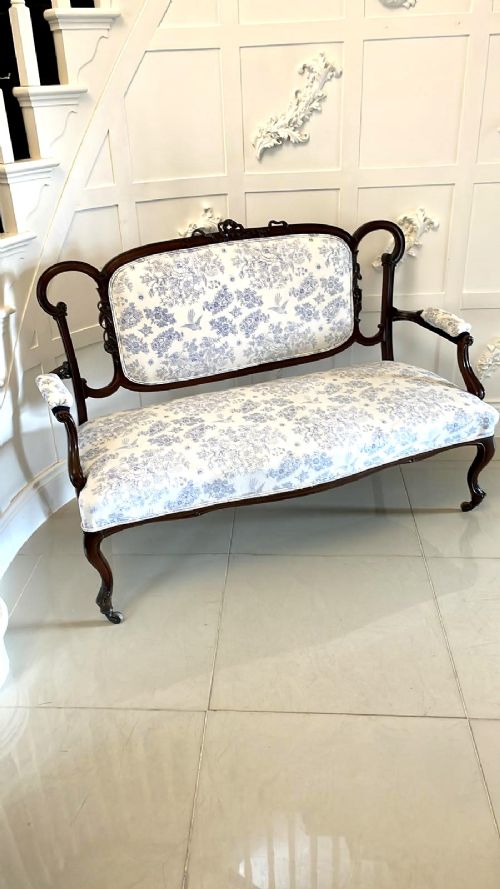
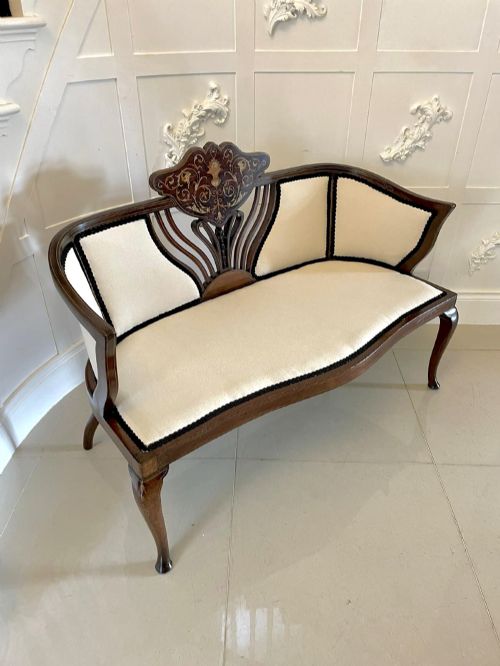

Carved Salon Settee
A carved salon settee brings formal French and Victorian elegance to a room, offering refined seating shaped by elaborate woodwork and plush upholstery.
Carved Salon Settee
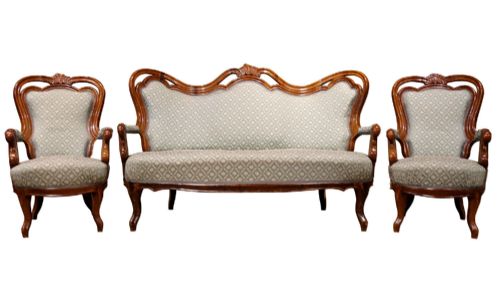
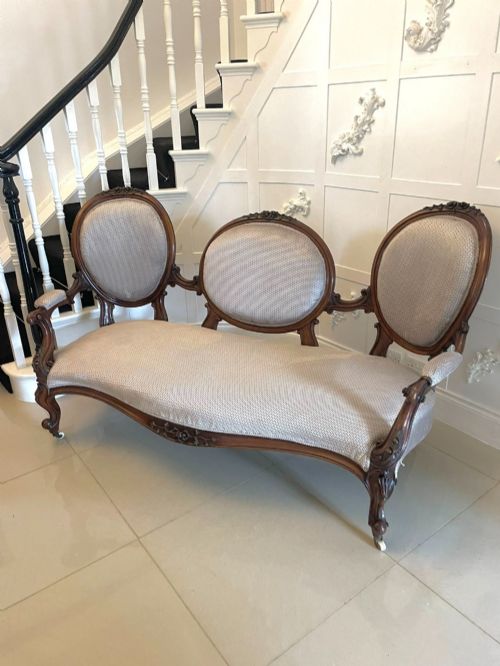
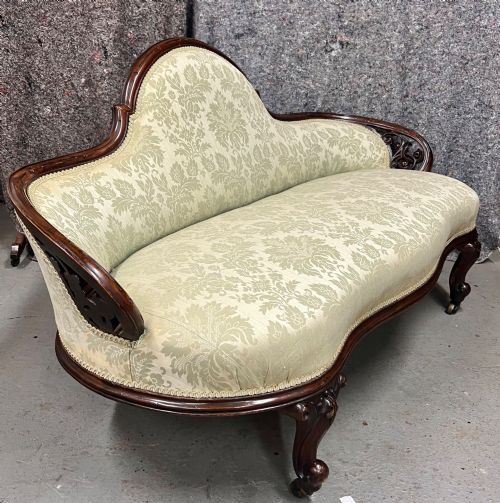
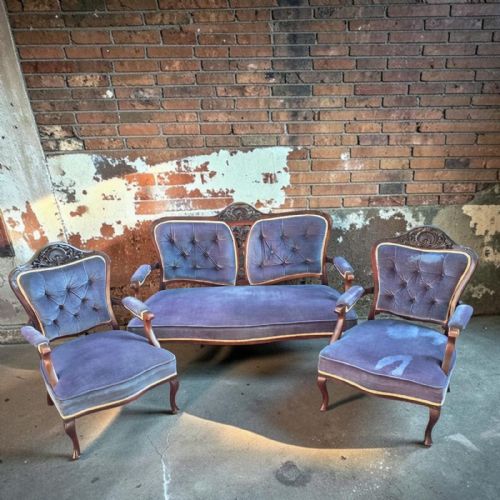
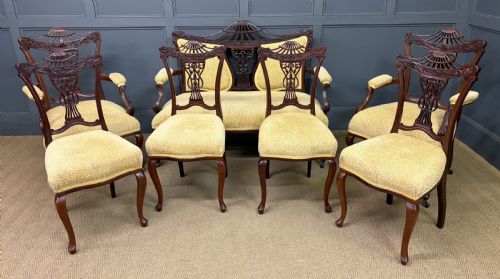
A carved salon settee is a formal piece of upholstered seating designed for reception rooms and parlours, originating primarily from Victorian Britain and continental European workshops during the nineteenth century. Buyers searching this phrase encounter substantial multi-piece salon suites alongside individual settees, canapés, and double-ended sofas.
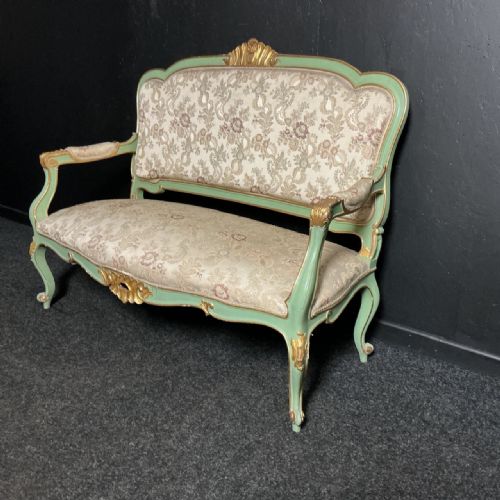
Design influences span from Louis XV and Louis XVI revivals to Rococo styles, bringing curving cabriole legs, serpentine rails, and intricate floral carvings into domestic interiors. Many pieces form part of larger seating arrangements that include matching armchairs.
Materials and Technique
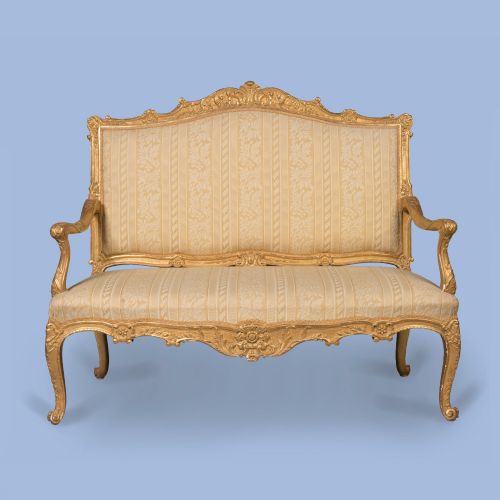
Frames rely on dense hardwoods such as mahogany, walnut, and rosewood, chosen for their strength in supporting deep relief carvings along the crest rails, arms, and cabriole legs. Giltwood surfaces utilise applied gold leaf over gesso and carved timber bases to achieve a brilliant metallic sheen.
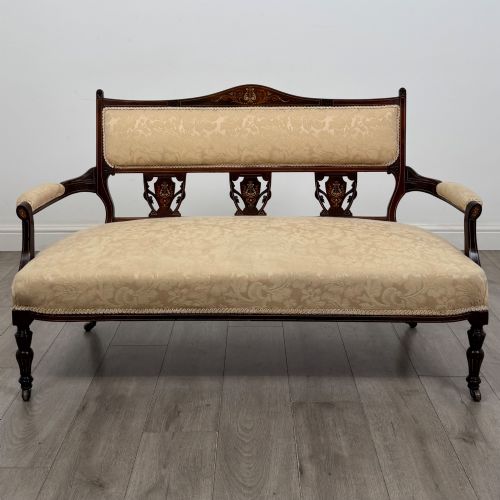
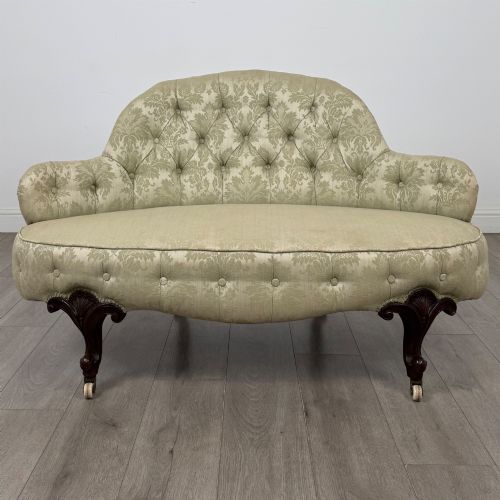
Upholstery techniques involve traditional sprung seat bases paired with heavy textiles like velvet, silk, brocade, and patterned upholstery fabric, often secured with button-tufting on cameo or tub backs. Inlaid details in contrasting timbers appear on later nineteenth-century pieces, adding linear decorative banding to the wooden rails.
Carved Salon Settee Retail Price Guide 2026
Typical asking prices for carved salon settee among the pieces listed under this phrase on Sellingantiques today, from the lower quarter to the upper quarter. They describe what is for sale here now, not the wider market.
Some nineteenth-century settees were explicitly designated as end-of-bed seating, proving that our ancestors took bedroom lounging very seriously indeed.
Craftsmanship and Construction
The distinction between standard production and superior craftsmanship lies in the depth and crispness of the hand-carved ornamentation on the wooden frame, where sharper floral motifs indicate skilled joinery. Superior examples maintain structural rigidity through robust mortise and tenon joints hidden beneath the upholstered underpinnings.
Material selection dictates the overall finish, with fine-grained walnut and figured mahogany showing greater natural warmth than painted or simpler softwood alternatives. The integrity of the internal springing and the quality of the textile coverings further separate everyday utility pieces from exhibition-grade salon furniture.
Morison and Co Edinburgh
The Carved Salon Settee Glossary
- Canapé
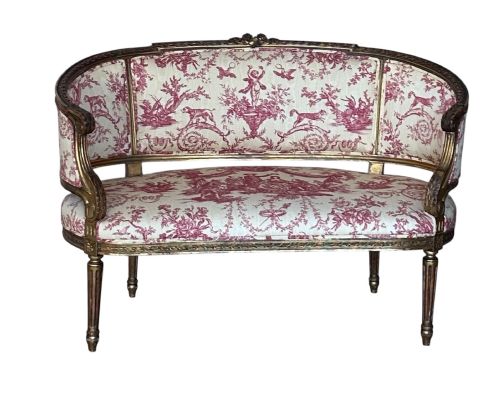
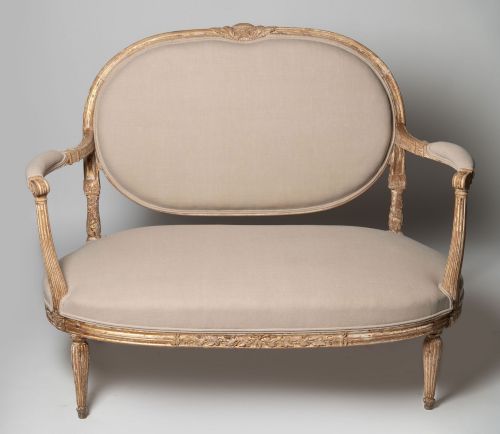
- An upholstered French sofa or settee featuring an exposed wooden frame and an arched backrest. This form typically displays Louis XV or Louis XVI stylistic traits.
- Salon Suite
- A matched set of reception room seating consisting of a settee and companion armchairs. These suites share identical wood framing, carving, and upholstery fabrics.
- Cameo Back
- An oval or shield-shaped upholstered backrest framed by carved wood resembling a cameo brooch. This shape is characteristic of Victorian parlour seating.
- Giltwood
- Timber coated with gold leaf applied over a prepared gesso ground. This luxurious finish appears frequently on continental European revival furniture.
Carved Salon Settee: Frequently Asked Questions
How were these settees used historically?
Historically, these settees occupied the principal reception rooms of townhouses and country houses, serving guests during formal visits and social gatherings. They provided comfortable yet upright seating suitable for polite conversation.
Smaller boudoir love seats were kept in private withdrawing rooms, while larger suites accommodated multiple visitors in grander public salons.
How do I identify French style influence?
French style influence appears through curving cabriole legs, asymmetrical floral carvings, and flowing serpentine lines derived from Louis XV and Rococo design vocabularies. Giltwood finishes and exposed walnut frames further signal continental European inspiration.
English interpretations often blend these continental curves with sturdy mahogany frames and traditional Victorian upholstery methods.
How should I care for upholstered antique woodwork?
Preserve the carved wooden frame by dusting regularly with a soft cloth and avoiding silicone-based polishes that degrade historic finishes. Keep the piece away from direct sunlight and heat sources to prevent the timber and textile coverings from drying out.
Handle the upholstery gently and consult a specialist restorer if the internal springs or traditional fabric require professional conservation.