



Carved Rope Twist Chair
A carved rope twist chair brings classic British craftsmanship into a room, offering timeless seating that elevates any traditional interior.
Carved Rope Twist Chair
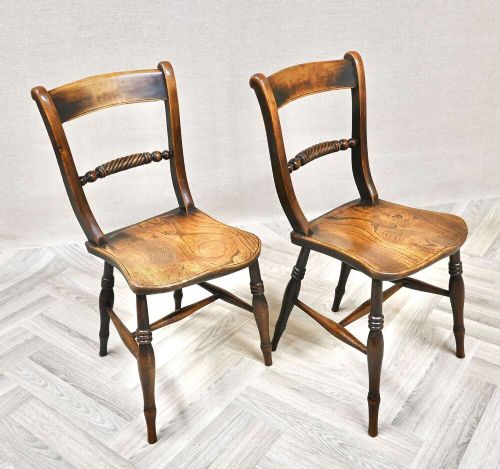
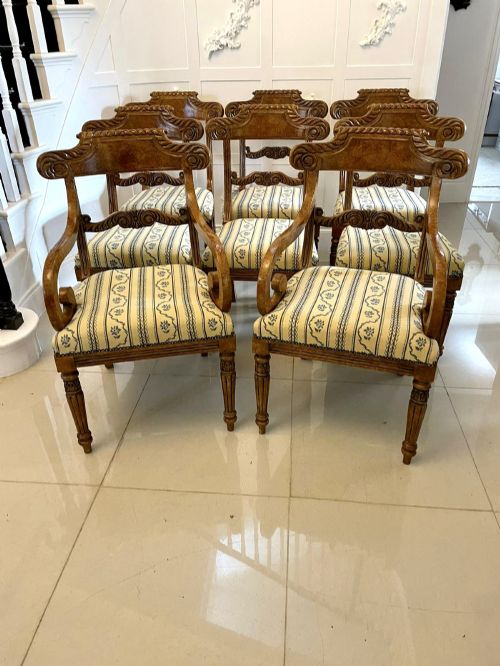
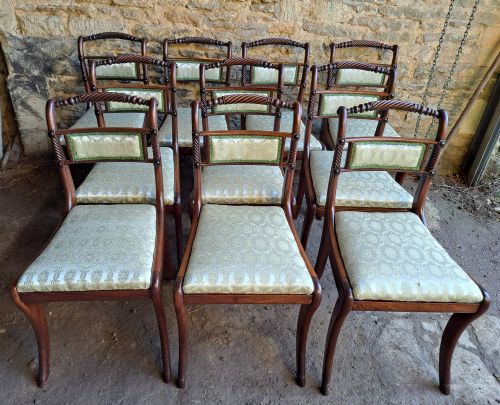
When you search for a carved rope twist chair, you encounter seating fashioned with distinctive twisted wooden details, most frequently seen as mahogany rope back carvers and dining chairs originating from the Georgian and Regency periods. These pieces often appear singly, in pairs, or as matched sets of varying sizes, designed for both practical dining and refined hall or dressing room use.
The selections on this page lean heavily towards nineteenth-century examples in rich timbers like mahogany and rosewood, alongside occasional twentieth-century interpretations in faux birdseye maple. Alongside standard dining chairs, you will find specialised forms such as dressing table stools with twisted rope legs and individual carver armchairs.
How they were made
Cabinet makers constructed these seats using dense hardwoods such as mahogany and rosewood, carving the signature rope motifs directly into the wooden frames and stretcher supports. Wood forms the primary structural substance, shaped carefully to replicate the texture and twist of cordage.
Seating portions frequently incorporate textile upholstery or fabric covers, ranging from period-appropriate textiles to restored surfaces that support modern utility while maintaining historical integrity.
Carved Rope Twist Chair Retail Price Guide 2026
Typical asking prices for carved rope twist chair among the pieces listed under this phrase on Sellingantiques today, from the lower quarter to the upper quarter. They describe what is for sale here now, not the wider market.
What varies in quality
The refinement of the woodwork dictates the distinction between standard and superior pieces, particularly in the crispness and depth of the carved rope twist details along the backrests and legs. Sharply defined carving requires expert hand skill, whereas softer profiles suggest more utilitarian production.
The choice of primary timber also influences the standing of a piece, with figured mahogany and rich rosewood commanding greater visual presence than simpler secondary woods. Furthermore, the completeness of matching sets alters their appeal, as assembled groups require careful harmony across all members.
The Carved Rope Twist Chair Glossary
- Carver chair
- An armchair, traditionally placed at the head of a dining table or used as a desk chair, featuring supportive armrests.
- Regency
- A stylistic period spanning the early nineteenth century, known for classical restraint and elegant, fluid lines.
- Ropeback
- A chair back design incorporating carved wooden strands that twist together in imitation of nautical rope.
- Stool
- A seat without back or arms, including dressing table variants supported on turned or twisted legs.
Carved Rope Twist Chair: Frequently Asked Questions
What is a ropeback chair?
A ropeback chair is a seating design featuring a horizontal top rail or splat carved to resemble twisted rope. This detail became particularly popular during the Georgian and Regency eras.
Craftsmen utilised dense timbers like mahogany to carve these intricate patterns, giving the appearance of nautical cordage translated into solid wood.
How are antique carver chairs used?
Carver chairs are armed seats traditionally positioned at the head and foot of a dining table or utilised as accent seating in a hallway. Their armrests provide additional comfort compared to standard side chairs.
In modern interiors, collectors frequently place single carvers in studies or bedrooms as decorative yet functional statement pieces.
How do I identify a Regency chair?
Regency chairs typically date from the early nineteenth century and exhibit classical lines influenced by Greek and Roman antiquity. Look for refined proportions, sabre legs, and characteristic carved details.
Woods such as dark mahogany and rosewood dominate this era, often paired with subtle reeding or rope twist motifs.
Can I use antique dining chairs daily?
Antique dining chairs built from sturdy hardwoods like mahogany are structurally robust and well-suited for regular use. Ensuring the joints remain tight is key to their longevity.
Many pieces feature updated fabric covers or restored frames, making them fully prepared for contemporary dining rooms.