


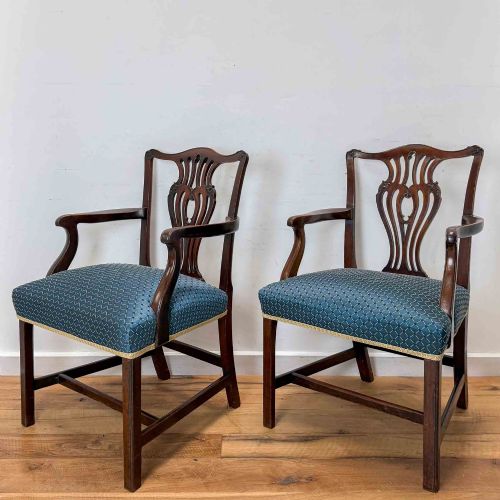


Carved Ribbon Back Chair
A carved ribbon back chair brings intricate woodwork to the dining table or desk, offering a distinct profile rooted in Georgian design.
Carved Ribbon Back Chair
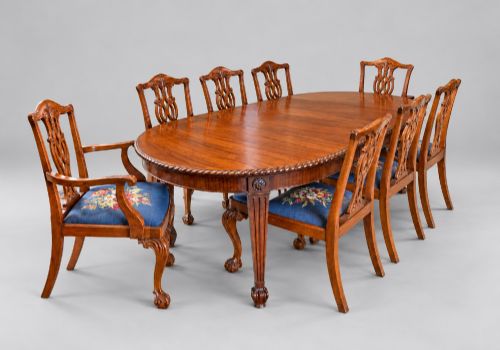
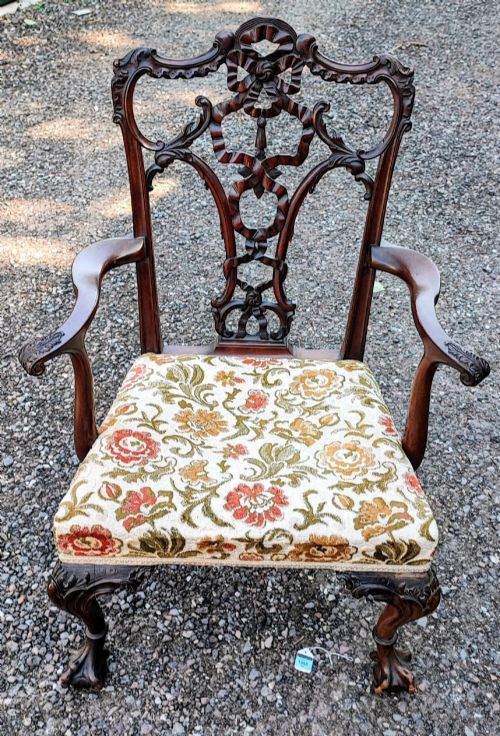
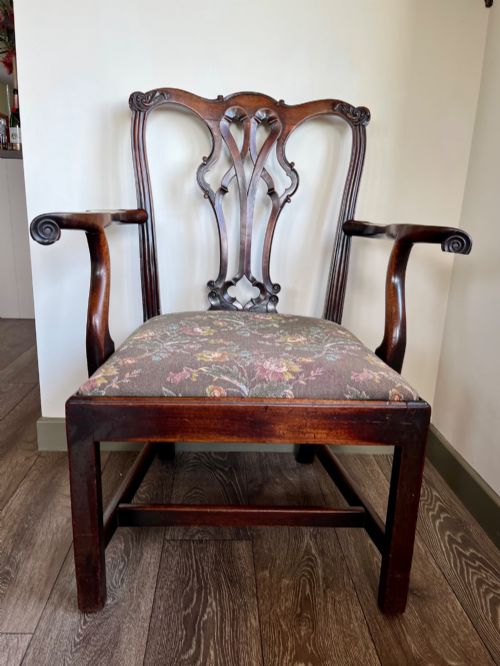
A carved ribbon back chair stands out through its pierced splat, which twists and loops to resemble fluttering fabric tied in a knot. When searching for a carved ribbon back chair, buyers encounter examples ranging from eighteenth-century originals to nineteenth-century Chippendale revival pieces.
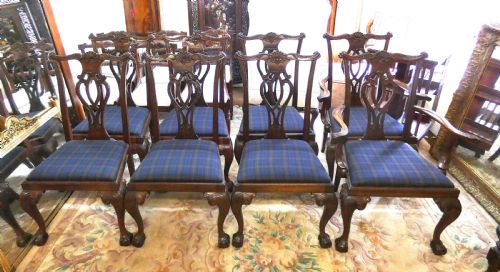
These forms appear singly as desk chairs or armchairs, as well as in matched sets of dining chairs. Mahogany and walnut serve as the primary woods, often paired with upholstered seats in various fabrics and leather.
The aesthetic bridges formal Georgian elegance and later Victorian interpretation. Pieces span periods from the Georgian era through to the 1930s.
How they were made
Cabinetmakers utilised dense timbers such as mahogany and walnut to achieve deep, crisp carving along the intricate splats and chair rails. These hardwoods provided the structural strength required to shape ribbon motifs without compromising the integrity of the backrest.
Joinery techniques included mortise and tenon frames, ensuring durability for seating subjected to daily use. Seat frames frequently accommodated drop-in pads upholstered in textile, fabric, or leather, secured with brass tacks.
Carved Ribbon Back Chair Retail Price Guide 2026
Typical asking prices for carved ribbon back chair among the pieces listed under this phrase on Sellingantiques today, from the lower quarter to the upper quarter. They describe what is for sale here now, not the wider market.
The carved ribbon motif requires such intricate woodworking that makers occasionally hid minor grain flaws inside the twists of the bow.
What varies in quality
Depth and precision of the wood carving dictate the distinction between standard production and top-tier execution. Finer examples display undercut ribbon folds and crisply rendered acanthus leaves that catch the light.
The weight and figure of the timber also influence the stature of the piece, with richly grained mahogany elevating the overall presence. Proportions of the splat and the curve of the cabriole legs determine visual harmony.
The Carved Ribbon Back Chair Glossary
- Splats
- The vertical slat down the centre of a chair back. On these pieces, it is pierced and carved to mimic flowing ribbon.
- Chippendale Style
- A design classification drawing on the eighteenth-century pattern books of Thomas Chippendale. It heavily influences nineteenth-century revival seating.
- Cabriole Leg
- A furniture leg that curves out and then in, resembling the leg of an animal. It often terminates in a claw and foot.
- Drop-in Seat
- A removable upholstered frame that drops into the wooden seat rails. It allows for straightforward reupholstery without dismantling the chair frame.
Carved Ribbon Back Chair: Frequently Asked Questions
Are these chairs comfortable for daily use?
The supportive upright back and generous seat proportions make them suitable for dining or desk work.
Upholstered pads in fabric or leather add cushioning to the wooden frame.
How do I spot a revival piece?
Nineteenth-century revival examples often utilise machine-assisted finishing alongside hand carving.
Timber patination and construction methods help distinguish earlier Georgian originals from later interpretations.
Can I buy large matching sets?
Dining chairs frequently appear in assembled groups ranging from sets of six to twelve.
Matching carver armchairs occasionally accompany these sets for the head of the table.
What woods were used?
Mahogany forms the majority of the surviving framework across both eighteenth and nineteenth-century eras.
Walnut also appears in select Georgian examples, offering a different grain pattern.