



Carved Relief Lighting
Carved relief lighting brings together structural woodwork and metalwork to create ambient illumination.
Carved Relief Lighting
Carved relief lighting encompasses items designed to hold candles or electric bulbs, featuring surface carving or dimensional metalwork across periods like the nineteenth century, Georgian era, and Victorian age.
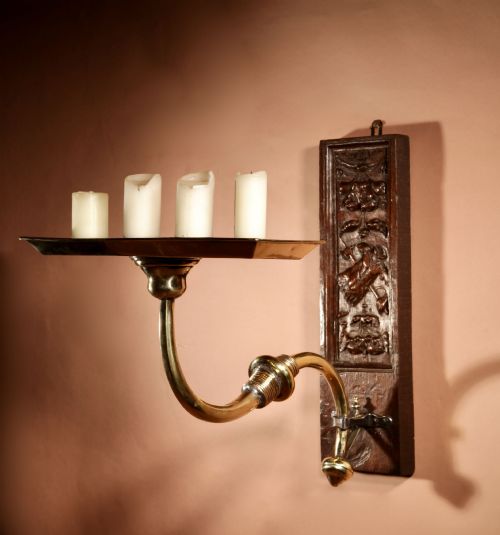
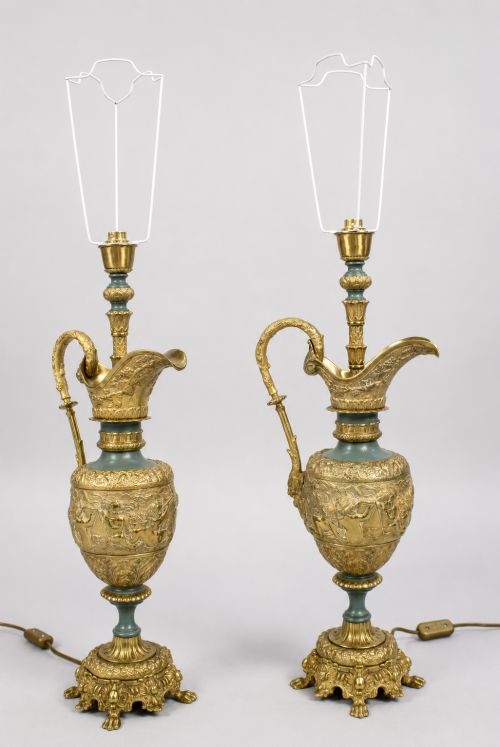
The objects take forms such as wall hanging pricket candle holders, table lamps, candlesticks, and standard lamps, utilising materials including brass, oak, gilt metal, and carved wood.
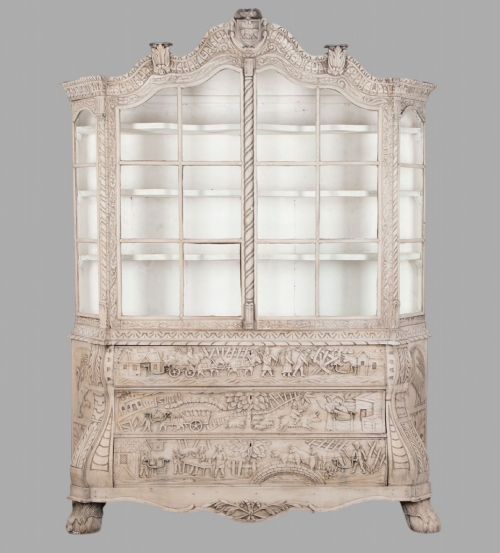
Buyers encounter styles ranging from Victorian Gothic and Neoclassical to Japanese Meiji and Dutch Rococo Revival, showing how makers integrated sculptural relief into functional lighting.
How they were made
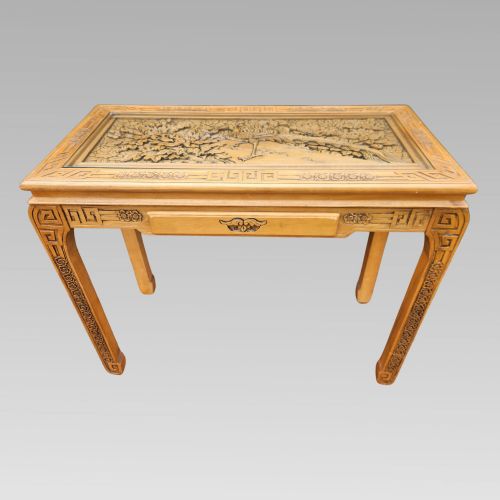
Makers utilised solid timber like oak and various woods, applying hand carving to shape tactile surface reliefs and structural forms for lamps and candle holders.
Metalwork involved casting and shaping brass and gilt metal, creating intricate components like ewer forms, ewers, and pricket mounts that complement the carved elements.
Makers integrated materials such as glass, fabric, enamel, and mother of pearl details to enhance the visual texture of the finished lighting pieces.
Carved Relief Lighting Retail Price Guide 2026
Typical asking prices for carved relief lighting among the pieces listed under this phrase on Sellingantiques today, from the lower quarter to the upper quarter. They describe what is for sale here now, not the wider market.
Listings feature items spanning the nineteenth century, Georgian era, and Victorian period, constructed from brass, oak, glass, and carved wood.
What varies in quality
Quality rests in the crispness of the hand carving and the precision of the metal casting, where deeper relief and sharper detail distinguish finer pieces.
The integration of materials determines the overall cohesion, as seen in how securely mother of pearl or enamel elements are set within the carved wood or metal frame.
Proportion and balance across lamp standards, table lamps, and wall sconces dictate the aesthetic success of each item.
The Carved Relief Lighting Glossary
- Pricket candle holder
- A candlestick featuring a central spike upon which a candle is mounted rather than a socket.
- Ewer form
- A vessel shape featuring a wide body, narrow neck, and looped handle, adapted here for table lamps.
- Meiji period
- The era of Japanese history lasting from eighteen sixty-eight to nineteen twelve, known for detailed bronze and carved works.
- Gilt metal
- Metal coated with a thin layer of gold or gold-coloured finish to provide a decorative metallic sheen.
Carved Relief Lighting: Frequently Asked Questions
What is carved relief lighting?
Carved relief lighting consists of lamps, candlesticks, and wall sconces that incorporate carved wooden elements or dimensional metalwork into their design.
These pieces combine functional illumination with sculptural surface decoration drawn from various historical periods.
How do I date these pieces?
Dating relies on identifying the prevailing stylistic traits, such as Victorian Gothic or Meiji period ornamentation, combined with material construction.
Examining the ageing of the brass, oak, or gilt metal helps confirm whether an item originates from the nineteenth century or later eras.
Where were they used?
These lighting items functioned primarily in principal rooms of period homes, including halls, dining rooms, and parlours, where ambient illumination was required.
Wall hanging pricket holders and table lamps provided both practical light and decorative focus against panelled walls or side furniture.
How do I care for them?
Maintenance involves dusting carved wooden surfaces gently with a dry cloth and avoiding harsh chemical polishes on brass or gilt metal.
Keeping fabric shades clean and ensuring electrical components on converted lamps meet safety standards preserves the piece for daily use.