

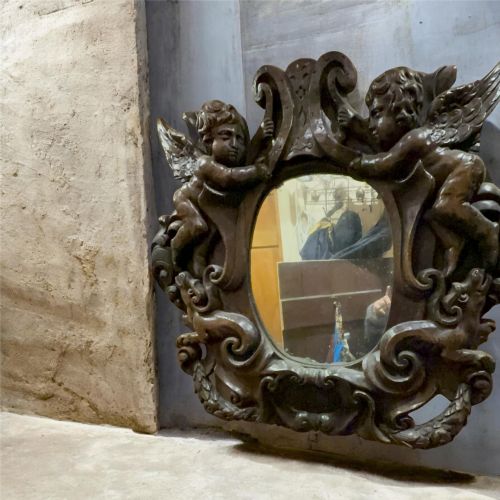


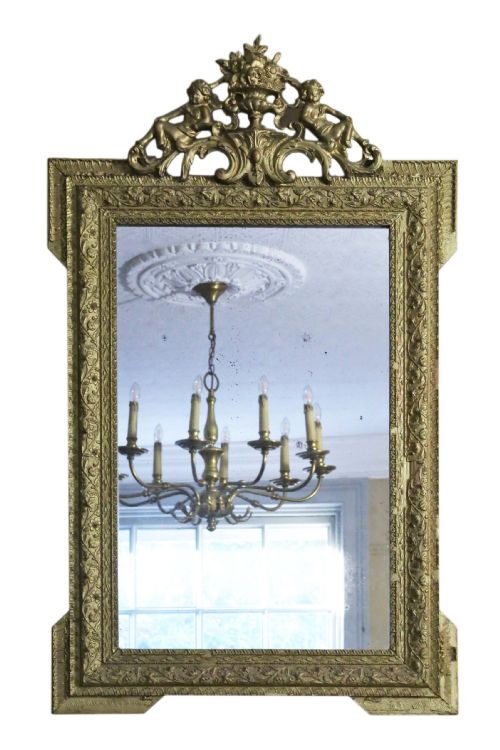


Carved Putto Mirror
A carved putto mirror brings theatrical charm to a room, framing reflections with winged cherubs rendered in giltwood, oak, or walnut.
Carved Putto Mirror
Buyers will encounter French Chateau, Baroque, and Victorian interpretations alongside specific regional pieces such as Florentine and Italian examples. These wall mirrors and overmantle mirrors utilise cresting figures and decorative pediments to frame the mirror glass.
The nineteenth-century pieces dominate the selection, bringing Grand Regency, Rococo Revival, and Carolean styles into domestic interiors. Each carved putto mirror relies on the presence of cherubic figures to define its ornamental character.
Materials and construction
Carvers shaped these frames from solid timbers including oak, walnut, and general wood before applying decorative gesso surfaces. Artisans then finished many of these structures with gold leaf or parcel gilding to create reflective, luminous borders.
The glass itself is set within bevelled or plain mirror glass panels, secured by heavy wooden backs and structural brackets. Craftsmen used detailed hand-carving techniques to shape the putto cresting and decorative pediments that crown the top of each frame.
Carved Putto Mirror Retail Price Guide 2026
Typical asking prices for carved putto mirror among the pieces listed under this phrase on Sellingantiques today, from the lower quarter to the upper quarter. They describe what is for sale here now, not the wider market.
Every carved putto mirror watches the room with at least one permanent, golden toddler attached to its forehead.
Evaluating craftsmanship and proportion
The integration of the cresting with the main frame dictates visual balance, where finer pieces maintain harmonious proportions between the mirror glass and the sculptural elements. The quality of the gilding and the preservation of the original wood grain further distinguish the range.
The Carved Putto Mirror Glossary
- Putto
- A plump, often winged child figure derived from classical art, commonly appearing as a cherub on these mirror crests.
- Giltwood
- Timber that has been coated with a thin layer of gold leaf or gilt powder, creating a bright decorative surface.
- Gesso
- A plaster-like mixture applied to wood frames to provide a smooth base for fine carving and gilding.
- Overmantle
- A large mirror designed specifically to hang on the wall directly above a fireplace mantelpiece.
- Pediment
- The triangular or decorative architectural crown positioned at the very top of a mirror frame.
Carved Putto Mirror: Frequently Asked Questions
How do I hang a heavy carved putto mirror?
These frames require secure wall fixings distributed evenly across the structural timber backing to support the weight of the wood and glass. Professional installation into masonry or wall studs ensures the mirror hangs safely.
Avoid relying on decorative brackets alone, as the projecting cresting and putto figures shift the centre of gravity forward.
Where should I place an overmantle mirror?
Positioning an overmantle mirror above a fireplace reflects natural light and anchors the room's primary focal point. Ensure the width corresponds appropriately with the mantel shelf below.
These pieces also function effectively on large drawing room walls where they can expand the visual space of the interior.
What is the difference between French and Italian styles?
French-inspired mirrors often utilise lighter Rococo Revival curves, parcel gilding, and refined Chateau elegance. Italian and Florentine examples tend to feature deeper, more elaborate floral and figurative carvings with rich gilt finishes.
Both traditions employ putto motifs, but the overall silhouette and ornament reflect their distinct regional origins.