
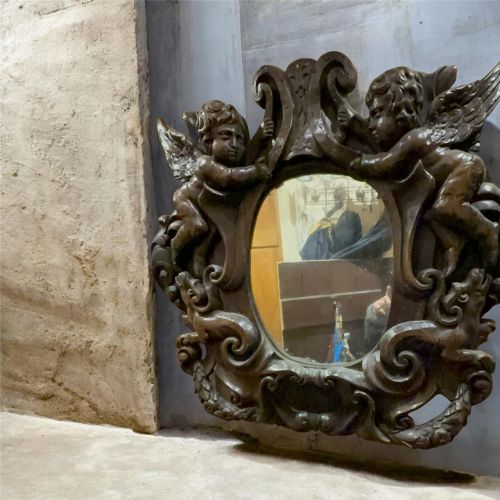


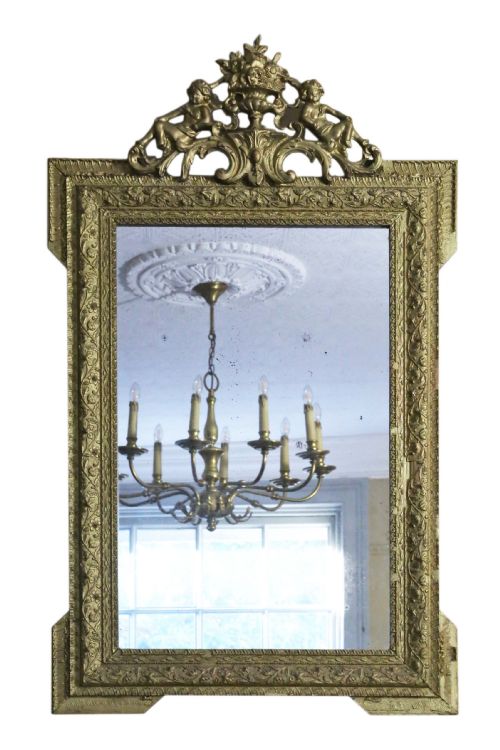


Carved Putti Wall Mirror
A carved putti wall mirror brings sculptural theatre to a room, framing glass with winged cherubs carved in wood.
Carved Putti Wall Mirror
When you search for a carved putti wall mirror, you encounter pieces that incorporate sculpted cherubic figures into their frames. The examples seen here range from compact wall mirrors to substantial overmantel pieces.
The prevalent forms date across the eighteenth and nineteenth centuries, spanning distinct revival styles. Oak and giltwood dominate the selection, frequently displaying elaborate cresting or bracket supports.
Origins stretch from English workshops to continental centres such as Italy and France. You meet both intimate oval formats and grand rectangular overmantels designed for principal reception rooms.
How they were made
Carvers shaped timber directly, working in oak, walnut or softer woods to form the intricate contours of the figures and frames. Gesso was then applied to provide a smooth ground for subsequent gilding.
Gold leaf and parcel gilding techniques imparted a lustrous metallic finish to the wooden surfaces. Mirror glass, often bevel-edged in later Victorian iterations, was subsequently fitted into the prepared rabbet.
What varies in quality
The depth and definition of the carving separate the finer pieces from simpler production. Master carvers imbued the putti with anatomical nuance and expressive movement rather than rigid symmetry.
The integrity of the original giltwood surface dictates much of the visual success. Surface wear reveals the underlying gesso and bole, whereas excessive later repainting obscures the crispness of the original tool work.
The Carved Putti Wall Mirror Glossary
- Putto
- A plump, naked male child figure, frequently winged, appearing in classical and revival art. These figures form the primary sculptural adornment on the cresting of these mirrors.
- Giltwood
- Timber that has been coated with gold leaf over a prepared gesso ground. This finish provides the bright, reflective surface characteristic of many antique frames.
- Overmantel mirror
- A large mirror specifically designed to hang above a fireplace mantelpiece. They often feature horizontal proportions and decorative pediments.
- Gesso
- A plaster mixture applied to wood to create a smooth surface for gilding. It holds sharp detail when carved or moulded prior to leaf application.
- Parcel gilt
- A finishing technique where only specific parts of an object are gilded, leaving other areas of the wood grain exposed. This creates a contrast between the timber and the gold leaf.
Carved Putti Wall Mirror: Frequently Asked Questions
Where should I hang a putto mirror?
These mirrors suit principal reception rooms, halls or above mantelpieces where their sculptural cresting can be fully appreciated.
Ensure the wall construction can support the weight, particularly for larger giltwood and overmantel examples.
How do I date a carved putto mirror?
Dating relies on timber choice, construction methods, and stylistic revival cues such as Baroque or Renaissance motifs.
Examining the mirror glass and the backboards provides further clues regarding the age of the piece.
Are putto mirrors fragile?
The projecting carved elements and applied gesso require careful handling during movement and cleaning.
Dusting with a soft, dry brush preserves the delicate surface details without damaging the gold leaf.
What is the difference between an overmantel and a wall mirror?
Overmantel mirrors are traditionally broader formats engineered to sit directly above a fireplace opening. Standard wall mirrors are proportioned for hanging on general wall spaces.
Both types incorporate putti cresting within the evidence.