




Carved Pine Desk
A carved pine desk brings the honest grain and functional warmth of Victorian and nineteenth century workshops straight into a modern study.
Carved Pine Desk
A carved pine desk is a functional workspace built from softwoods, often appearing alongside related nineteenth-century forms such as writing desks, side tables, and washstands. These pieces reflect the robust utility of Victorian and nineteenth-century cabinetmaking, ranging from simple country pieces to more ornate Gothic Revival designs.
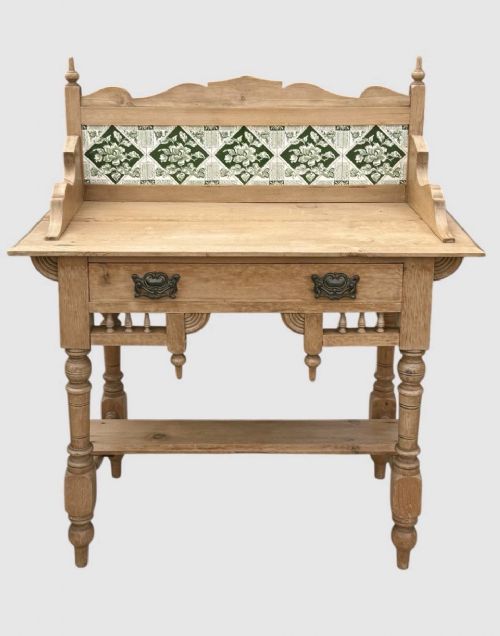
The versions most commonly met on this page date from the Victorian era and the later nineteenth century, utilising dense pitch pine or standard pine timbers. They frequently display period characteristics such as carved detailing, structural side supports, and integrated writing surfaces designed for everyday use.
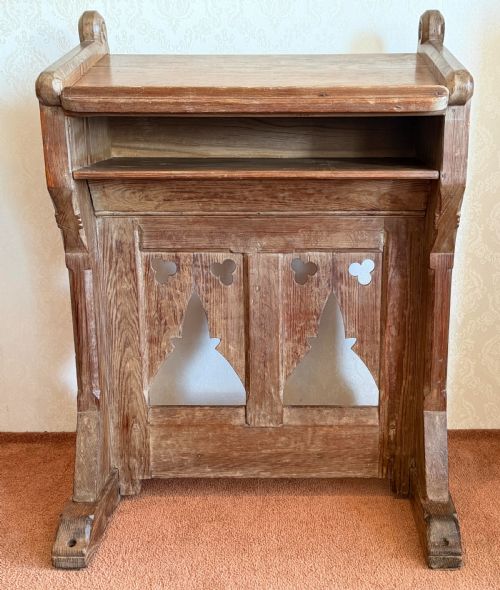
While many listings focus on standard writing desks and side tables, the broader category also encompasses specialised forms like church lecterns, console tables, and large glazed secretaire bookcases. Each piece demonstrates how nineteenth-century makers applied decorative carving to humble softwood construction.
Materials and construction
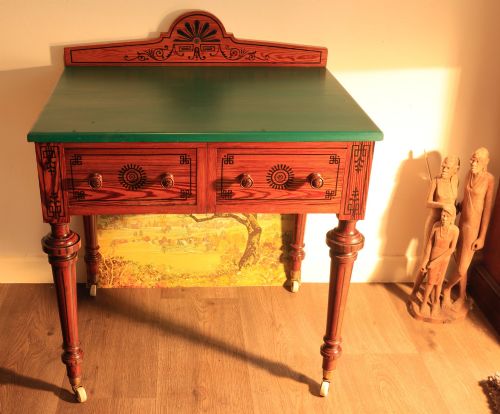
Makers constructed these pieces primarily using solid pine and dense pitch pine, selecting timbers that offered both workability and structural strength for daily writing tasks. Surfaces were sometimes finished with paint to protect the softwood or left natural to highlight the grain.
Carpenters utilised traditional joinery techniques to assemble frames, securing tabletops and writing compartments with sturdy wooden joints and occasionally incorporating brass or metal hardware. Decorative elements were carved directly into the pine or pitch pine substrate, reflecting the prevailing Gothic Revival and Victorian aesthetic movements of the period.
Carved Pine Desk Retail Price Guide 2026
Typical asking prices for carved pine desk among the pieces listed under this phrase on Sellingantiques today, from the lower quarter to the upper quarter. They describe what is for sale here now, not the wider market.
Current listings demonstrate a strong presence of Victorian and nineteenth-century pieces, utilising materials such as pitch pine, standard pine, brass, and applied paint.
Judging quality in pine furniture
The Carved Pine Desk Glossary
- Pitch pine
- A heavy, resinous softwood commonly utilised in nineteenth-century furniture for its durability and prominent grain pattern. It provides a robust surface suitable for hardworking writing desks.
- Gothic Revival
- An architectural and decorative style popular during the Victorian period characterised by pointed arches, quatrefoils, and ecclesiastical motifs. This style heavily influenced the carved detailing on nineteenth-century desks and lecterns.
- Secretaire
- A piece of furniture incorporating a pull-down or hinged writing flap that conceals small drawers and pigeonholes. These desks combine storage with a dedicated writing surface.
Carved Pine Desk: Frequently Asked Questions
What is a carved pine desk?
A carved pine desk is a nineteenth-century workspace built from softwoods like standard pine or pitch pine, featuring decorative woodwork applied by period makers.
These pieces range from simple Victorian writing tables to more elaborate Gothic Revival forms designed for domestic or institutional use.
How do I care for antique pine?
Antique pine benefits from simple dusting with a dry cloth and occasional treatment with appropriate natural waxes to nourish the dry softwood.
Avoid placing these desks in direct sunlight or near sudden heat sources to prevent the timber from warping or splitting over time.
How do I date a pine desk?
Dating relies on examining the construction methods, tool marks left by nineteenth-century joiners, and stylistic indicators such as Victorian Gothic carvings.
Timbers like dense pitch pine and specific hardware choices also help narrow the piece down to the mid to late nineteenth century.
Where were these desks used?
Nineteenth-century pine desks served in domestic studies, country houses, and occasionally institutional settings like churches and offices.
Their practical construction made them reliable everyday workstations for writing, record-keeping, and administrative tasks.