
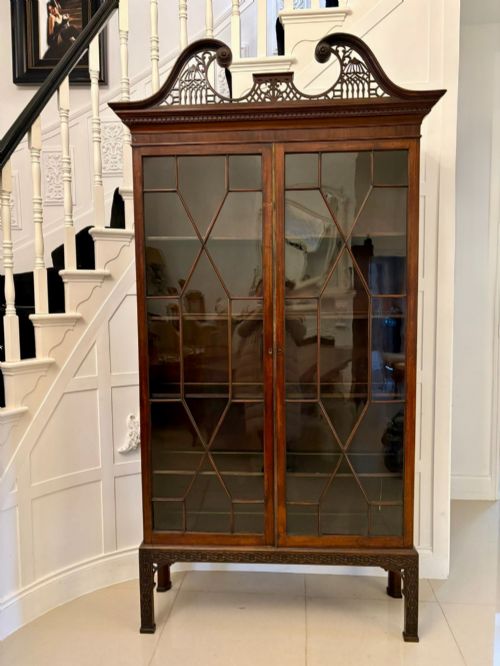
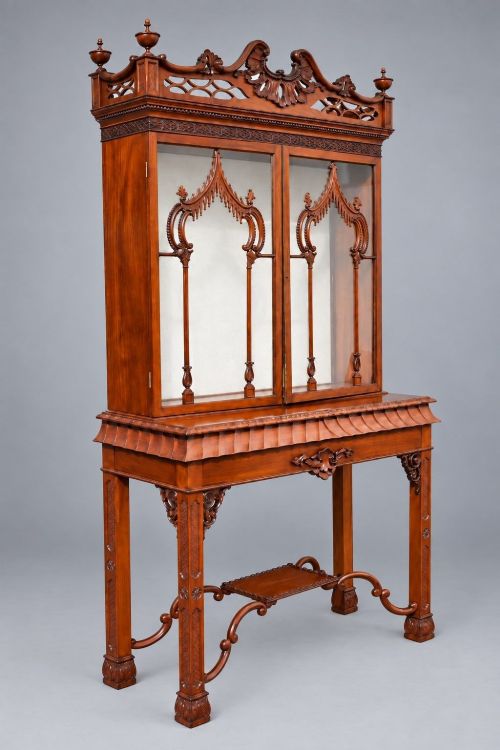
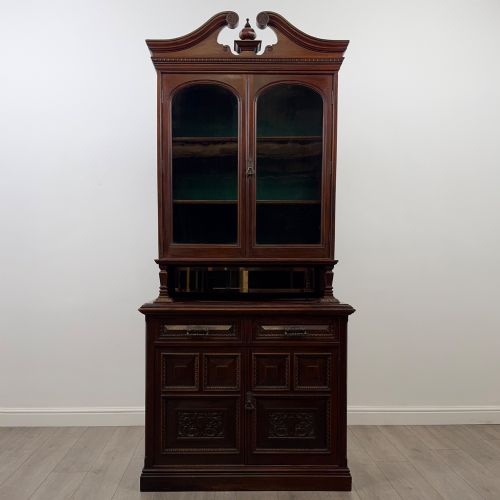
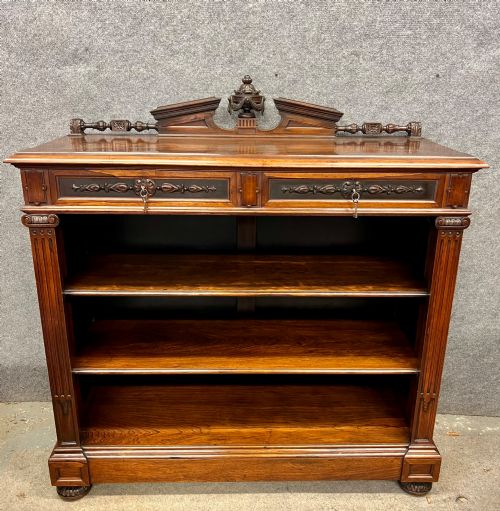
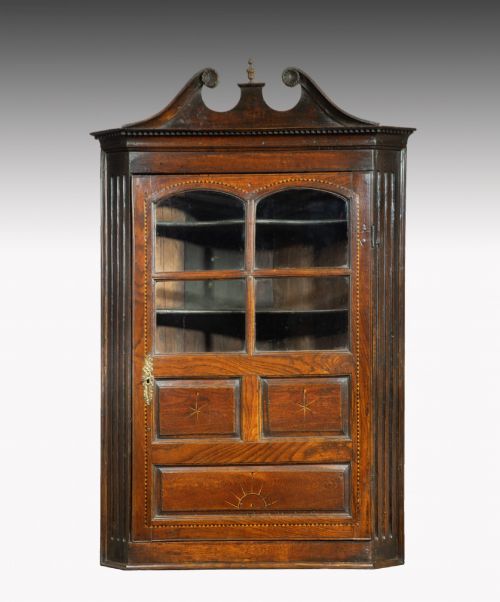


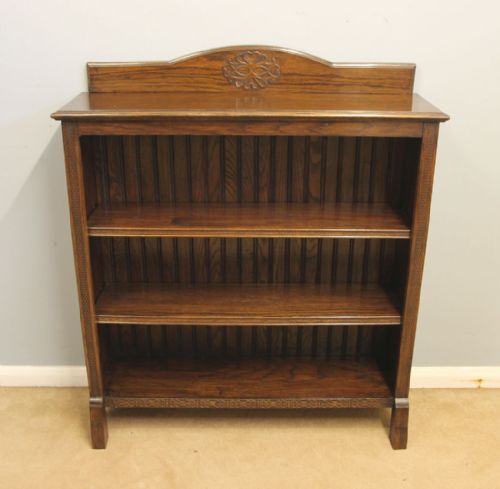


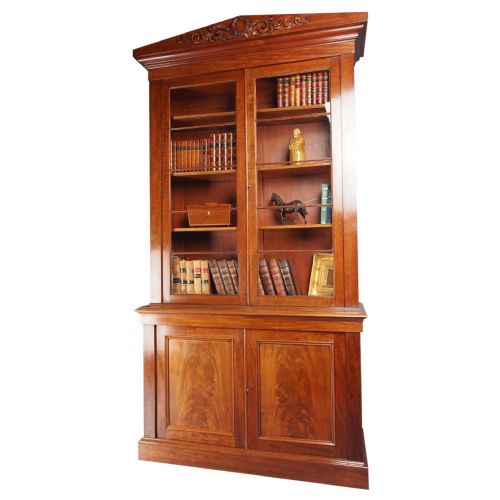

Carved Pediment Cabinet
A carved pediment cabinet brings architectural presence to a room, framing books or displays with timber crown work built to command attention.
Carved Pediment Cabinet
When you search for a carved pediment cabinet, you are looking at substantial storage furniture crowned with architectural woodworking, from bookcases to display units and hanging cupboards. The pieces listed on this page span the eighteenth, nineteenth, and early twentieth centuries, reflecting enduring forms such as bookcases, corner cupboards, and wall cabinets.
You are most likely to meet mahogany and oak examples representing Georgian, Victorian, and Edwardian periods. These range from imposing breakfront bookcases and linen cupboards to smaller wall-hanging display cabinets and corner units.
The architectural crown defines the form, taking inspiration from classic revival styles including Chippendale, Dutch Neoclassical, and George II designs. Each piece integrates upper pediment detailing with lower storage or display spaces behind timber panelled or glazed doors.
What varies in quality
The depth and crispness of the carved pediment separate standard production from exceptional examples, as hand-carved architectural details require skilled execution. The choice of timber grain, particularly figured mahogany or burr walnut veneers, dictates the visual richness of the surface.
Proportion and structural integrity define the higher end of the range, where the crown balances harmoniously with the lower cabinet doors or open shelving. Original brass hardware, unblemished glass, and intact internal fittings further distinguish superior pieces from utilitarian storage.
Materials documented across the listings include mahogany, oak, walnut, bleached oak, fruitwood, brass, glass, and mirror.
The Carved Pediment Cabinet Glossary
- Pediment
- The architectural crowning feature above the main body of a cabinet, often carved with scrolls, dentils, or classical motifs. It draws the eye upward and defines the formal character of the piece.
- Breakfront
- A large cabinet design where the central section projects forward from the flanking wings. This layout creates depth and breaks up the flat planes of large bookcases.
- Marquetry
- The art of applying decorative veneer pieces in wood and fruitwood to form geometric or pictorial patterns. It creates surface contrast on the doors and panels of continental European cabinets.
- Astral glazing
- Cabinet doors fitted with slender wooden bars that divide the glass into smaller panes. This technique lightens the visual weight of large bookcases and display cabinets.
- Bijouterie
- A glazed display cabinet specifically designed to showcase small precious objects, medals, or jewellery. These pieces often feature glass shelves and velvet-lined interiors.
Carved Pediment Cabinet: Frequently Asked Questions
What is a carved pediment cabinet used for?
These cabinets serve as functional storage and display furniture for books, linen, or prized collections. The upper sections typically house glass doors or open shelves, while lower compartments provide enclosed storage.
In living spaces or studies, they anchor the room visually while keeping contents protected behind timber or glazed doors.
How do I style a carved pediment cabinet?
Allow the architectural crown to remain unobstructed so the pediment detailing commands attention against a neutral wall. Balance the interior displays with thoughtfully spaced books or curated objects without overcrowding the shelves.
Position the cabinet away from direct sunlight to protect antique timber finishes and historic glass panels from degradation.
How do I tell Georgian from Victorian pieces?
Georgian pieces from the eighteenth and early nineteenth centuries often display restrained classical proportions and solid construction in oak or mahogany. Victorian examples tend to embrace revivalist exuberance, incorporating heavier carving and diverse stylistic influences like Chinese Chippendale.
Examine the secondary timbers inside drawers and the style of the pediment carving to help distinguish between these periods.
Are corner cupboards practical for small rooms?
Corner cabinets utilise unused wall intersections efficiently, providing storage capacity without dominating floor space. Hanging corner cupboards attach directly to walls, freeing up the room below entirely.
Their triangular footprint makes them suitable for smaller dining areas or hallways that cannot accommodate a full-sized bookcase.