
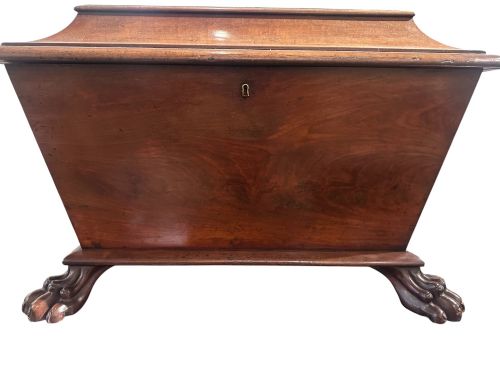


Carved Paw Feet Chest
A carved paw feet chest brings sculptural presence to a room, offering robust storage or bottle containment through time-honoured forms.
Carved Paw Feet Chest
When you search for a carved paw feet chest, you encounter a specialised selection of antique furniture predominantly composed of wine coolers, cellarettes, and chests dating from the Georgian, Regency, and Victorian periods. These pieces serve practical storage roles while making a strong visual statement through carved animal foot supports.
Buyers select these items to anchor a room with period character, whether using a sarcophagus cellarette for hospitality or a traditional chest for linen and dry goods storage. The integration of carved paw feet elevates functional containers into sculptural works of cabinet-making.
How they were made
Cabinet-makers constructed these pieces primarily using solid and figured mahogany, oak, and walnut, selecting dense timbers that allowed for sharp chisel work on the paw feet. Brass fittings, iron linings, and metal hardware often reinforced the heavy wooden bodies designed to hold bottles or textiles.
Carving the distinctive paw feet required skilled hand-chiselling directly into the timber base or onto applied bracket supports. Secondary materials such as painted timber, velvet, and textiles appear in specific interior linings and upholstery elements, particularly on ottomans and cellarettes.
Materials recorded across the inventory include solid mahogany, figured walnut, oak, painted timber, brass, iron, velvet, and textile.
What varies in quality
The degree of figuration in the mahogany or walnut veneer determines visual depth, with highly figured grain commanding greater attention than plain timber surfaces. Crispness in the hand-carving of the paw feet separates standard output from superior examples, where sinews, claws, and proportions are rendered with anatomical conviction.
Structural integrity depends on the retention of original interior linings, metal mounts, and brass castors where applicable. Coherence of proportion between the massive body of the chest and the supporting paw feet dictates the overall visual balance.
The Carved Paw Feet Chest Glossary
- Cellarette
- A lockable container used for storing wine and spirits near the dining table. These vessels often take sarcophagus forms and rest upon carved paw feet.
- Sarcophagus
- A tomb-like shape with a rounded or steeply sloped hinged lid, popular during the Regency period for large wine coolers.
- Figured Mahogany
- Timber cut to reveal complex grain patterns such as flame or feather, highly prized by Georgian and Regency cabinet-makers.
- Ottoman
- A low upholstered seat or footstool with enclosed storage beneath, occasionally found with carved paw feet.
- Coffer
- A heavy wooden chest traditionally used for storing valuables, linens, or documents before the widespread adoption of drawer chests.
Carved Paw Feet Chest: Frequently Asked Questions
What is a cellarette?
A cellarette is a specialised chest designed to hold wine bottles safely at room temperature. They were kept in dining rooms for easy access during meals.
Many examples feature lead linings or fitted interior dividers to secure glass bottles. Their sturdy construction allowed them to double as decorative furniture pieces.
How do I date a Regency piece?
Regency pieces typically date from the early nineteenth century and display Classical Revival motifs. Look for heavier architectural proportions and dark, rich timbers.
Carved paw feet and sarcophagus shapes are strong indicators of this specific design era. Hardware such as brass ring handles also helps confirm the period.
Where were these chests used?
These chests primarily occupied dining rooms, libraries, and grand halls in large English and Irish homes. Wine coolers stood near the dining table while storage chests sat in living quarters.
Their robust timber construction allowed them to endure heavy daily use. Today, they transition easily into modern living spaces as focal display pieces.
What woods were used?
Cabinet-makers relied heavily on mahogany, oak, and walnut for their structural stability and rich colour. Figured varieties were selected for exterior surfaces to display striking grain patterns.
Secondary woods like pine or oak frequently appear in internal dividers and drawer linings. Painted timber surfaces also occur in specific regional pieces.
How do I maintain the timber?
Keep wooden chests away from direct heat sources and strong sunlight to prevent the timber from drying out or splitting. Dust regularly with a dry cloth to protect the polished surface.
Applying a traditional wax polish occasionally helps nourish old mahogany and walnut. Avoid using liquid cleaners that can damage historic finishes.