

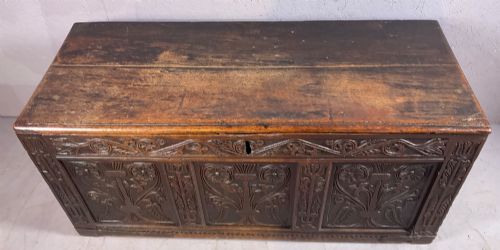
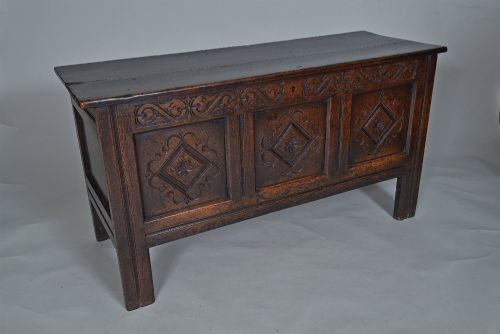
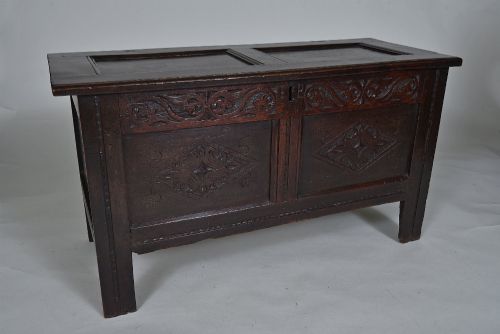
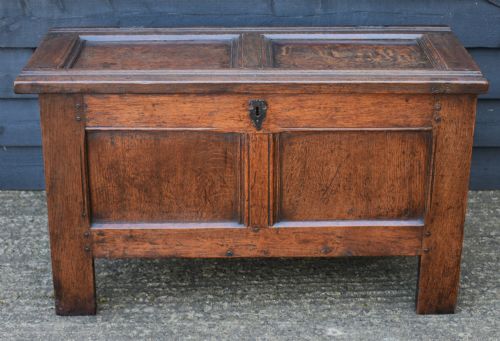

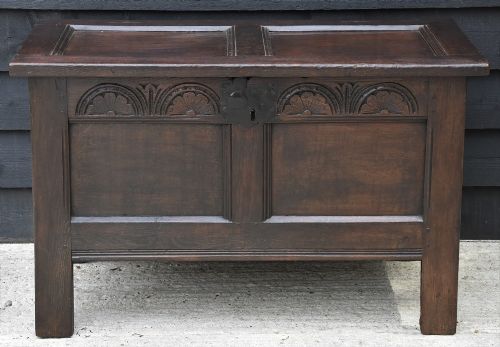
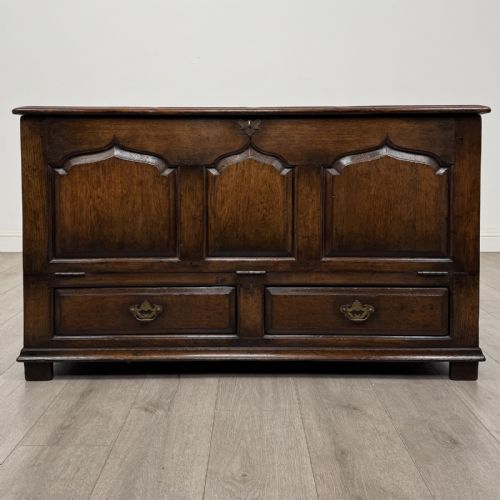
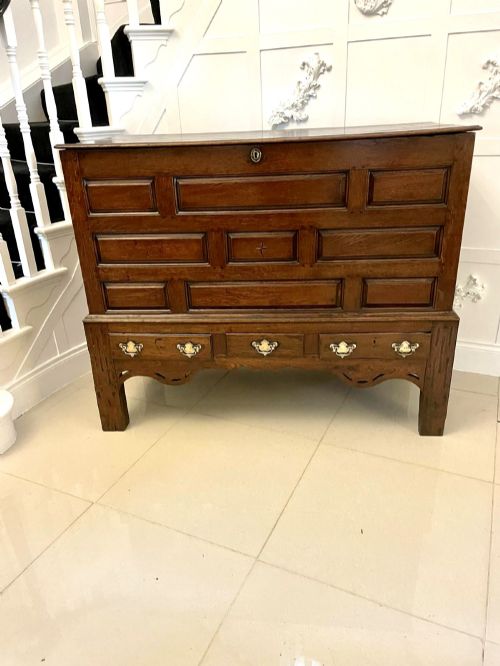
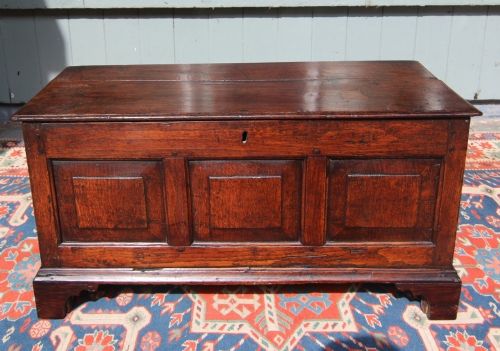
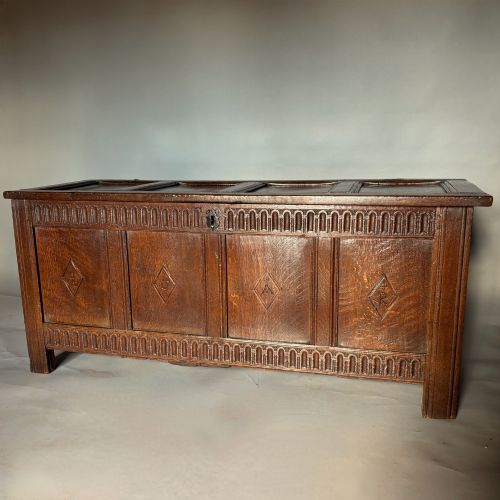
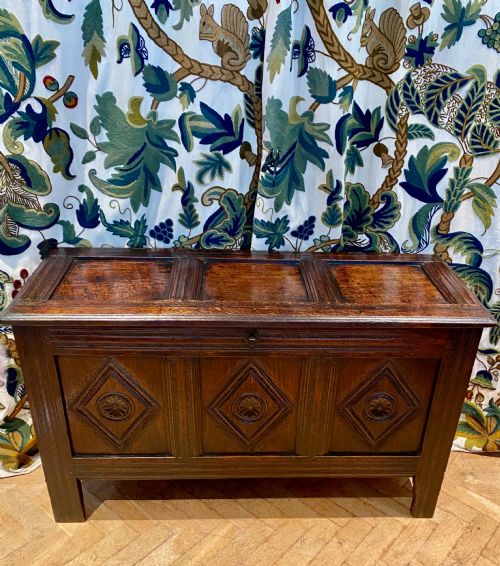
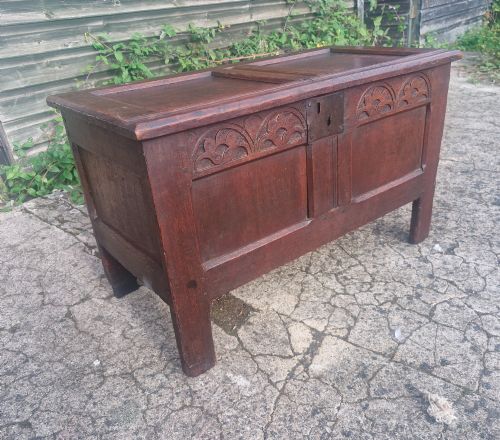
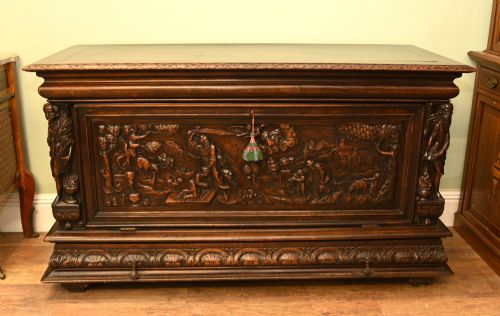
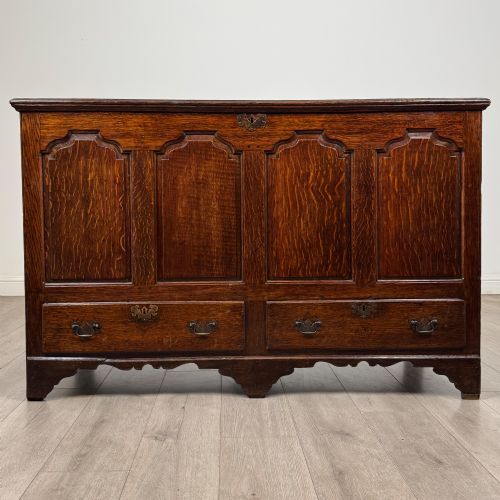
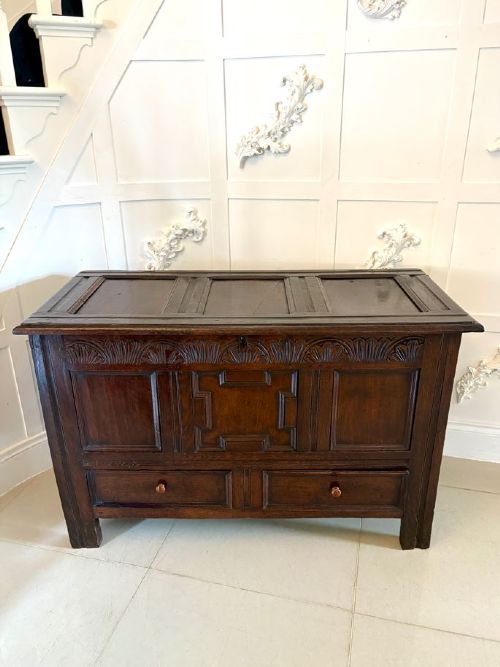
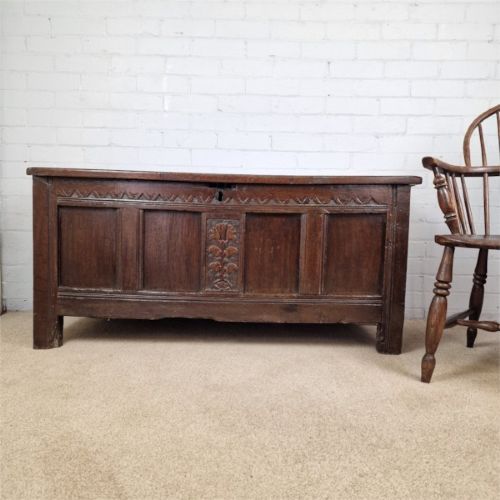
Carved Panelled Trunk
A carved panelled trunk is a sturdy storage piece built from timber, and buyers want one to anchor a hallway or bedroom with historical texture.
Carved Panelled Trunk
A carved panelled trunk typically presents as a coffer or chest built from heavy timber with recessed panels set into a rigid frame. These items function as durable storage boxes that double as seating or tables within domestic spaces.
The versions most commonly met on this page date from the seventeenth and eighteenth centuries, alongside later revival pieces produced in the early twentieth century. Common regional forms span English oak examples to French provincial and Welsh coffer bach designs.
Makers constructed these storage pieces to hold household linens, documents, or valuables securely off damp floors. They appear in variations including mule chests with lower drawers, coffers on stands, and simpler lidded box formats.
How they were made
Carpenters built these trunks using joined timber frames, slotting stiles and rails around flat or carved panels to accommodate the natural expansion and contraction of wood. Oak dominates the construction, supported by secondary hardwoods and occasional marquetry inlay or wood inlay work.
Decoration relied on hand chiselling directly into the solid wood boards, producing geometric strapwork, scrolling foliage, or dated inscriptions. Iron and brass hardware such as hinges, straps, and lock plates secured the lids and corners.
Carved Panelled Trunk Retail Price Guide 2026
Typical asking prices for carved panelled trunk among the pieces listed under this phrase on Sellingantiques today, from the lower quarter to the upper quarter. They describe what is for sale here now, not the wider market.
Some seventeenth century chests bear rough scratched initials inside the lid, left by past owners who used the heavy box as a portable wardrobe.
What varies in quality
Depth and crispness of the hand carving separate standard provincial work from master pieces, where chiselled details retain sharp relief and balanced proportions. The integrity of the original joined frame and timber thickness dictate the structural survival of the piece.
Surface patination and the retention of original iron or brass hardware influence the character of the wood. Alterations to lids, replaced feet, or later panels change the historical honesty of the object.
The Carved Panelled Trunk Glossary
- Coffer
- A heavy wooden chest traditionally used for storing valuables or documents. These storage boxes often feature hinged lids and joined construction.
- Mule chest
- A storage chest equipped with one or more drawers beneath the main lidded compartment. This form bridges the traditional coffer and the modern chest of drawers.
- Panel
- A thin board fitted securely within a grooved frame to prevent warping. Panels provide the flat surfaces used for decorative carving.
- Stile
- The vertical upright member in a joined wooden frame. Stiles flank the panels on the front and sides of a trunk.
- Marquetry inlay
- Decorative patterns formed by fitting contrasting veneer pieces into the wood surface. This technique adds pictorial detail to the chest front.
Carved Panelled Trunk: Frequently Asked Questions
What is a coffer bach?
A coffer bach translates from Welsh as a small box or chest. These miniature versions served specific domestic storage roles or acted as apprentice pieces.
Craftsmen built them with the same joined panel techniques found on full sized furniture.
How do I date an oak chest?
Dating relies on examining construction methods, tool marks, and framing styles. Seventeenth century examples use joined frame and panel assembly with hand cleft timber.
Later revival pieces from the twentieth century show mechanical saw marks and standardised fixings behind historical facades.
Can I use a trunk as a coffee table?
These sturdy wooden chests function well as living room tables because their flat lids provide a stable surface. Their internal storage space also conceals household items out of sight.
Placing felt pads beneath items on the lid protects the historic wood finish from scratches.
What is joined oak furniture?
Joined furniture uses pegged mortise and tenon joints to lock the wooden frame together securely. This method preceded mass production and created rigid frameworks that survived centuries of use.
Panels float loosely within the joined grooves to allow for seasonal wood movement.