
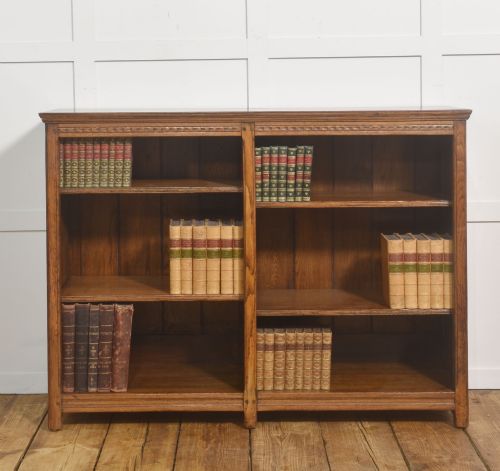
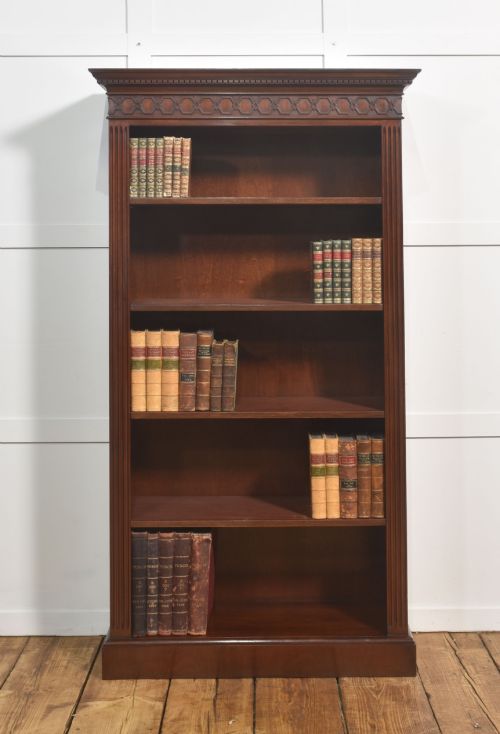
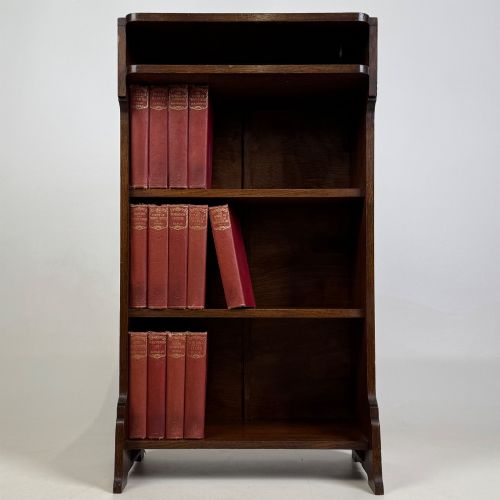
Carved Open Bookshelves
Carved open bookshelves bring architectural warmth to a room, offering accessible display for books and treasured objects alike.
Carved Open Bookshelves
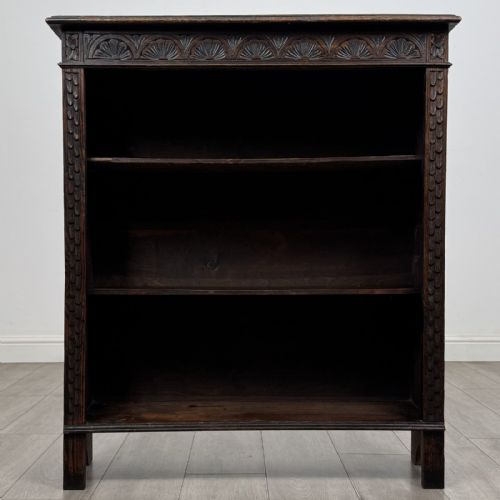
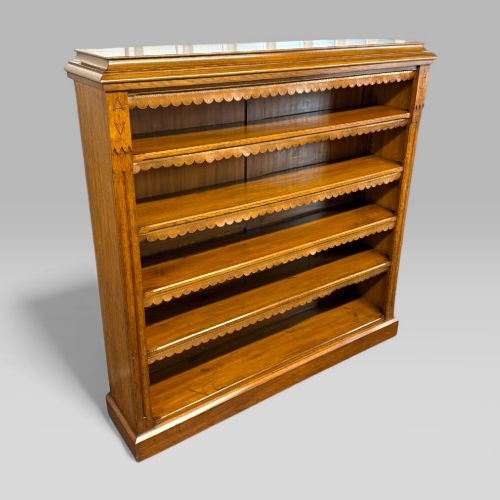
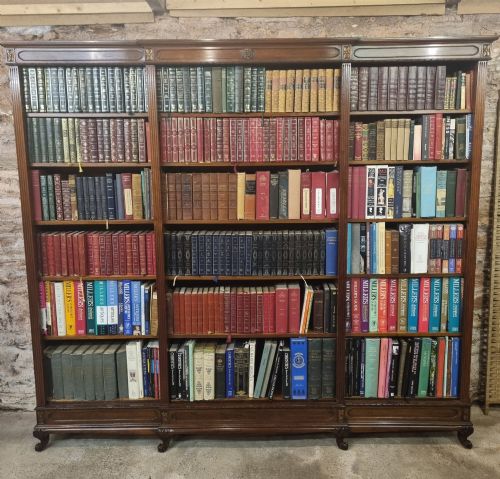
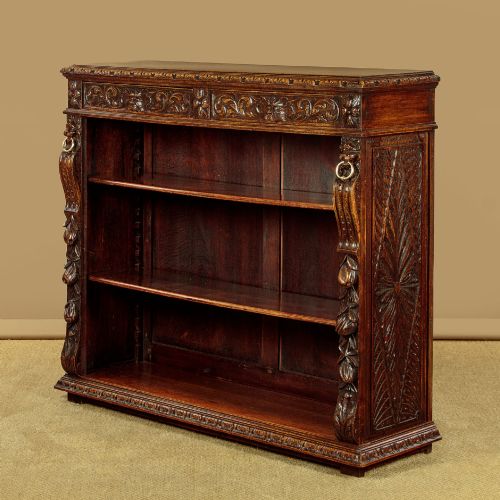
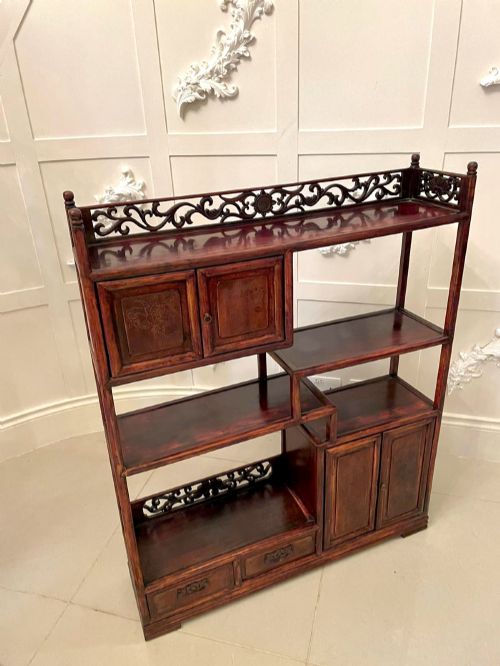
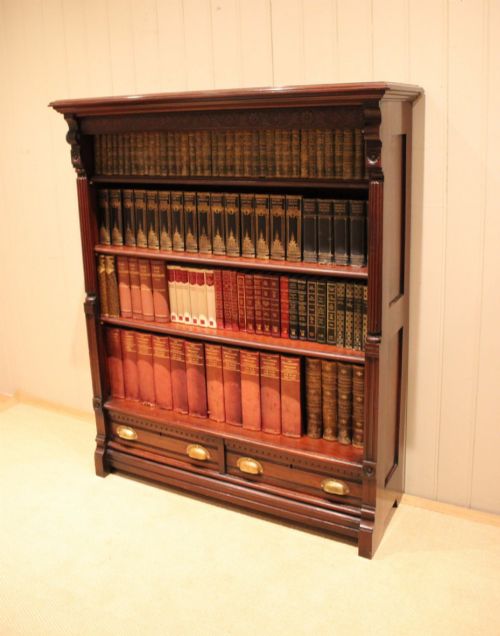
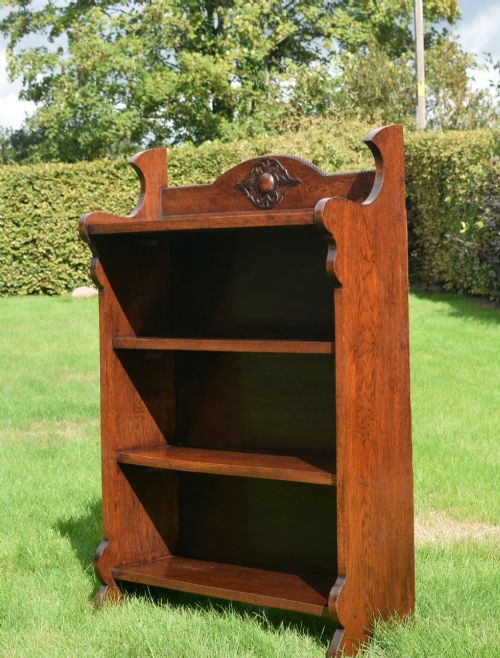
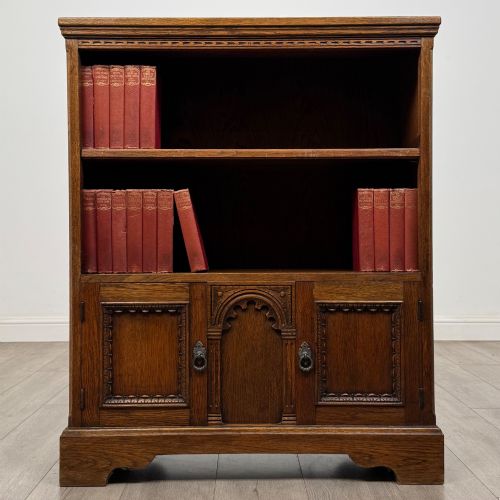
Carved open bookshelves provide accessible, wall-adjacent storage for volumes while displaying decorative bindings and small objects. Pieces matching this search phrase span centuries of cabinet-making, from compact Edwardian examples to grand nineteenth-century library fixtures.
Oak and mahogany dominate the offerings, frequently enhanced by carved motifs characteristic of Victorian, Edwardian, and Arts and Crafts production. Lower dwarf configurations and tall breakfront library formats appear regularly across the selection.
Makers utilised various regional timbers, integrating adjustable shelving mechanisms to accommodate volumes of changing sizes. Buyers encounter everything from simple domestic oak units to elaborate rosewood and burr walnut furniture.
How they were made
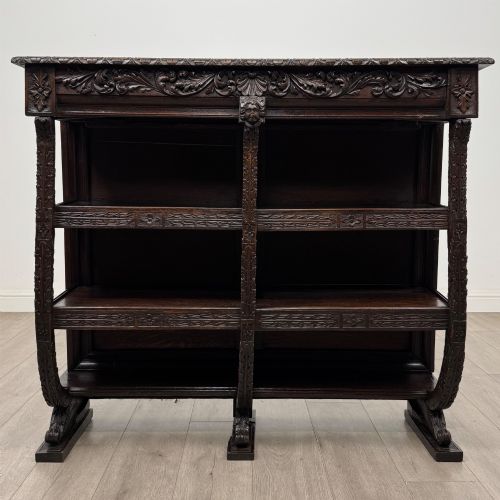
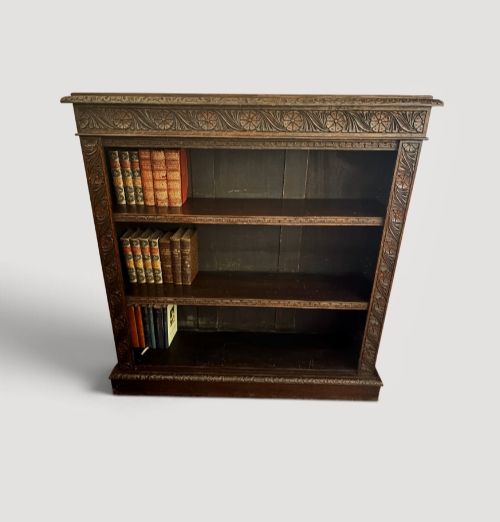
Cabinet-makers relied predominantly on solid hardwoods like oak, mahogany, walnut, and rosewood, sometimes applying veneers over secondary woods for decorative effect. Hand-carved details such as green man masks, Gothic tracery, and geometric panels decorate the stiles and friezes.
Internal construction incorporates adjustable shelf systems using brass pins, wooden ratchets, or traditional slot-in supports. Joinery techniques prioritise stability for heavy book loads, utilising pegged mortise and tenon joints in sturdy oak and mahogany bodies.
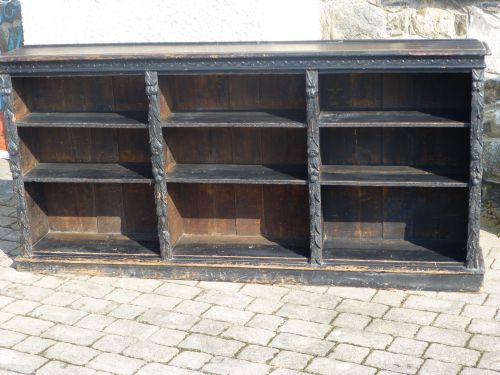
Several Victorian oak units hide grinning green man carvings among their foliate scrolls, watching quietly over the library.
What varies in quality
Depth and crispness of the hand-carving separate standard domestic furniture from finer architectural commissions. Sharp, well-defined wooden reliefs indicate skilled hand work rather than mechanical routing.
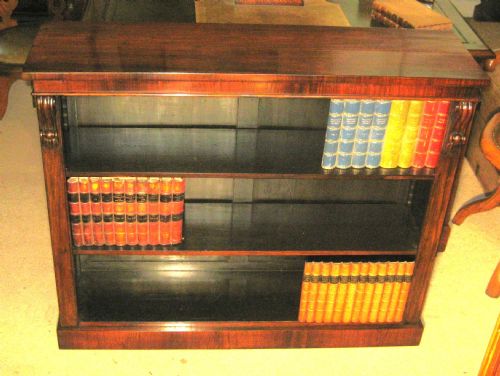
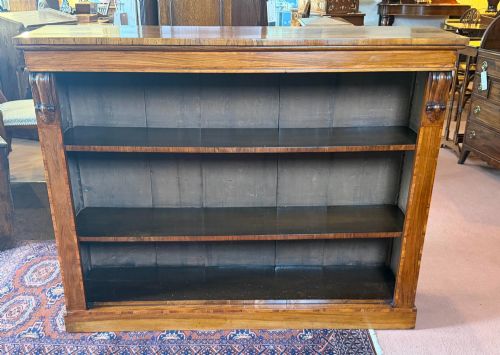
Selection of timber grain and figure dictates overall visual success, particularly on burr walnut, rosewood, and figured mahogany surfaces. Integration of original brass hardware and fully functional adjustable shelving mechanisms adds considerable merit to a piece.
The Carved Open Bookshelves Glossary
- Dwarf bookcase
- A low shelving unit designed to sit beneath dado height, often topped with a display surface. These pieces keep books at hand without dominating vertical wall space.
- Breakfront
- A piece of furniture where the central section projects forward from the flanking wings. This configuration creates visual depth and architectural interest.
- Green man
- A sculptural architectural ornament depicting a human face disgorged from foliage. It appears frequently in Victorian and Gothic Revival carved woodwork.
- Adjustable shelves
- Internal boards supported by movable pegs or ratchets rather than fixed housings. This system allows the owner to alter shelf heights for varying book sizes.
- Ormolu
- Gilded bronze mounts applied to furniture for decorative enrichment. It is found on finer nineteenth-century walnut and rosewood pieces.
Carved Open Bookshelves: Frequently Asked Questions
How do I style open bookshelves?
Balance heavy volumes with decorative ceramics, framed photographs, and trailing plants across the available shelves. Leave some negative space to prevent the arrangement from feeling heavy.
Group books by size or colour to create visual harmony within the wooden framework of the bookcase.
Are these shelves adjustable?
Many examples feature adjustable shelving supported by brass pins, wooden rack strips, or traditional vertical slots. This allows you to accommodate oversized volumes easily.
Check the listing details to confirm whether the specific unit retains its original adjustable mechanism.
What woods were commonly used?
Oak and mahogany appear most frequently, offering robust support for dense rows of books. Finer examples utilise decorative veneers of walnut, rosewood, burr walnut, and satinwood.
Secondary woods like pine often form the internal carcasses and backboards of these pieces.
How do I identify Victorian pieces?
Victorian bookcases often display heavy timber construction with pronounced grain, alongside stylistic clues like Gothic tracery or deep foliate carving. Darker finishes and robust proportions are characteristic of the period.
Later Victorian iterations frequently incorporate adjustable shelving and Aesthetic Movement styling.