

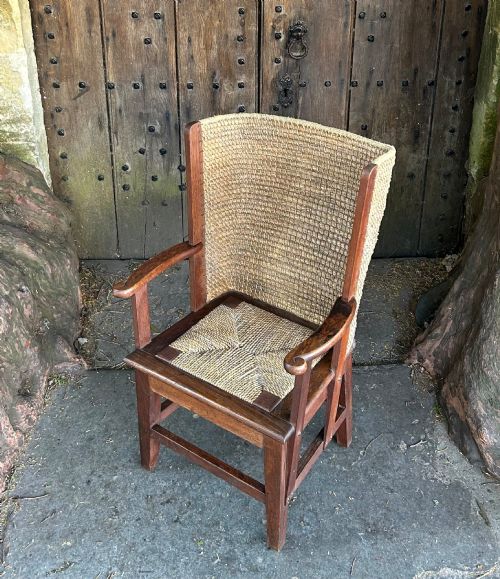


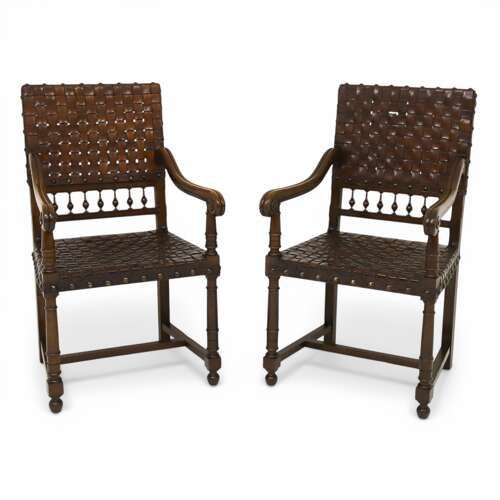


Carved Oak Woven Armchair
These carved oak woven armchairs offer solid joinery and tactile seating, bringing honest character to any room.
Carved Oak Woven Armchair
A carved oak woven armchair combines sturdy timber frames with woven seating elements like cane, rush, straw, leather, or Lloyd Loom. These pieces span periods from the nineteenth century through the 1930s, encompassing styles such as Jacobean Revival, Carolean Revival, Arts and Crafts, and Scottish Vernacular.
Regional variations emerge through vernacular forms like Orkney chairs alongside urban designs associated with London makers. Buyers encounter standard armchairs, reclining variants, and matched pairs suitable for diverse interior settings.
Materials and construction methods
Frames rely on solid oak, often shaped with hand-carved detailing inspired by earlier centuries. Joinery secures heavy timber members designed to withstand decades of daily use.
Seating and backrests incorporate woven materials including natural cane, supple leather, straw, rush, and Lloyd Loom fibre. These woven surfaces provide flexible support within rigid wooden skeletons.
Carved Oak Woven Armchair Retail Price Guide 2026
Typical asking prices for carved oak woven armchair among the pieces listed under this phrase on Sellingantiques today, from the lower quarter to the upper quarter. They describe what is for sale here now, not the wider market.
Some garden room armchairs incorporate woven paper fibre, proving that even paperwork can withstand decades of afternoon tea.
Assessing craftsmanship and execution
Quality rests in the crispness of the oak carving and the tightness of the woven components. Finer examples display evenly tensioned cane or leather work integrated seamlessly into rebated frame channels.
Proportion and scale distinguish superior items, where armrests and uprights balance comfort with architectural presence. The integration of brass fittings or secondary materials further elevates specific pieces.
The Carved Oak Woven Armchair Glossary
- Bergere
- An upholstered or cane-panelled armchair with a wooden frame. This French style became popular in various British revivals during the nineteenth and twentieth centuries.
- Cane
- Strips of rattan or similar plant material woven into open mesh patterns. It provides a lightweight yet durable backing or seat surface.
- Lloyd Loom
- A twisted paper fibre pressed over wire and woven into sheets. Developed in the United States, it found wide use in British garden rooms by the 1930s.
- Carolean Revival
- A furniture style imitating the ornate late seventeenth-century reign of Charles II. Pieces typically feature rich carving, twisted turnings, and cane panels.
- Rush
- Pliable marsh plants twisted into cords for traditional bottoming. It forms a textured, supportive seat surface common in country vernacular chairs.
Carved Oak Woven Armchair: Frequently Asked Questions
How do I care for cane seats?
Cane requires moderate humidity to prevent the natural fibres from drying out and snapping. Light dusting keeps the weave clean and prevents grit accumulation.
Applying a damp sponge occasionally helps maintain the flexibility of the rattan strips. Avoid placing these chairs directly next to intense heat sources.
Are these chairs comfortable for daily use?
Many of these designs were built with ergonomic reclining or supportive fireside postures in mind. The woven elements provide a degree of give that adapts to the sitter.
Adding a loose cushion can enhance comfort for extended lounging. Sturdy oak frames ensure reliable structural support over time.
What distinguishes Carolean style?
Carolean style draws inspiration from late seventeenth-century English design under Charles II. It emphasises elaborate carving, scrollwork, and rich textures.
Chairs from this revival period often incorporate pierced crest rails and woven cane back panels. The dark oak frames complement traditional and eclectic interiors alike.