
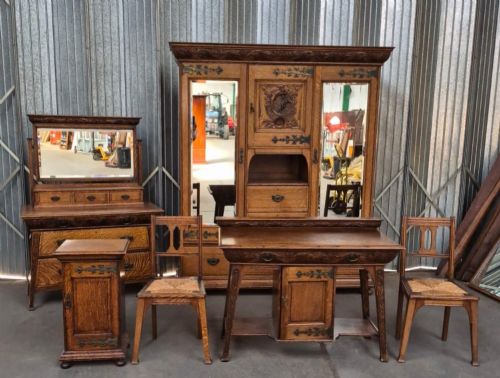
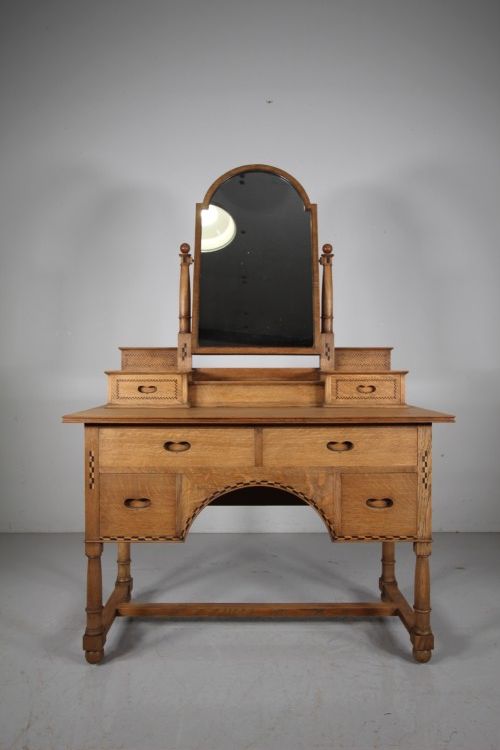
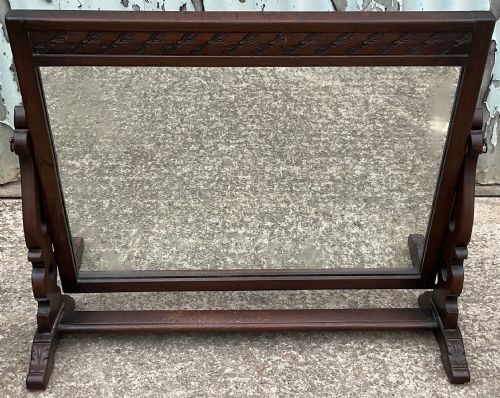
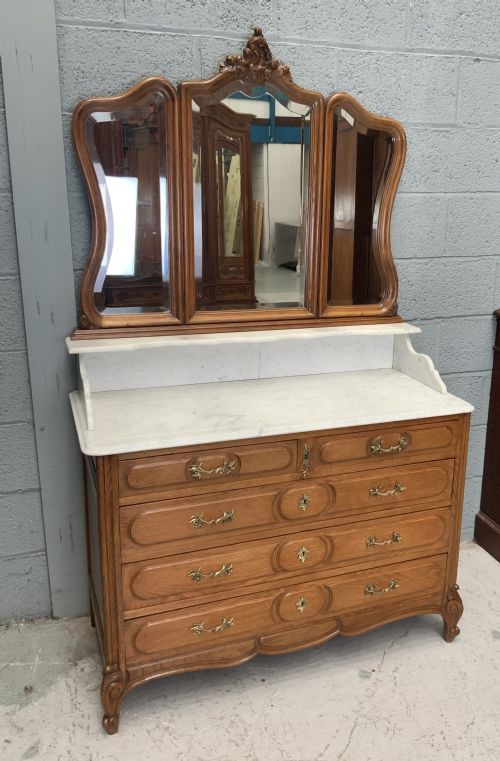


Carved Oak Table Mirror
These carved oak table mirror pieces offer practical reflection surfaces grounded in solid timber frames from the nineteenth and twentieth centuries.
Carved Oak Table Mirror
A carved oak table mirror provides a functional dressing glass mounted within a timber frame designed to sit upon a chest, table or vanity surface.
The pieces appearing under this search phrase span periods from the Victorian era through Edwardian years into the twentieth century, alongside styles like Arts and Crafts, Rococo Revival and Art Deco.
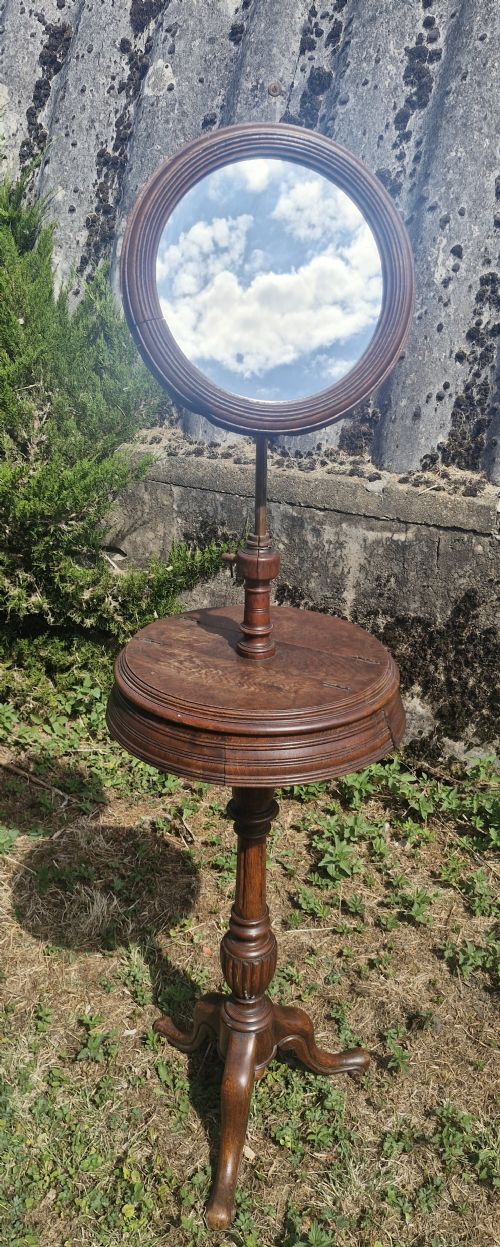
Most examples function as adjustable swing mirrors or toilet glasses, often associated with dressing chests and washstands rather than standalone items.
Materials and construction
Construction relies heavily on oak timber, sometimes appearing as blonde oak, golden oak or pollard oak alongside supporting elements of glass, brass and occasionally wood inlay or rush.
Carving techniques shape the wooden frames and supports, while pivoting mechanisms allow the glass to tilt to various angles for the user.
Listings feature oak combined with brass, marble, metal, iron and rush across Victorian, Edwardian and Art Deco periods.
Assessment of quality
Quality rests upon the crispness of the timber carving and the solidity of the framing, distinguishing finely detailed workshop output from simpler production.
The condition and clarity of the glass mirror plate, together with the smooth operation of any adjustable pivots or support brackets, influence the overall standard.
Heals·Shapland and Petter·Arnott and Co
The Carved Oak Table Mirror Glossary
- Swing mirror
- A glass plate mounted on vertical pivots within a frame, allowing the user to tilt it forward or backward.
- Toilet mirror
- A smaller mirror designed to sit atop a dressing table, chest of drawers or washstand.
- Arts and Crafts
- A design movement prioritising traditional craftsmanship, simple forms and visible construction methods.
- Rococo Revival
- A nineteenth century style characterised by ornate, asymmetrical scrollwork, floral motifs and curved lines.
- Pollard oak
- Timber taken from trees that have been pollarded, producing a decorative knotty grain highly prized for cabinet work.
Carved Oak Table Mirror: Frequently Asked Questions
How do I clean the wooden frame?
Dust the carved oak surfaces regularly with a dry, soft cloth to prevent dirt accumulation within the recessed carving.
Avoid using harsh chemical polishes or excessive moisture, applying a quality beeswax sparingly only when the timber appears dry.
Are these mirrors adjustable?
Many examples feature pivoting side supports or brass screws that allow the glass angle to be altered for personal use.
Check the pivot mechanism gently to ensure the glass holds its position without slipping.
What period are most pieces from?
The available evidence spans the nineteenth century through the Edwardian period and into the nineteen twenties and thirties.
Victorian and Edwardian examples frequently show denser carving, whilst later pieces often display cleaner Arts and Crafts or Art Deco lines.
Can I place these on any surface?
These table mirrors are built to rest securely upon dressing tables, sideboards, chests of drawers or washstands.
Ensure the footprint of the mirror base matches the depth of your chosen surface for stability.